5 Best Golf Drivers for Mid and High Handicappers in 2026
Five 2026 drivers built to bail out mishits rather than reward a perfect strike, ranked from budget-friendly to premium so golfers at every stage of the forgiveness spectrum have a real option.
Most golfers who carry a mid-to-high handicap don't lose distance to a bad driver. They lose it to a driver that punishes a strike a half-inch off-center, which is most of the strikes most golfers actually make. The five drivers below were built around that problem specifically: higher moment of inertia (MOI), forgiving center-of-gravity placement, and in several cases genuine adjustability, rather than chasing the last few yards of ball speed that only shows up on a flush hit. This guide surveys five 2026 releases that reviewers and manufacturer data agree sit at or near the top of their category for forgiveness, from a sub-$500 value pick to a fully adjustable premium option.
Quick picks
| Driver | Best for | Price | Why it's here |
|---|---|---|---|
| Callaway Elyte | Tightest budget | ~$400 clearance | Up to 10,000 MOI with an optional heavier screw weight, 8-way adjustable hosel, now in clearance well under MSRP |
| Cobra OPTM Max-K | Golfers who need lie/loft fitting flexibility | ~$599 | Cobra's highest-MOI driver ever, 33 loft/lie combinations via FutureFit33 |
| TaylorMade Qi35 Max | No-fuss fixed-head forgiveness | ~$600 street | Roughly 10,000 MOI with no adjustability to fuss over, locked into a low, forgiving CG |
| TaylorMade Qi4D Max | Shot-shape control without leaving titanium-level forgiveness | ~$649 | First adjustable non-titanium driver in TaylorMade's line, forged 7075 aluminum collar |
| PING G440 K | Maximum stock forgiveness | ~$650 street | Highest MOI in PING's current line, adjustable rear weighting |
Why forgiveness matters more than raw distance here
MOI is a measure of how much a clubhead resists twisting when contact happens away from the center of the face. A higher number means less energy lost, and less directional miss, on a strike that isn't perfectly centered. All five drivers below sit at or near 10,000 g/cm² MOI, which is close to the practical ceiling under current equipment rules; beyond that number, manufacturers are mostly working on where the forgiveness is concentrated (heel-toe versus high-low) rather than adding more of it.
None of that requires a launch monitor to evaluate for yourself. A simpler proxy: pay attention to where your strikes land on the face after a range session, using foot spray or face tape, and how much a strike a half-inch toward the toe or heel actually costs you in a visibly shorter or more crooked result compared to a strike closer to the center. A driver with genuinely high MOI shows a smaller gap between those two outcomes. If you don't have access to a launch monitor, that visible dispersion gap is a fair substitute for a spin or ball-speed number.
The 5 best drivers for mid and high handicappers in 2026
Callaway Elyte
Callaway's Elyte carries up to 10,000 MOI with an optional heavier screw weight for golfers who want to push that number further, built around the brand's Ai10x face for ball speed retention across the face. It carries an 8-way adjustable hosel and a 13-gram movable weight, giving it more built-in tuning range than the two TaylorMade Max models below, and it's positioned toward a lower-spin ball flight than the PING or Cobra picks here. That makes it a better fit for a mid-handicap golfer with faster swing speed and an off-center miss than for a slower-swinging, high-handicap golfer who needs more launch. Street price has fallen to roughly $400, with Callaway.com listing it at $399.99 clearance against a $619.99 MSRP, making it the clear value anchor of this list. Worth being direct about why it's priced that low: the Elyte is still Callaway's current-gen driver, but it's in clearance now and could be superseded by a newer release at some point, so buy it for what it does today rather than assuming that price holds.
Buy: Buy the Callaway Elyte on Amazon
Cobra OPTM Max-K
Cobra calls the OPTM Max-K the highest-MOI driver it has ever built, and backs that with FutureFit33, a hosel system offering 33 loft and lie combinations across a plus-or-minus-2-degree range. That range is the widest fitting flexibility of any driver on this list, useful for a golfer whose swing changes season to season or who wants one driver a fitter can adjust repeatedly rather than replace. Cobra's own materials describe reduced side-spin on off-center strikes as the main forgiveness gain. Street price runs around $599.
Buy: Buy the Cobra OPTM Max-K on Amazon
TaylorMade Qi35 Max
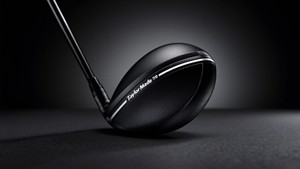
The Qi35 Max is TaylorMade's value-forward forgiveness play for 2026: roughly 10,000 MOI, 34 grams of tungsten weighting, and a deliberately low, forgiving center of gravity, all locked into a fixed, non-adjustable head. That lack of adjustability is a genuine tradeoff, not a missing feature by accident. TaylorMade optimized the CG placement at the factory rather than leaving it open to a fitter, which removes a variable a lot of higher-handicap golfers never touch anyway. Street pricing sits close to $600, with 2nd Swing listing it at $599.99 and Today's Golfer citing a $599 RRP, putting it in the same range as the Cobra pick rather than at the bottom of this list.
Buy: Buy the TaylorMade Qi35 Max on Amazon
TaylorMade Qi4D Max
The Qi4D Max shares the Max badge with the Qi35 Max but takes a different route to its forgiveness: a forged 7075 aluminum collar in place of a titanium one, which TaylorMade says is the first time it has built an adjustable driver on a non-titanium chassis. The adjustability that gives up is what separates it from the Qi35 Max: golfers who want to dial in loft and face angle, not just buy a fixed forgiving head, get that control here without giving up much MOI. Street price runs around $649.
Buy: Buy the TaylorMade Qi4D Max on Amazon
PING G440 K
The G440 K carries the highest MOI in PING's current driver line, above 10,000 g/cm², and pairs it with adjustable rear weighting so golfers can bias the forgiveness toward a draw or fade tendency rather than accepting a single fixed miss pattern. It's built for a high launch and maximum forgiveness rather than low spin, which suits a slower-swinging, higher-handicap player more than someone already fighting a low, hooking ball flight. Current street price runs around $650; PING's original launch RRP was $705, though retailers have settled below that since release.
Buy: Buy the PING G440 K on Amazon
Head-to-head comparison
| Driver | MOI / forgiveness | Adjustability | Launch / spin profile | Price |
|---|---|---|---|---|
| Callaway Elyte | Up to 10,000 MOI, optional heavier screw weight | 8-way hosel, 13g movable weight | Lower-spin bias | ~$400 clearance |
| Cobra OPTM Max-K | Cobra's highest MOI ever | FutureFit33 hosel, 33 loft/lie combinations (+/-2 degrees) | High launch, reduces side-spin on mishits | ~$599 |
| TaylorMade Qi35 Max | ~10,000 MOI, 34g tungsten | None (fixed, CG-optimized) | Low CG, high launch | ~$600 |
| TaylorMade Qi4D Max | High MOI via forged 7075 aluminum collar | Adjustable (first non-titanium adjustable TaylorMade driver) | More shot-shape control than Qi35 Max | ~$649 |
| PING G440 K | Highest in PING's line, over 10,000 g/cm² | Adjustable rear weighting | High launch, max forgiveness | ~$650 |
Already own a previous-generation driver?
If you're currently gaming a TaylorMade Qi10 or a Callaway Paradym Ai Smoke Max, you don't necessarily need to upgrade. Both are now a generation behind the drivers above, but both have also dropped hard in price as a result, and both still test as genuinely forgiving heads. Our TaylorMade Qi10 driver review covers it as a clearance-priced forgiveness option now that the Qi35 Max and Qi4D Max have replaced it at the top of TaylorMade's line. Our Callaway Paradym Ai Smoke Max driver review covers the same story on the Callaway side, now that the Elyte has taken over as the current-gen model. Neither is a current pick in this guide, but if the price gap between a prior-gen driver and a new one is wide enough where you shop, it's worth reading both before spending full price on a 2026 release.
How to choose between these five
Start with what you already know about your miss, not the spec sheet. A golfer who mishits mostly toward the heel or toe wants the highest raw MOI available, which points toward the PING G440 K or the Cobra OPTM Max-K. A golfer on the tightest budget who doesn't want to think about adjustability at all is well served by the Elyte at its current clearance price, or the Qi35 Max if you'd rather buy new-generation stock at a similar price to the Cobra. A golfer who already gets fit regularly and wants a driver a fitter can keep adjusting over a full season is better matched to the Qi4D Max or the Elyte, both of which carry more built-in tuning range than the fixed-head Qi35 Max. Fitters consistently report that golfers fixate on a headline MOI number far more than the dispersion data a launch monitor actually shows, and the second one matters more than the first for anyone buying a driver for forgiveness rather than raw distance.
None of these five is a bad pick for this audience. The differences that matter are adjustability versus simplicity, and launch/spin bias versus a neutral, high-launch build, not a meaningful gap in outright forgiveness.
Frequently Asked Questions
What's the most forgiving driver for a high handicapper in 2026?
Do I need an adjustable driver as a mid or high handicapper?
What's the cheapest driver on this list?
Should I upgrade from a TaylorMade Qi10 or Callaway Paradym Ai Smoke Max?
Can I evaluate driver forgiveness without a launch monitor?








The golf newsletter that cuts the hype
Data-backed reviews and advice that works. No brand spin.
Recommended products