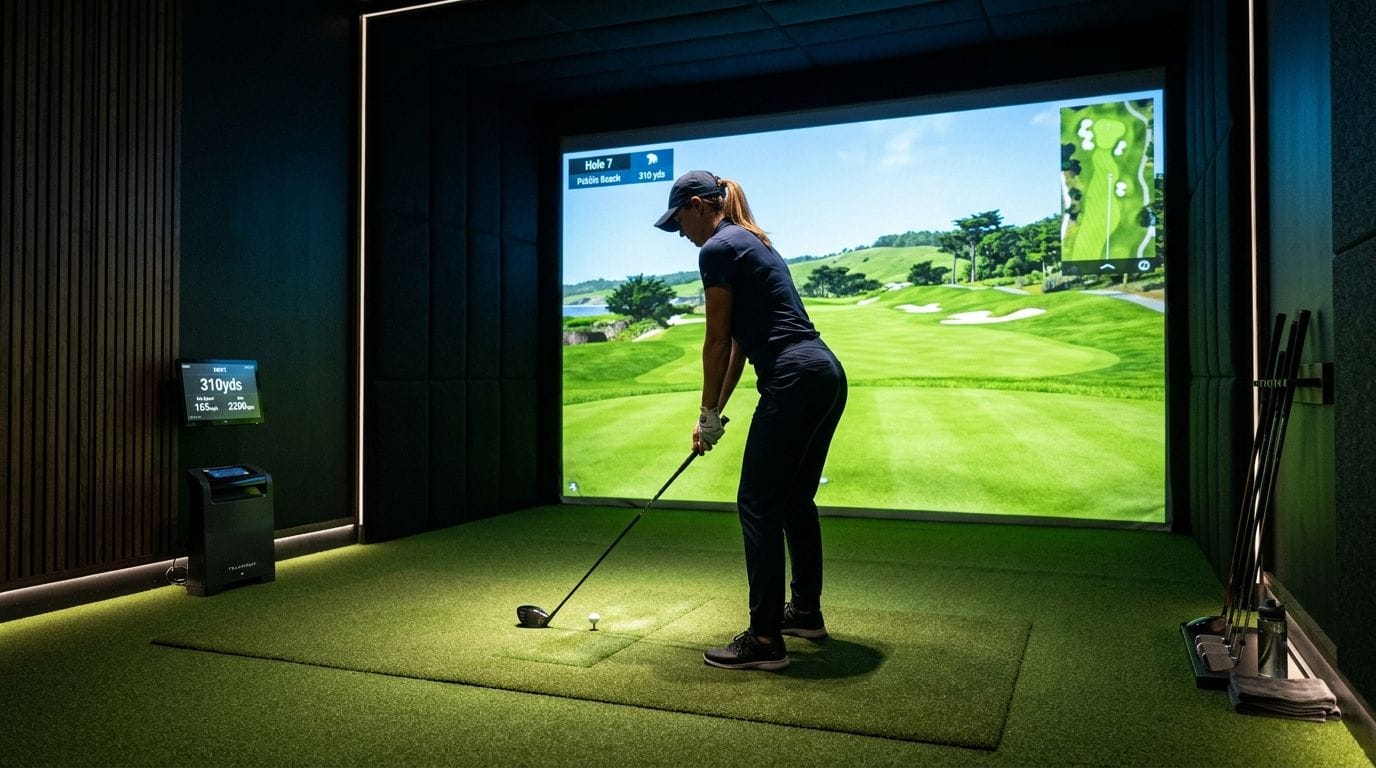
Golf VX, the U.S. arm of South Korean tech company Kakao VX, has brought its Quantum simulator platform to the American market. For anyone watching where commercial simulation is heading, the specs are worth a close look.
Golf VX announced the Quantum platform's U.S. debut on April 17, and the headline numbers are legitimately different from what most commercial sim operators are running today. The system uses ultra-high-speed cameras at up to 4,000 fps, 4K course graphics, and a 15-piece terrain plate system that replicates 19,000 distinct surface variations. There's also a six-step AI swing analysis module built in.
To put 4,000 fps in context: most consumer-grade camera-based launch monitors, like the Uneekor QED, run at around 3,200 fps. The jump matters for spin axis accuracy and oblique impact detection, two areas where cheaper systems still have gaps.
The Quantum is not a home unit. Golf VX is targeting venue operators and franchisees, which means the 14-22 handicapper reading this isn't buying one for the garage. But you'll play one, and the benchmarks set here will shape what you expect from mid-tier simulators in two or three years.
The more interesting question is competitive pressure. Kakao VX runs over 500 GDR venues in Korea and is expanding into the U.S. market with this platform. That puts pressure on Full Swing, TruGolf, and others who hold the current commercial market share. More competition at the top of the commercial tier is how better technology at lower price points gets built. That's the so what for a club-level golfer: this platform raises the floor on what counts as a good simulator experience.
Also today
- r/Golfsimulator 2026 Launch Monitor Survey: The pinned comparison spreadsheet in the 80,000-member r/Golfsimulator community has been updated with 2026 survey data covering owner satisfaction, software compatibility, and side-by-side figures across mats, projectors, and enclosures. If you're in the research phase on a home setup, this is the most consolidated real-world dataset available. No lab bias, no brand relationships. Just owners reporting what they're seeing.
- MyGolfSpy Driver Distance by Handicap, 2026: Shot Scope on-course tracking data shows the gap in average driver distance between handicap brackets is smaller than most golfers assume. What separates a 7-handicap from an 18-handicap isn't how far they hit it, it's the size and cost of their misses. Fairway percentage holds within a few points across groups. The data makes a solid case for spending practice time on dispersion, not carry distance.
- Callaway Chrome Tour Triple Diamond 2026 Update: Callaway has updated the Chrome Tour Triple Diamond one year after the original release, which is a short turnaround. The new version sits at around 100 compression and near the USGA Overall Distance Standard ceiling. It's the fastest, lowest-spinning ball in Callaway's lineup. The firm feel and high compression make it a poor fit for anyone under 105 mph swing speed. If you're in that range, this is not your ball.
- Titleist GTS2 and GTS3 Fairway Woods Tour Debut: The GTS2 and GTS3 made their competitive debut at the RBC Heritage, with Cameron Young and Johnny Keefer both gaming GTS3 7-woods. Titleist hasn't released specs or pricing yet. Retail is expected in May. Worth monitoring if you're in the market for a fairway wood this season.
Titleist's GTS retail timing and the Shot Scope distance data are the two things to watch this week. If you track your own shots, the handicap distance breakdown is worth comparing against your numbers.