TaylorMade Qi10 Driver Review: The Data Verdict
The TaylorMade Qi10 Max offers 10,000 MOI forgiveness for mid-handicappers at clearance prices. Data-backed review of all three Qi10 models.

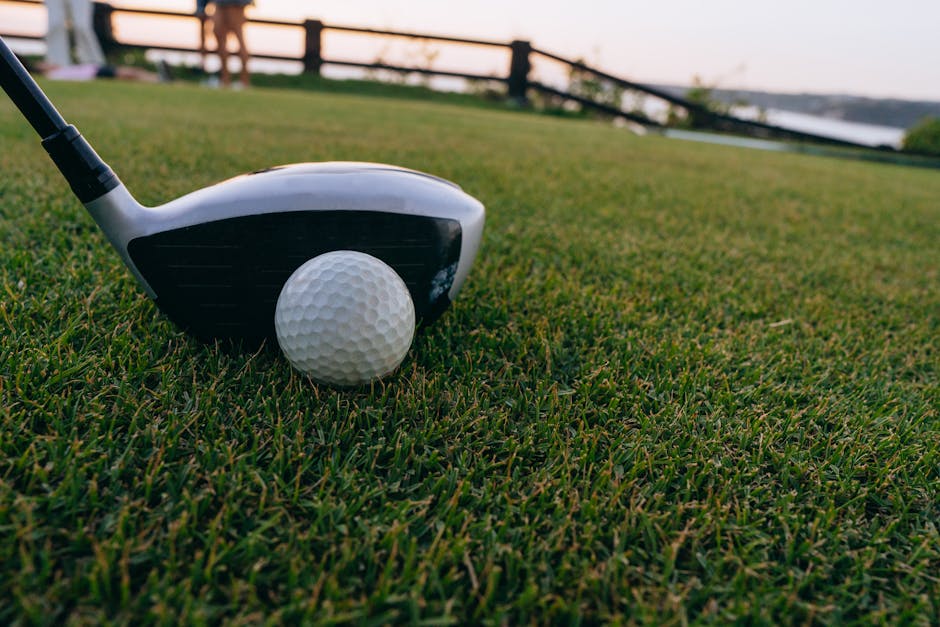
TaylorMade launched three Qi10 drivers in January 2024 with a bold headline: 10,000 g-cm² of MOI, the maximum the USGA allows. That's the forgiveness ceiling. One generation later, the Qi35 has replaced it on the rack, and clearance pricing has dropped the Qi10 Max into the $274 to $331 range on the used market. The question for a 10 to 20 handicapper isn't whether the Qi10 is a good driver. It is. The question is which of the three models fits your game, and whether buying now at a discount beats paying $500 for the Qi35.
I've pulled data from MyGolfSpy's 2024 Most Wanted Driver test, Golf.com's robot testing, Golfalot's Foresight launch monitor data, and real-golfer community feedback from GolfWRX and Plugged In Golf.
• Built for 10–20 handicappers at 85–95 mph: The Qi10 Max is TaylorMade's answer to the forgiveness ceiling — 10,000 g·cm² MOI, the maximum the USGA allows.
• 1.7 fewer yards lost per mishit: Golf.com robot testing found the Qi10 Max loses 3.5 yards on off-centre strikes vs 5.2 yards for the standard Qi10 — that gap adds up over 18 holes.
• Used pricing makes the case: The Qi10 Max is sitting at $274–$331 on SidelineSwap (April 2026). Original MSRP was $599.99. At clearance prices, the value is hard to beat.
• The standard Qi10 is the wrong pick for most: Unless you're a 10–14 handicapper shaping shots deliberately, the Max's forgiveness advantage is too large to ignore.
• Cross-shop the Ping G430 Max 10K: It won the 2024 MyGolfSpy Most Wanted Driver test outright. If you're brand-agnostic, it belongs in your comparison.
• Verdict: Buy the Qi10 Max used if you want maximum legal forgiveness under $350. Skip the Qi10 if you want current-gen tech or swing above 100 mph.
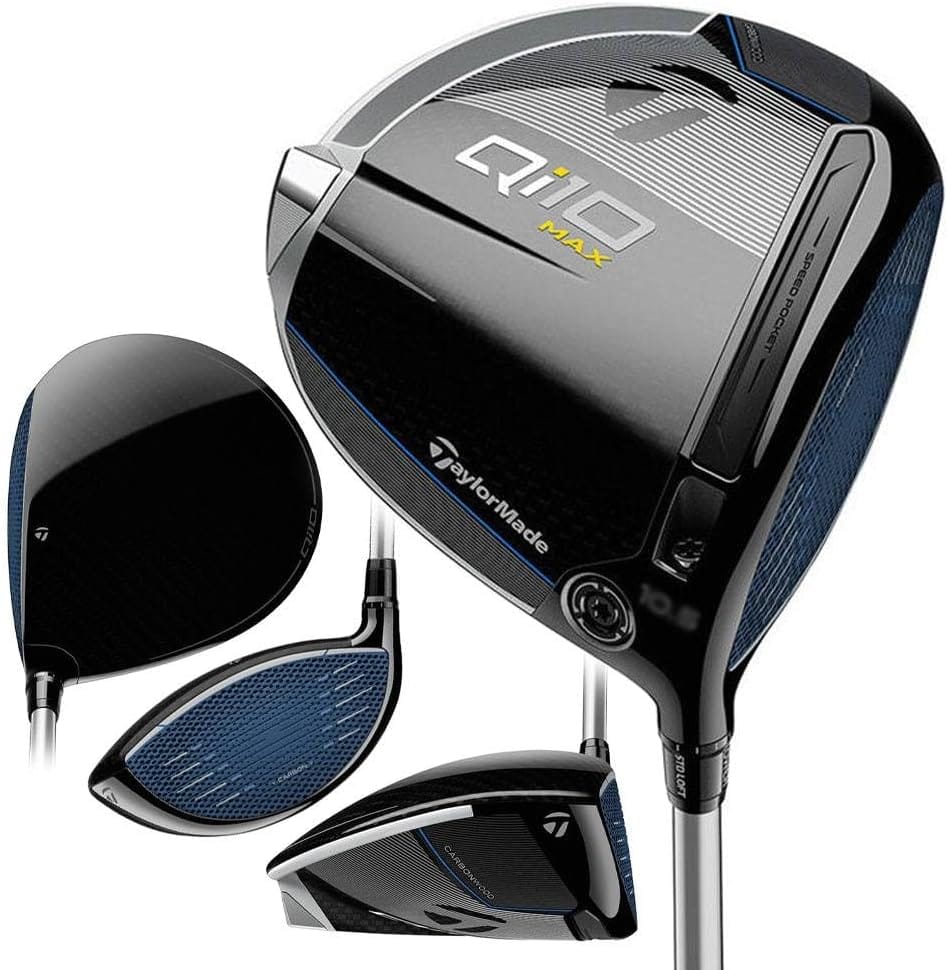
TaylorMade Qi10 Driver
Who Is the Qi10 For?
Three drivers share TaylorMade's 60-layer Carbon Twist Face and 97% Infinity Carbon Crown. What separates them is MOI, adjustability, and the golfer they're built for. MOI is a measure of how strongly a clubhead resists twisting on off-centre strikes, expressed in g-cm² and capped at 10,000 by the USGA.
| Feature | Qi10 (Standard) | Qi10 Max | Qi10 LS |
|---|---|---|---|
| Target golfer | 10-14 HCP, wants shot shaping | 12+ HCP, wants max forgiveness | Low single-figure, high swing speed |
| MOI | ~8,500 g·cm² | 10,000 g·cm² (USGA max) | ~8,200 g·cm² |
| Head size | 460cc | 460cc | 460cc |
| Adjustability | Loft sleeve (±2°) | Loft sleeve (±2°) | Loft sleeve (±2°) + 18g sliding weight |
| Spin profile | Mid (2,100-2,500 RPM) | Mid-high (~3,215 RPM centre) | Low (2,100-2,200 RPM) |
| Loft options | 9°, 10.5°, 12° | 9°, 10.5°, 12° | 8°, 9°, 10.5° |
| Original MSRP | $599.99 | $599.99 | $629.99 |
For the 10 to 20 handicap golfer swinging at 85 to 95 mph, the Qi10 Max is the right pick. That 10,000 g-cm² MOI is 1,500 g-cm² above the Stealth 2 (per TaylorMade's spec sheet), and the robot testing data shows it translates to 1.7 fewer yards lost when you miss the centre.
The LS exists for a different golfer. If you're swinging above 100 mph and fighting ballooning drives, the LS's low spin profile and sliding weight make sense. At 88 mph? You'll launch it too low and lose carry. Leave it on the shelf. So which model suits most mid-handicappers? The Max, and it's not close.
Key Specs
| Spec | Detail |
|---|---|
| Face material | 60-layer Carbon Twist Face |
| Crown | 97% Infinity Carbon Crown |
| Speed Pocket | Thru-Slot Speed Pocket |
| Hosel adjustability | ±2° (12 positions, all models) |
| Moveable weight | LS only (18g sliding weight); standard and Max have no moveable weight |
| Stock shaft | Varies by retailer configuration; aftermarket fitting recommended |
Pros
- 10,000 g·cm² MOI (USGA maximum) — only 1.7 yards lost per mishit vs 5.2 yards for the standard Qi10
- 60-layer Carbon Twist Face and Infinity Carbon Crown save weight for better MOI distribution
- Clearance and used pricing ($274–$331) makes it one of the strongest value plays in forgiving drivers
- Tighter dispersion over 18 holes — real scoring benefit for 12–20 handicappers
- Satisfying sound and feel on good strikes; mishits don't punish the hands
Cons
- No moveable weight on the standard or Max models — fade/draw shaping requires fitting, not club adjustment
- Carbon face masks strike feedback — hard to tell where you missed it during practice
- Stealth 2 upgrade is modest; not a performance leap for existing TaylorMade owners
- One generation old — the Qi35 at $499.99 new undercuts the value case if clearance pricing disappears
Performance: What the Data Shows
MyGolfSpy 2024 Most Wanted Results
MyGolfSpy's 2024 Most Wanted Driver test is the largest independent driver test published: 35 testers, 37 driver models, 18,000+ shots tracked on a Foresight GCQuad using Titleist Pro V1 balls across 420 testing hours.
Headline result: the Ping G430 Max 10K won the overall test. Not TaylorMade.
TaylorMade's Qi10 LS placed 6th overall with an MGS Score of 8.9. It finished 2nd for accuracy in the high swing speed category and 1st for distance efficiency at high swing speed. But it also placed in the bottom half for forgiveness at high swing speed, which tells you what the LS is: a precision tool, not a safety net. 36% of testers ranked the Qi10 LS in their Top 5 for total yards.
The standard Qi10 and Qi10 Max were included in the test, but their individual composite scores sit behind the MGS paywall. What's clear from the confirmed data: TaylorMade's forgiveness story (the Max) and their distance story (the LS) serve different golfers. The MGS test confirmed the LS as a competitive distance driver for faster swingers. For a 15-handicapper at 90 mph, the LS result isn't the relevant data point.
Launch Characteristics: Spin, Launch, Ball Speed
Golfalot's Foresight testing of the standard Qi10 (9°, ~90-92 mph swing speed) produced:
- Ball speed: 133 mph
- Carry distance: 214 yards (196m)
- Total distance: 239 yards (219m)
- Spin rate: 2,500 RPM
- Shot shape: slight fade bias
At the same swing speed, the Qi10 LS generated 2 to 3 mph higher ball speed but lower spin (2,100 to 2,200 RPM), which for a mid-handicapper could mean less stopping power on approaches. Golfalot's reviewer noted the standard Qi10 "fell slightly short in each performance category" compared to the Qi10 Max at the same swing speed. Single-tester data, so treat it as directional rather than definitive.
Golf.com's robot testing (95 mph delivery, 9-point face mapping) added the spin detail: the Qi10 Max produced a centre baseline of ~3,215 RPM, climbing to 4,066 RPM in the low-toe zone. If you tend to catch it low on the face, that spin jump on the worst miss matters.
Forgiveness: Face Mapping Data
This is where the Qi10 Max separates itself. Mishit distance loss is the carry difference between a centred strike and an off-centre strike at the same delivery speed, measured under robot-testing conditions. Golf.com's robot testing (2024) found:
- Qi10 Max mishit distance loss: 3.5 yards (12° model, off-centre vs centre)
- Standard Qi10 mishit distance loss: 5.2 yards (same test conditions)
That's 1.7 yards saved per mishit. Over 14 drives in a round, if you're missing centre on half of them (realistic for a 15-handicapper), the Max saves you about 12 yards of cumulative distance loss. It won't show up as a single dramatic shot. It shows up as a tighter dispersion pattern over 18 holes, and that's where forgiveness pays off. For a 15-handicapper, tighter dispersion means two or three more fairways hit per round. Fewer fairways missed means fewer recovery shots from the rough, fewer forced layups, and fewer penalty strokes from drives that leak into trouble. Over 18 holes, that pattern can be worth a full stroke or more off your score, which, in strokes gained terms, is a bigger gain than most club upgrades deliver. If you're tracking your game with a sub-$1K launch monitor, you'll see it in your spin consistency numbers and your offline dispersion shrinking round over round.
Qi10 vs the Competition
| Driver | MOI (g·cm²) | Centre Spin (approx.) | Mishit Distance Loss | MGS 2024 Ranking | Used Price (Apr 2026) |
|---|---|---|---|---|---|
| TaylorMade Qi10 Max | 10,000 | ~3,215 RPM | 3.5 yards | Behind paywall | $274-$331 |
| Ping G430 Max 10K | 10,000 | N/A (paywalled) | N/A (paywalled) | 1st overall | $280-$350 |
| Callaway Paradym Ai Smoke Max | N/A | ~2,600 RPM | N/A | Best carry for 34% of testers | $250-$320 |
| TaylorMade Stealth 2 | ~8,500 | Similar to Qi10 std | Higher than Qi10 | N/A (2023 model) | $150-$220 |
Only two 2024 drivers, the Ping G430 Max 10K and Qi10 Max, hit the 10,000 g-cm² MOI ceiling (Bunkered, 2024). If you're choosing between them: both deliver maximum legal forgiveness. MGS gave the G430 Max 10K higher marks for sound and feel. The Qi10 Max has a deeper, more rounded profile at address.
Callaway's Paradym Ai Smoke plays differently. It's built for distance, with 34% of MGS testers rating it best for total carry. Lower spin than the Qi10 Max. For a typical club golfer choosing between these two: if your misses cost you strokes because drives land in the rough or out of bounds, the Qi10 Max's forgiveness edge matters more than the Paradym's extra carry. If you're already finding fairways but losing ground to playing partners off the tee, the Paradym's distance profile deserves a look. At used pricing in April 2026, the Paradym Ai Smoke ($250 to $320) sits in the same bracket as the Qi10 Max, so cost isn't the deciding factor. Your miss pattern is.
For Stealth 2 owners: Golfstead (2024) found "similar RPMs" but "less variability in ball flight" with the Qi10. Golf Monthly (Joe Ferguson, January 2024) called it "virtually the same performance according to the numbers" but with "better feel and more refinement." The upgrade from Stealth 2 to Qi10 is real but modest: tighter dispersion, better feel, not extra yards.
What Golfers Are Saying
Every community source lands on the same thing: the carbon face feels different from titanium, and that's either a positive or a deal-breaker depending on what you expect from a driver at impact.
Plugged In Golf (Matt Meeker, 2024) described it as "clean sound," "explosive and powerful," and "stable and solid." But Meeker also noted "little audible feedback on mishits," saying you needed a "fairly bad strike to register strike location." The carbon face masks where you missed it.
GolfWRX's Club Junkie review called the sound "just a touch more muted" than the Stealth 2. Golfstead described a "fairly loud, sharp 'snap' at impact" that was "not overly harsh on mishits." The Hackers Paradise (James Miles, July 2024) ran six on-course rounds and noted exceptional forgiveness, "watching the ball go toward the fairway" on off-centre strikes.
Every source lands on the same conclusion: the Qi10 sounds satisfying on good strikes and hides bad ones. If you want your driver to tell you where you missed, this isn't the club. If you want it to minimise the damage when you do miss, the Max delivers.
Limitations
No point glossing over the weak spots.
The standard Qi10 has no moveable weight. The LS gets an 18g sliding weight for fade, neutral, and draw tuning. The standard and Max models are loft-sleeve-only (±2°). If you need draw bias built into the head, you're relying on the fitter, not the club.
Carbon face feel is polarising. The muted feedback is a feature for some and a flaw for others. Coming from a titanium driver, the difference is noticeable. You lose some of the tactile information about strike location that helps during practice sessions.
The forgiveness gap between standard and Max matters. Golf.com's data shows 5.2 yards lost on mishits for the standard vs 3.5 for the Max. Most 10 to 20 handicappers don't hit the centre often enough to ignore that gap, which means the standard Qi10 is the wrong choice for a lot of the golfers who buy it.
The Stealth 2 upgrade is modest. If you're hitting a Stealth 2 and expecting a transformation, the data says otherwise. Better consistency, better feel, higher MOI. Not a new tier of performance.
The Qi10 is a generation old. The Qi35 launched in January 2025 at $499.99 new. TaylorMade's 2025 model costs less than the Qi10's original MSRP. The value case for the Qi10 depends on the discount. Without clearance pricing, the case evaporates.
The Verdict
At used pricing ($274 to $331 on SidelineSwap, April 2026), the Qi10 Max is one of the strongest value plays in forgiving drivers right now. You're getting the maximum legal MOI, a face that loses fewer yards on mishits than most competitors, and a driver that a 15-handicapper at 90 mph can trust to keep the ball in play.
What does that mean for a 15-handicapper shopping on a budget? Three questions before you buy:
- Are your misses costing you more strokes than your distance? If yes, forgiveness (Qi10 Max) beats raw carry (Qi10 LS or Paradym).
- Can you find the Qi10 Max under $350 used or on clearance? If not, the Qi35 at $499.99 new with a warranty is the smarter spend.
- Are you comfortable buying previous-generation gear? If the "latest model" matters to you, skip the Qi10 and go Qi35.
Buy the Qi10 Max if: You're a 12 to 20 handicapper who values forgiveness over shot shaping. You want to spend under $350. You don't need the newest model and you're comfortable buying used or clearance. You're upgrading from a Stealth 2 (or older) and want tighter dispersion.
Skip the Qi10 if: You swing above 100 mph and want low spin (look at the Qi10 LS or the Qi35 LS). You want maximum adjustability (the standard and Max have no sliding weight). You're brand-agnostic and willing to pay $350+ (cross-shop the Ping G430 Max 10K, which won the MGS 2024 test outright). Or you'd rather buy new with a warranty, in which case the Qi35 at $499.99 is the cleaner path.
One more thing. The driver is the least important club for strokes gained off the tee for most 15-handicappers. When your driver's costing you strokes, it's big misses, not a lack of distance. That's what the Qi10 Max fixes. It shrinks the misses. It doesn't add 15 yards (14m) to your carry. At clearance prices, that tradeoff is well worth it.
Frequently Asked Questions
What lofts does the TaylorMade Qi10 driver come in?
The standard Qi10 and Qi10 Max are available in 9°, 10.5°, and 12°. The Qi10 LS comes in 8°, 9°, and 10.5°. All three models have a ±2° adjustable hosel with 12 positions, so a 10.5° head can be tuned from roughly 8.5° to 12.5° (TaylorMade spec sheet).
Does the TaylorMade Qi10 have a moveable weight?
Only the Qi10 LS has a moveable weight: an 18g sliding weight on the sole track with fade, neutral, and draw positions. The standard Qi10 and Qi10 Max do not have a moveable weight. Their only adjustability is the ±2° loft sleeve.
Is the TaylorMade Qi10 Max worth it over the standard Qi10?
For most mid-handicappers, yes. Golf.com's 2024 robot testing found the Qi10 Max loses 3.5 yards on mishits compared to 5.2 yards for the standard Qi10. The Max's 10,000 g·cm² MOI (vs ~8,500 for the standard) makes it 1.7 yards per mishit more forgiving. If you hit the centre of the face on 10+ drives per round, the standard Qi10 offers lower spin and a different launch profile. Most 10 to 20 handicappers don't hit centre often enough to skip the Max's forgiveness advantage.
How does the Qi10 compare to the Qi35?
The Qi35 launched in January 2025 at $499.99 new, which is cheaper than the Qi10's original $599.99 MSRP. Performance differences between generations are incremental rather than dramatic. The value case for the Qi10 depends on buying at clearance or used pricing ($274 to $331 for the Qi10 Max on SidelineSwap, April 2026). If you want new with a warranty and current-gen tech, the Qi35 is the better buy. If you want the best price-to-forgiveness ratio and don't mind a previous-generation model, the Qi10 Max at used prices is hard to beat.
What is the TaylorMade Qi10's MOI?
The Qi10 Max has an MOI of 10,000 g·cm², the maximum allowed under USGA rules. The standard Qi10 sits at about 8,500 g·cm². The Qi10 LS comes in at 8,200 g·cm². For context, the Stealth 2 (previous generation) had an MOI about 1,500 g·cm² lower than the Qi10 Max. Higher MOI means the clubhead resists twisting on off-centre hits, which reduces distance loss and tightens dispersion.
Some links in this article are affiliate links. If you buy through them, I earn a small commission at no extra cost to you. This never influences what I recommend. I link to gear I'd buy myself.