How to Chip in Golf: Fix the Real Problem
A 15-handicapper saves just 1 in 4 up-and-downs. According to Break X Golf's study of 3,788 rounds, that conversion rate matches what Dave Pelz established decades ago: 80% of strokes lost to par happen within 100 yards (91m) of the pin. Your driver isn't costing you. Your wedge work is.
Standard instruction gives you a setup checklist, says "keep your hands forward," and stops there. I'm going deeper: wrist-tracking evidence from HackMotion drawn from over a million amateur motions, a club-matching framework that removes half the guesswork, and two drills targeting root faults. Pick any of these up by Saturday.
📋
Quick Picks
- Hit 5 greens per round and you're facing 13 scrambling opportunities. Strokes Gained: Around the Green is where scores drop fastest.
- Poor contact originates before impact. HackMotion sensors reveal 10 degrees of excess wrist cupping at backswing apex as an amateur's primary fault.
- "Minimum air, maximum ground": keep it rolling whenever possible. Loft only when you must carry an obstacle.
- Matching iron or wedge to each lie (see table) matters more than mechanics for mid-handicap players.
- Two focused drills tackle what goes wrong: single-arm reps and a tee gate forcing ball-first contact.
- A portable launch monitor converts random repetition into deliberate training with measured carry feedback.
Why Your Chipping Isn't Improving (The Data)
Ask any mid-handicapper where they spend range time and wedge play ranks last. The data backs that up. Break X Golf found 15-handicappers converting 25.1% of up-and-downs across 3,788 tracked rounds. One in four.
The gap widens at every skill tier. Shot Scope's database (cited by MyGolfSpy) puts up-and-down success at 34% for a 15-handicap, 40% for a 10, 50% for scratch, and 58% on Tour. Bridging that gap from 15 to 10 means gaining 3.5 strokes per round inside 50 yards (46m), versus just 1 off the tee. Recovery skill is where your index moves.
Now consider volume. Break X Golf's GIR figure for a 15-handicap sits at 26.4%, about 5 greens per round. That's 13 missed approaches. Thirteen scrambling chances, and you're saving one in four.
Here's how bad it gets: Arccos Golf (October 2023) found a typical 10-handicapper needs the same number of strokes to hole out from 12 yards (11m) in rough as from 81 feet (25m) on a manicured putting surface. That's poor technique, expressed in cold arithmetic.
If you want to understand how these metrics connect, I broke down the full Strokes Gained framework here.
The Root Cause Most Golfers Miss
Conventional wisdom says "keep your hands forward at impact." That's treating a symptom. HackMotion's analysis of over 1,000,000 tracked swings shows the real problem starts earlier.
Amateur chippers show 10 degrees more lead-wrist extension than tour pros at the top of the backswing, and that gap carries straight through to impact.
Wrist extension (cupping) is when the lead wrist bends back, creating a concave angle on the top of the wrist. The opposite is wrist flexion (bowing), a convex angle. Between the two sits a flat wrist, the neutral position.
What happens mechanically: excessive extension raises the club's effective loft and creates a rising arc at impact. The club catches the turf behind the ball (fat) or catches the ball's equator on the upswing (thin). Both come from the same fault.
Fix the wrist position at the top of the backswing and you don't have to fight it on the way down. Chase it at impact and you're always a step behind.
Chip, Pitch, or Bump-and-Run? Use the Right Shot First
Before technique matters, shot selection matters. Three shots live inside 30 yards (27m), and each has a specific job.
A chip shot is a short, low-trajectory shot from just off the green or within 30 yards (27m), designed to land on the putting surface and roll to the hole. It flies less than it rolls: about 30% air, 70% ground.
A bump-and-run is a chip played with a lower-lofted club (7-iron to 9-iron), keeping the ball low and rolling along the ground. It flies about 20% of the distance and rolls 80%. This is the highest-percentage short game shot when there's a clear, flat path to the hole.
A pitch shot uses a lofted wedge (50 to 60 degrees) to fly most of the distance and stop with spin. You need it when there's an obstacle between ball and green: a bunker, a mound, or thick rough.
The rule: if you can chip it, chip it. Pitch only when you must carry something. This "minimum air, maximum ground" principle isn't from a single study. It's accumulated PGA teaching wisdom, and the logic is simple: ground shots have fewer variables. Fewer variables, fewer bad outcomes.
Club Selection for Every Lie
Most mid-handicappers default to the lob wedge for every chip. That's like teeing up a 3-wood on every hole. Match the club to the lie, not your comfort zone.
The pattern: pick the lowest-lofted club that gets the ball onto the green and rolling. More loft means more spin, more variables, and more margin for error. Save the lob wedge for situations that demand it.
If you're thinking about adding a new wedge, I reviewed the Titleist Vokey SM10 for exactly this kind of work.
The Setup (Step by Step)
- Narrow your stance to 6 to 8 inches (15 to 20cm), tighter than your standard iron shots.
- Play the ball inside your back foot, further back than any other iron shot in your bag.
- Load 55 to 60% of your weight onto your lead foot and keep it there through the entire swing.
- Grip down the shaft by an inch (2.5cm) for more control at short distance.
- Set your hands ahead of the ball so the shaft leans toward the target, not away from it.
- Check your lead wrist: it should be flat, not cupped. This setup position is what makes the swing work.
Every position here serves one goal: ball first, turf second. Skip one and the others have to compensate.
The Swing: What Should Move
- Rotate your shoulders and trunk to start the backswing, not your hands and arms alone.
- Keep the lead wrist flat through the backswing. This is what HackMotion's data shows professionals doing that amateurs don't.
- Accelerate through the ball. Deceleration is the single most common cause of a chunked chip. Commit to the through-swing.
- Finish with the club low and your body open to the target. Hips and chest should face the flag, not stall at impact.
The swing is small. What matters is that it's driven by body rotation, not the hands. When the hands take over, the wrist cups, loft increases, and the low point shifts behind the ball.
Fixing the Most Common Mistakes
1. Fat shot (chunked)
Cause: weight staying on the trail foot, or too steep an angle of attack. The low point lands behind the ball.
Fix: confirm 60% lead-side weight before starting. Check that the ball isn't too far forward in your stance.
2. Thin/bladed shot
Cause: decelerating through impact or scooping the club upward. The leading edge catches the ball's equator.
Fix: commit to the through-swing. Think "low and through," not "up and over."
3. Excessive wrist hinge
Cause: treating the chip like a mini pitch, with arms dominating instead of shoulders.
Fix: keep the triangle of arms and chest intact. Let the shoulders rock the club back and through.
4. Over-lofting
Cause: defaulting to the lob wedge for every lie, relying on loft rather than technique.
Fix: apply the club selection table before every chip. Start with the lowest loft that fits the situation. For a full system that turns club selection into carry-to-roll ratios rather than a loft guess, see our guide to controlling chip shot distance.
5. Deceleration
Cause: fear of hitting it past the hole, or poor distance control confidence.
Fix: pick a landing spot, commit to it, and swing through. A chip 6 feet (1.8m) past the hole is a better outcome than a chunk that stays in the rough.
Two Drills That Fix the Root Problem
Drill 1: Lead Hand Only
Take your normal chipping address but remove your trail hand from the grip. Hit 10 chip shots using your lead hand alone. This eliminates the trail-hand flip that causes the scoop and forces you to rotate through the ball rather than throw the clubface at it. If you're thinning or shanking these, your wrist is extending. Feel the difference between a flat lead wrist and a cupped one. That awareness is the drill's real value.
Place two tees in the ground just outside your ball, angled so that the clubhead would clip them if you hit behind the ball. The gate forces you to track the club on a forward-skipping path and catch the ball first. If you clip the tees on every attempt, your low point is too far back. Go back to the weight distribution check in step 3 of the setup.
Run both drills in short sessions: 10 to 15 minutes, two or three times a week. Volume doesn't fix faults. Focused reps with feedback do.
For a full at-home practice plan — drill rotation, a session-length guide, and the net/mat setup that makes this practical in a garage or backyard — see how to improve your short game at home.
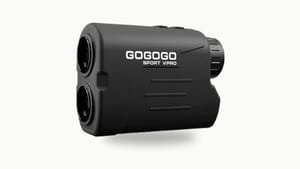
A launch monitor on the practice green gives you carry distance feedback that makes these drills deliberate rather than random. I compared the best launch monitors under $1,000, and several work well for short game sessions.
Frequently Asked Questions
What is the correct stance and ball position for chipping in golf?
Stand with your feet 6 to 8 inches (15 to 20cm) apart, narrower than a normal iron shot. Play the ball inside your back foot (right foot for right-handed golfers). Load 55 to 60% of your weight onto your lead foot before you start the swing and keep it there throughout. Grip down the shaft by about an inch (2.5cm). Your hands should sit ahead of the ball so the shaft leans toward the target. This setup creates the conditions for a descending strike that contacts ball first, then turf.
Why do I keep hitting chip shots fat?
Fat chips happen when the club's low point is behind the ball instead of in front of it. The two most common causes are weight staying on the trail foot (shifting the low point back) and excessive wrist extension (cupping) at the top of the backswing, which HackMotion data identifies as the primary amateur fault. Fix the weight distribution first: 55 to 60% on the lead foot at address. Then check that your lead wrist stays flat, not cupped, through the backswing. The gate drill with two tees gives you direct feedback on where your low point sits.
Should I use a lob wedge or a 7-iron to chip?
It depends on the lie and the situation, but most mid-handicappers use the lob wedge far too often. The rule is to pick the lowest-lofted club that gets the ball onto the green and rolling. From a tight lie with a clear path, a 7-iron bump-and-run is the highest-percentage play. Save the lob wedge for situations that demand height: carrying a bunker, pitching over thick rough, or stopping the ball on a tight pin from heavy rough. The club selection table in this article maps each lie to the right club choice.
What is the difference between a chip shot and a pitch shot?
A chip shot is a low-trajectory shot from within 30 yards (27m) of the green, designed to fly less than it rolls (about 30% air, 70% ground). A pitch shot is a higher-trajectory shot with a lofted wedge (50 to 60 degrees), designed to fly most of the distance and stop with spin. The deciding factor is the obstacle: if there's a clear path to the green, chip. If you need to carry a bunker, mound, or thick rough, pitch. The chip has fewer variables and a higher success rate for most amateurs.
How do I stop decelerating on chip shots?
Deceleration comes from fear of hitting the ball too far. The fix is to pick a specific landing spot on the green before you address the ball, then commit to swinging through to that spot. Make your backswing shorter rather than your through-swing slower. A shorter backswing with full acceleration through impact produces more consistent contact than a long backswing with a hesitant finish. Practice with the gate drill: if the tees force your focus onto ball-first contact, the deceleration habit breaks down on its own.
How can I practice chipping at home or without access to a course?
You can practice the setup, wrist position, and swing motion indoors without hitting a ball. Stand in front of a mirror, take your chipping address, and check six things: stance width (6 to 8 inches / 15 to 20cm), ball position (inside back foot), weight on lead foot (55 to 60%), hands ahead of ball, shaft leaning toward target, and flat lead wrist. Rehearse the backswing and through-swing, watching your wrist in the mirror. If you have space in your garden, foam or practice balls let you run both the lead-hand-only and gate drills without worrying about distance.
The fix starts at the top of the backswing, not at impact. Get the lead wrist flat there and the rest of the swing gets simpler. Pair that with smarter club selection (lower loft, more ground time) and you've removed half the difficulty before you even swing. If you want to track whether this is working, Strokes Gained is the metric that shows it.
Some links in this article are affiliate links. If you buy through them, I earn a small commission at no extra cost to you. This never influences what I cover or recommend. I link to gear I'd buy myself.