What Is Ball Speed in Golf and Why Does It Matter?
Ball speed is the single most important number on any launch monitor. Here's what it means, what a mid-handicapper should aim for, and how to improve it.
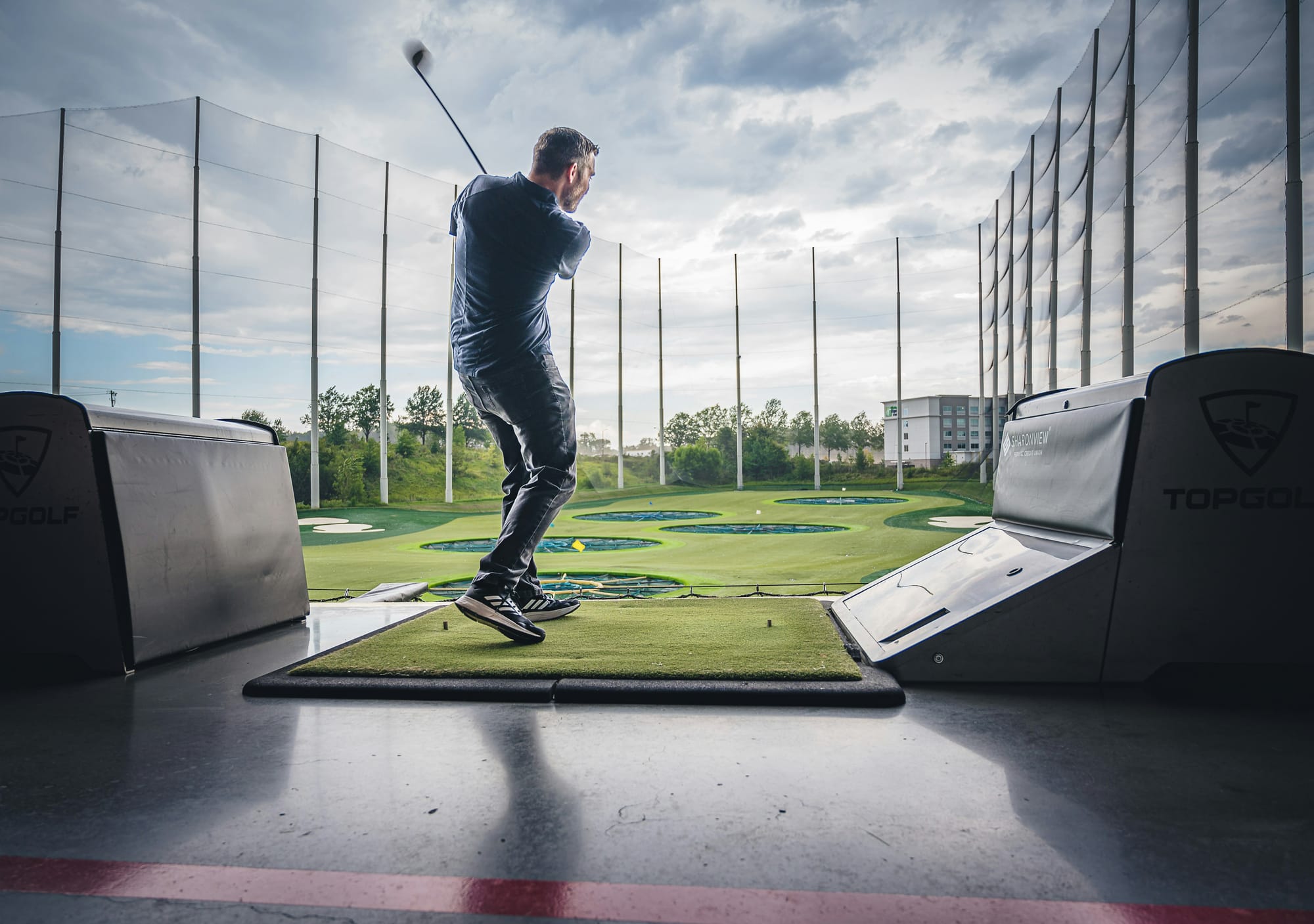
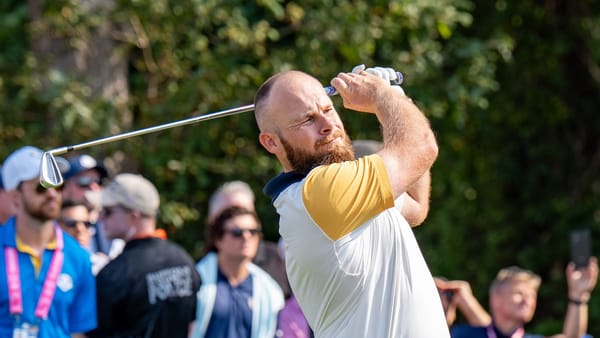
Photo by Matt Benson on Unsplash
Ball speed is the velocity of the golf ball immediately after impact, measured in miles per hour (mph) or kilometers per hour (km/h). It's the single number that launch monitors use as the foundation for every other calculation: carry distance, spin rate projections, smash factor. Get ball speed wrong and the rest of the data is noise.
For a mid-handicapper, understanding ball speed gives you a direct line between what you're doing with the club and how far the ball actually travels. No guessing. No "that felt solid." Just a number.
- 1.Ball speed is the most reliable metric on any launch monitor. It's measured directly, not estimated.
- 2.A mid-handicapper (14-22 handicap) should target 130-145 mph ball speed with driver. Around 90-105 mph with a 7-iron.
- 3.Smash factor (ball speed divided by club head speed) is the real efficiency gauge. A poor smash factor costs you yards without any extra effort.
- 4.Center-face contact is the fastest route to more ball speed for most amateurs. Fitting and shaft changes help, but only if strike quality is already solid.
- 5.Every 1 mph of ball speed adds roughly 2 yards of carry distance with driver. A 5 mph gain is worth about 10 yards in the air.
What Ball Speed Actually Measures
When a club face contacts a ball, energy transfers from the moving clubhead into the ball. Ball speed is the result of that transfer, measured by Doppler radar or high-speed cameras in the fraction of a second after impact.
The measurement is direct. Unlike carry distance or total distance, which launch monitors calculate based on ball speed plus other inputs (launch angle, spin rate, air density), ball speed is captured from the ball itself. That's why it's the most accurate number on your screen. TrackMan's dual-radar system, for instance, tracks the ball from impact to landing. Photometric systems like SkyTrak+ use high-speed cameras to capture ball position in the first few inches of flight.
At tour level, elite male professionals generate ball speeds of 175-185 mph with driver. For context, the PGA Tour average sits around 167 mph ball speed off the driver, per TrackMan's published norms (2023). The LPGA Tour average is around 143 mph.
For the rest of us, the numbers are lower. The relationship between ball speed and distance is the same regardless of where you play off.
Ball Speed and Smash Factor: The Efficiency Equation
Club head speed gets all the attention in golf marketing. Ball speed is more useful.
Smash factor is ball speed divided by club head speed. If you swing at 95 mph and the ball leaves at 140 mph, your smash factor is 1.47. The USGA sets a maximum smash factor of 1.50 for conforming equipment. Above that, the face is acting like a spring, which isn't allowed.
The target smash factor by club type, based on TrackMan benchmark data:
| Club | Target smash factor | Why it differs |
|---|---|---|
| Driver | 1.48-1.50 | Large sweet spot, designed for high COR |
| 3-wood | 1.43-1.47 | Smaller head, tighter face |
| 5-iron | 1.38-1.42 | Lower loft, less face flex contribution |
| 7-iron | 1.33-1.38 | Mid-iron range |
| Pitching wedge | 1.20-1.28 | High loft reduces energy transfer efficiency |
A low smash factor means you're losing energy at impact. The ball is going slower than your swing speed should produce. The cause is almost always off-center contact: heel, toe, or high on the face all reduce efficiency. MyGolfSpy's 2023 robot testing data showed that heel strikes with a driver can reduce ball speed by 10-15 mph compared to center contact at the same swing speed. That's 20-30 yards of carry gone without changing your swing at all.
This is why chasing club head speed before fixing contact quality is backwards for most amateurs.
What Numbers Should a Mid-Handicapper Target?
Using TrackMan's published amateur norms and data from MyGolfSpy's testing pool, here are the ball speed benchmarks worth knowing.
| Handicap bracket | Driver ball speed |
|---|---|
| 14-20 handicap | 125-145 mph (typical range) |
| 10-14 handicap | 140-155 mph |
| Below 10 handicap | 150+ mph |
| 7-iron (14-20 HCP) | 90-105 mph |
| Pitching wedge (14-20 HCP) | 80-92 mph |
If you're a 16-handicapper hitting 130 mph ball speed with driver and your smash factor is 1.44, your club head speed is about 90 mph. Getting that smash factor to 1.48 through better contact alone would take ball speed to 133 mph and add roughly 6 yards of carry.
These are benchmarks, not targets to chase obsessively. Where they're useful: if your 7-iron ball speed is well below the low end of your handicap bracket, something is off with contact or equipment. That's worth investigating.
The Ball Speed to Carry Distance Rule
The relationship between ball speed and carry distance with driver isn't perfectly linear. Launch angle and spin rate both influence how efficiently speed converts to distance. But as a working rule: every 1 mph of ball speed with driver produces approximately 2 yards of carry distance, assuming a reasonable launch angle (12-16 degrees) and manageable spin rate (2,200-2,800 rpm).
This is the figure TrackMan and Foresight Sports both reference in their educational content, and it holds across the 100-175 mph ball speed range for driver.
Where it breaks down: if your spin rate is very high (above 3,500 rpm with driver), you're losing carry distance even at the same ball speed. High spin balloons the ball and bleeds distance. The practical takeaway: if you want 10 more yards of carry, you need roughly 5 mph more ball speed, or the same ball speed at the right spin and launch conditions.
Why Ball Speed Is the Launch Monitor's Primary Metric
Every other number your launch monitor shows you is either measured alongside ball speed or calculated from it.
Carry distance is a calculated output. The monitor takes ball speed, launch angle, spin rate, and atmospheric conditions, then runs a physics model. The calculation is only as good as the inputs, and ball speed is the most accurately captured input.
Spin rate is measured independently on good units (TrackMan, Foresight GCQuad), but on radar-only units at the sub-$1,000 price point, spin is often estimated using ball speed and launch angle as inputs. That's worth knowing when you're reading spin numbers from an affordable launch monitor. They're ballpark figures, not precision data.
Ball speed is the one number cleanly measured on virtually every unit from the $200 Garmin R10 up to the $20,000 TrackMan 4. If you had to pick one metric to trust, it's this one.
How to Actually Improve Your Ball Speed
Three levers. In order of impact for most mid-handicappers:
1. Strike quality (biggest gain, no equipment cost)
Center-face contact is the most underrated improvement available to amateur golfers. A 10-15 mph ball speed difference between heel and center contact is well-documented in robot testing. Foot powder spray or impact tape on the face for a session will show you exactly where you're striking. If you're consistently heel-heavy, addressing your swing path is worth more than any equipment change.
2. Equipment fitting (significant, one-time cost)
Driver fitting addresses loft (which affects launch angle and spin) and shaft (which affects how efficiently your swing speed transfers to ball speed). A 2023 study by True Spec Golf found that proper driver fitting added an average of 7 mph of ball speed for golfers with swing speeds below 100 mph, primarily by correcting shaft flex and face angle at impact. The gains from fitting drop if strike quality is poor. Fitting optimizes what's already there.
3. Swing speed training (long-term, requires commitment)
Overspeed training protocols (SuperSpeed Golf, weighted club programmes) have shown measurable swing speed gains over 6-8 weeks. A 2018 study in the International Journal of Golf Science found an average 5% club head speed gain from a 6-week overspeed protocol. For a mid-handicapper swinging at 90 mph, that translates to roughly 5-7 mph of ball speed. The caveat: speed without control is a net negative for scoring. Gain the speed in off-season practice, then re-groove accuracy at the new speed before taking it on-course.
The SuperSpeed Golf Training System is the overspeed protocol behind those published gains, a set of three progressively lighter clubs used in short, structured training swings rather than full practice sessions.
Buy now Buy now
Ball Speed and Club Selection: A Practical Note
One underused application of ball speed data is dialing in your actual carry distances by club. Not the ones you think you hit. Not the ones you hit on your best day.
Most mid-handicappers overestimate their carry distances by 10-20 yards. A session on any launch monitor with your full bag will give you ball speed and reliable carry distance for every club. Once you have that data, club selection becomes considerably simpler.
If you're thinking about getting a launch monitor, our guide to the best launch monitors under $1,000 covers the units worth considering at that price point, including which ones measure ball speed most reliably.
The ball you choose also plays a role. If you're hitting below 130 mph ball speed with driver, compression matching is worth looking at. We cover this in the guide to choosing the right golf ball for mid-handicappers.
Frequently Asked Questions
What is a good ball speed in golf for an amateur?
For a mid-handicapper (14-22 handicap), 125-145 mph ball speed with driver is a solid range. This corresponds to club head speeds of roughly 85-97 mph with a smash factor around 1.47. If you're below 120 mph, focus on strike quality before anything else. If you're above 145 mph, launch angle and spin rate optimization will give you more carry than trying to add speed.
How does ball speed relate to carry distance?
As a working rule, every 1 mph of ball speed with driver adds about 2 yards of carry distance, assuming a normal launch angle and manageable spin. So 130 mph ball speed with driver should produce roughly 200-210 yards (183-192m) of carry. High spin blunts the distance return.
What's the difference between ball speed and club head speed?
Club head speed is how fast the club is moving at impact. Ball speed is how fast the ball leaves the face. The ratio between them is smash factor. You can have a high club head speed and a low ball speed if you're hitting off-center. Most amateurs improve faster by raising smash factor than by raising club head speed.
Can a different golf ball increase my ball speed?
A ball change alone won't dramatically move your ball speed number. Where compression matters most: golfers with swing speeds below 80 mph lose measurable energy hitting high-compression balls. A softer ball (compression 70-85) recovers some of that. Above 90 mph club head speed, most modern balls perform similarly for ball speed at impact.
Is ball speed measured accurately on budget launch monitors?
For ball speed, yes. Affordable launch monitors like the Garmin Approach R10 and Rapsodo MLM2PRO use radar to track the ball, and ball speed is the most directly measurable output. Where budget units diverge from gold-standard units (TrackMan, Foresight GCQuad) is in spin rate accuracy and club head speed measurement. If ball speed is your primary metric, a sub-$1,000 unit will serve you well.
Some links in this article are affiliate links. If you buy through them, I earn a small commission at no extra cost to you. This never influences what I recommend. I link to gear I'd buy myself.







The golf newsletter that cuts the hype
Data-backed reviews and advice that works. No brand spin.
Recommended products

Rukket SPDR Golf Net Review: 10x7 Bundle for Home Practice.
The Rukket 10x7 SPDR golf net bundle reviewed: what's actually in the box, what MyGolfSpy and PluggedInGolf found, and who it fits best.
Read review