 Buy now







articles
Before You Buy a Home Golf Simulator, Read This First
A home golf simulator is one of the few golf gifts big enough to change how someone plays
MyGolfSpy named the R50 Best Overall launch monitor in 2025. James Whitfield breaks down the accuracy data, total cost, and who should actually buy it.
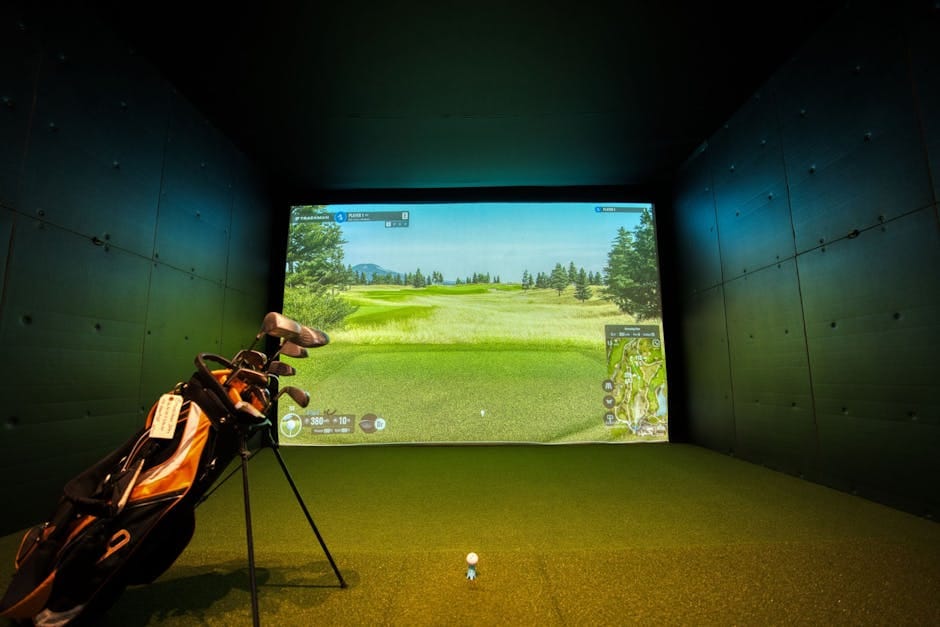
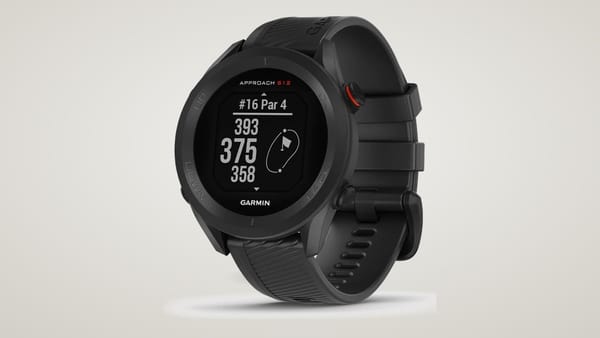
The Garmin Approach R50 is a radar-based personal launch monitor with a built-in simulator that doesn't need a PC, a phone, or a subscription to run. MyGolfSpy named it Best Overall personal launch monitor in their 2025 testing, putting its indoor accuracy on par with the Foresight GC3 (MyGolfSpy, 2025). That's a $4,999.99 unit going toe-to-toe with hardware that costs thousands more.
"Best Overall" doesn't tell you whether it's right for your setup, your budget, and your handicap. I've pulled the accuracy data from four independent sources and broken down the real cost of ownership, because the sticker price is only part of the story.
| Spec | Garmin Approach R50 |
|---|---|
| Technology | Radar-based |
| Display | 10" built-in touchscreen |
| Measured metrics | Ball speed, launch angle, spin rate (direct), club speed, smash factor, carry/total distance |
| Simulator software | Home Tee Hero (built-in, no subscription) |
| Courses | 42,000+ |
| PC required | No (optional for GSPro) |
| Indoor spin tracking | Requires RCT golf balls |
| Price | $4,999.99 |
| Outdoor use | Yes, strong outdoor performance |
| Dimensions | Compact floor unit |
Three independent tests tell a consistent story, and they all point the same way.
Carl's Place ran an indoor vs outdoor accuracy comparison against Trackman, the industry reference standard. The R50's driver carry distance averaged a 4.01% difference from Trackman readings (Carl's Place, 2025). For context, Trackman units cost $20,000+. A 4% variance at a $5K price point is remarkable.
Independent Golf Reviews went further and compared ball data directly against a Foresight GCQuad. Their finding: the R50's numbers were "almost perfectly in line with GCQuad" (Independent Golf Reviews, 2025). The GCQuad retails for around $14,000. You're getting comparable ball data at roughly a third of the price.
MyGolfSpy's 2025 testing put the R50's indoor accuracy on par with the Foresight GC3, specifically calling out launch angle and spin rate as "especially tight" (MyGolfSpy, 2025). Those two metrics matter most for dialing in your iron distances and understanding why your 7-iron goes 165 one day and 155 the next.
The biggest reason the data looks this good: the R50 directly measures spin rate. The older Garmin R10 calculated spin using an algorithm, which meant indoor spin numbers were often unreliable, sometimes wildly so. The R50 uses its radar array to measure the ball's actual rotation. Plugged In Golf flagged this as the key accuracy differentiator in their review (Plugged In Golf, 2025). Calculated spin is a guess. Measured spin is data. That distinction matters when you're trying to figure out why your wedge shots balloon or why your driver spin is costing you 15 yards of carry.
SkyTrak+ needs a PC or iPad running E6 Connect or GSPro. Foresight GC3 needs third-party software and a capable machine to run it. The R50 doesn't need any of that.
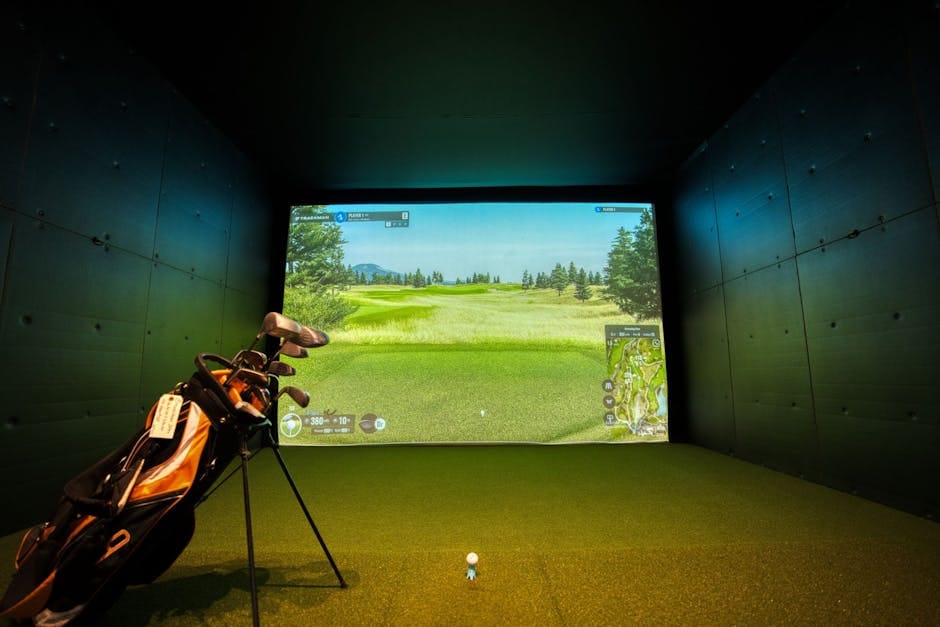
Garmin's Home Tee Hero runs directly on the unit's 10" touchscreen. Forty-two thousand courses. No app download. No monthly subscription. No separate computer.
That's not a small thing. Building a simulator PC to run GSPro well costs $800-$1,500. E6 Connect subscriptions run $300/year for the full course library. With the R50, you're getting a complete simulator experience the day it arrives.
Think about the golfer who wants a home sim in the garage or basement without turning it into an IT project. You mount a hitting screen, set up a mat, plug in the R50, and you're playing Pebble Beach. No troubleshooting display drivers, no fiddling with PC settings, no software updates at 9pm when you just wanted to hit balls.
If you do want to connect to GSPro later for its course library and multiplayer features, the R50 supports that too. Optional, not required. I've written up how GSPro, E6 Connect, and TGC 2019 stack up if you're weighing the software side.
The R50's roughly $5,000 sticker price is the starting point, not the finish line.
RCT golf balls are required for accurate indoor spin measurement. The R50's radar needs the reflective coating on RCT balls to read spin indoors. A dozen runs about $55. If you're hitting 50-100 balls per session, two or three times a week, expect to replace balls every 4-8 weeks depending on how hard you hit them. Budget roughly $150-$250 per year for balls alone.
Year-one cost breakdown:
| Item | Cost |
|---|---|
| Garmin Approach R50 | $4,999.99 |
| RCT golf balls (3-5 dozen, year one) | $165-$275 |
| Home Tee Hero software | $0 (included) |
| SimStudio Essentials package (optional: screen, enclosure, mat) | Varies |
| SimStudio Complete package (optional: full enclosure build) | Varies |
| Realistic year-one total (unit + balls) | $5,165-$5,275 |
| Feature | Garmin Approach R50 | SkyTrak+ | Foresight GC3 | Bushnell Launch Pro |
|---|---|---|---|---|
| Price | $4,999.99 | $1,995 | ~$7,500 | Discontinued (2025) |
| Technology | Radar | Photometric | Photometric | Photometric |
| Spin measurement | Direct (radar) | Photometric (direct) | Photometric (direct) | Photometric (direct) |
| Standalone simulator | Yes (Home Tee Hero, 42K courses) | No (requires PC/iPad + software) | No (requires PC + software) | No |
| Subscription required | No | E6 Connect: $300/yr (full) | FSX Play: varies | N/A |
| Outdoor performance | Strong | Primarily indoor-optimized | Good | Good (when available) |
| Accuracy vs Trackman | 4.01% driver carry (Carl's Place) | Comparable indoor accuracy | Reference-grade | Strong (historical data) |
| Special balls required (indoor) | Yes (RCT) | No | No | No |
R50 vs SkyTrak+: The SkyTrak+ costs $3,000 less. Its accuracy is well-regarded, and the photometric sensor doesn't need special balls indoors. But you'll need a PC or iPad, plus E6 Connect or GSPro, plus a capable machine to run them. By the time you add a $1,000 PC and $300/year for E6, the cost gap narrows. The R50's standalone capability is worth the premium if you don't want a computer in the equation.
SkyTrak also sells the ST MAX at $2,995. Per reviewer consensus, accuracy is the same as the SkyTrak+ (SkyTrak, 2025). You're paying for the hardware form factor and connectivity options, not better data.
R50 vs Foresight GC3: The GC3 is more accurate. Full stop. But at $7,500+ before software, it's playing in a different league financially. If your budget is $5K, the R50 gives you 90-95% of the GC3's accuracy with a built-in simulator. If your budget stretches to $10K all-in and accuracy is everything, the GC3 is the better sensor.
The Bushnell Launch Pro shows up in a lot of older comparison articles, but it was discontinued in 2025. Don't base a buying decision on a product you can't buy new or get supported.
The 10-18 handicapper building a home sim for the first time. You want good data, a working simulator out of the box, and you don't want to become a PC technician. The R50 is built for this exact profile.
The golfer who plays year-round but loses 3-4 months to weather. You're in the Upper Midwest, Pacific Northwest, UK, or anywhere winter shuts courses down. The R50 gives you a meaningful practice tool and a way to play courses during the off-season.
The time-poor professional. You've got 30 minutes between dinner and bedtime. You don't want to boot a PC, launch software, calibrate the unit. You want to walk into the garage, tap the screen, and start hitting.
The data nerd who's done with calculated spin. If you've used an R10 or Mevo+ and been frustrated by indoor spin numbers that don't match reality, the R50's direct spin measurement is the fix.
Budget-conscious golfers under $3K. The R50 at $5K is a serious investment. If your budget is $1,000-$2,000, I've ranked the best launch monitors under $1,000, or consider the SkyTrak+ at $1,995 paired with a basic PC setup.
Golfers who only want outdoor range use. The R50's biggest advantages are its standalone simulator and indoor accuracy. If you're never putting it indoors and just want driving range data, the Garmin Approach R10 at $599 does the basics.
Accuracy obsessives with deep pockets. If you need GCQuad-level precision and you've got $15K to spend, the R50 isn't your unit. Close, but not reference-grade. The Foresight GC3 or GCQuad is where you belong.
Lefties who share with a right-handed golfer. The R50 requires repositioning between left and right-handed players. Overhead units like the Uneekor EYE XO2 handle this better.
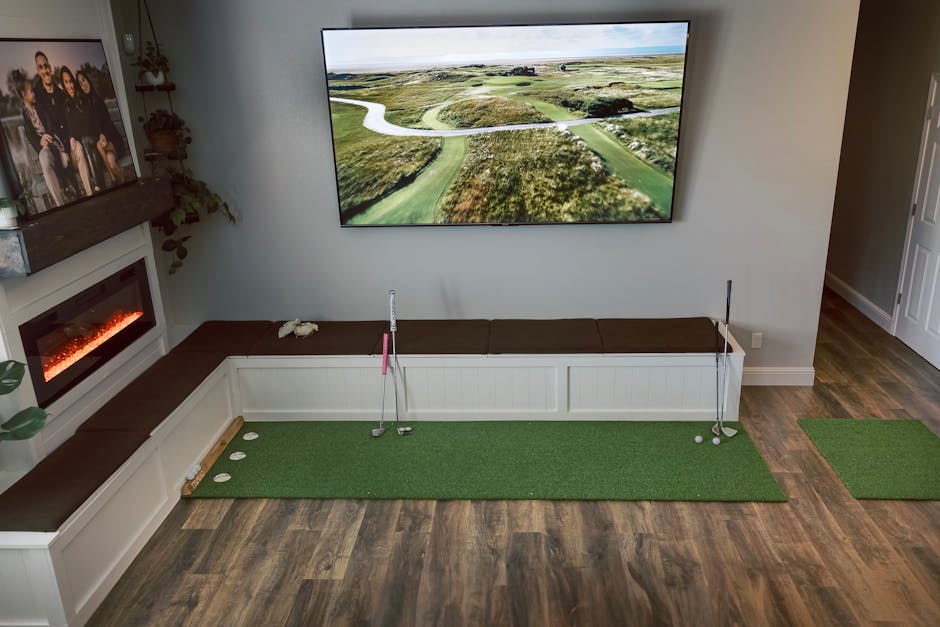
You'll need more space than you think. Minimum practical dimensions for an indoor R50 setup:
The R50 sits on the floor behind the ball. Factor in 3-4 feet behind the hitting area for the unit placement and your stance. I've covered the full room planning math, including projector throw distance and screen placement, in the simulator room planning guide.
The Garmin Approach R50 is available through Amazon, priced in the premium launch-monitor tier at roughly $5,000.
The R50 isn't the cheapest way into a home simulator. It's not the most accurate, either. What it is: the most complete package at this price point. Accurate data, a working simulator, no PC required, no subscription. For a mid-handicapper spending $5K on a setup they'll use three times a week for six months of the year, that completeness is worth paying for. If your budget is tighter, the SkyTrak+ paired with a decent PC is still a strong path. But if you want to walk into your garage and start playing Pebble Beach without touching a keyboard, the R50 is the one to buy.
Buy the Garmin Approach R50
Buy now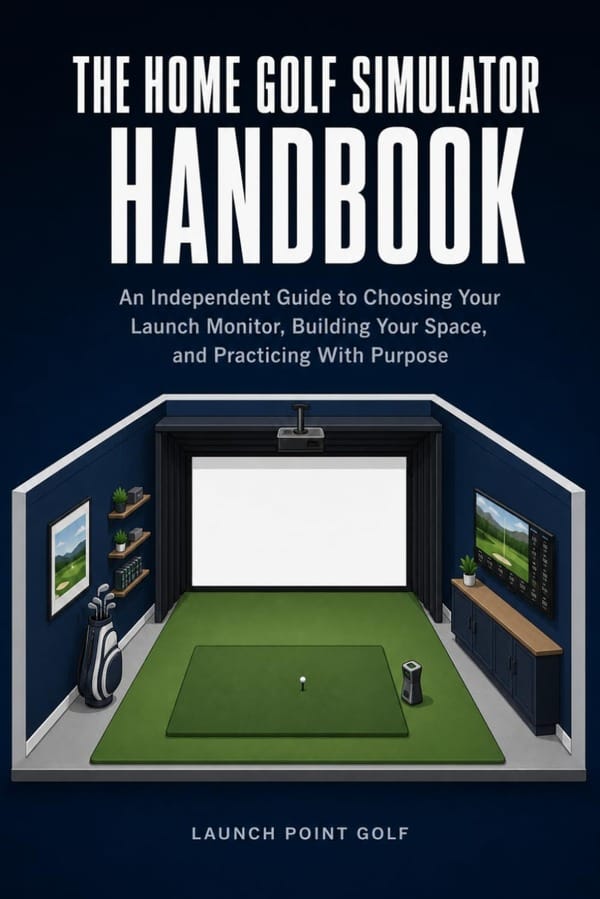
Building or buying a home golf simulator? I put the research most buyers do the hard way into one place. The Home Golf Simulator Handbook walks through picking the right launch monitor, fitting the setup to your actual space, and building a practice plan that pays off, without the brand loyalties or affiliate pressure that shape most buying advice.
No. The R50 has a built-in 10" touchscreen running Garmin's Home Tee Hero software with access to over 42,000 courses. It works as a complete standalone simulator. You can optionally connect a PC to run GSPro or other third-party simulator software, but it's not required for a full sim experience.
Carl's Place tested the R50 against Trackman and found an average driver carry difference of 4.01% (Carl's Place, 2025). Independent Golf Reviews found the R50's ball data "almost perfectly in line with GCQuad" (Independent Golf Reviews, 2025), and MyGolfSpy put its indoor accuracy on par with the Foresight GC3 (MyGolfSpy, 2025). For a $5K unit, that's strong performance against hardware costing $14,000-$20,000+.
Yes. The R50 requires Garmin RCT (Radar Capture Technology) golf balls for accurate indoor spin measurement. These run about $55 per dozen. The radar sensor needs the reflective coating on RCT balls to read spin data indoors. Outdoors, the R50 works with any golf ball. Budget roughly $150-$250 per year for RCT balls if you're practicing indoors regularly.
The SkyTrak+ costs $1,995, which is $3,000 less than the R50. Its accuracy is well-regarded and it doesn't need special balls indoors. The trade-off: you'll need a PC or iPad ($800-$1,500) plus simulator software ($300/year for E6 Connect or a one-time GSPro purchase). The R50's advantage is the standalone simulator experience with no extra hardware or subscriptions. If you want the simplest all-in-one setup and can afford $5K, the R50 wins. If you want to minimize upfront cost and don't mind managing a PC setup, the SkyTrak+ is solid.
No. The Bushnell Launch Pro was discontinued in 2025. If you see it mentioned in older comparison articles or find remaining stock, be aware that manufacturer support and software updates are no longer guaranteed. The Garmin R50 and SkyTrak+ are the current mid-range options worth considering.
9-10 feet is recommended for a full driver swing. Standard 8-foot basement ceilings work for irons and wedges but will restrict driver swings for most golfers over 5'10". If your ceiling is 8 feet, you can still get solid practice with irons and short game, but you'll want to test your driver swing carefully before committing to a full build.
Some links in this article are affiliate links. If you buy through them, I earn a small commission at no extra cost to you. This never influences what I recommend. I link to gear I'd buy myself.
Data-backed reviews and advice that works. No brand spin.