Before You Buy a Home Golf Simulator, Read This First

A home golf simulator is one of the few golf gifts big enough to change how someone plays the game year-round, and one of the few expensive enough to turn into regret if it's bought on impulse. With Father's Day in Australia landing September 6 and the broader September buying season for simulators already underway, a lot of these purchases are about to happen fast, and a real build can run anywhere from a modest hitting-net setup to a full enclosure system well into five figures. The problem isn't the category. It's buying the wrong pieces in the wrong order, whether you're shopping for someone else or finally building the setup you've wanted for yourself.
- A home simulator is a system, not a single purchase: space, launch monitor, software, and budget all have to fit together, and getting one wrong undercuts the rest.
- Space comes first, because it quietly limits every other decision that follows it.
- The launch monitor is the single most common overspend or underspend, and the right pick depends on the golfer, not the flashiest spec sheet.
- Software changes daily use more than most buyers expect going in, so it's worth weighing before checkout, not after.
- The full cost runs well past the sticker price, and knowing that number up front is what separates a good buy from an expensive regret.
- The safe first move, gift or self-buy, is a real research pass before any of that money moves.
Why this is a considered purchase, not an impulse buy
A home golf simulator isn't one product. It's a set of interlocking decisions, how much space is actually available, which launch monitor fits that space and that budget, which software the golfer will actually use, and what the whole thing costs once it's installed rather than just what shows up in the box. Get the order or the fit wrong on any one of those and the rest of the setup suffers for it, sometimes expensively. That's true whether the money is coming from a gift-giver who wants to get this right on the first try, or from a golfer who's decided this is finally the year they build one for themselves.
Our complete guide to building a home golf simulator walks through that full decision sequence step by step; this piece is about the judgment calls inside each step, the ones a spec sheet can't make for you.
Space comes first, and it's the one decision nobody can skip
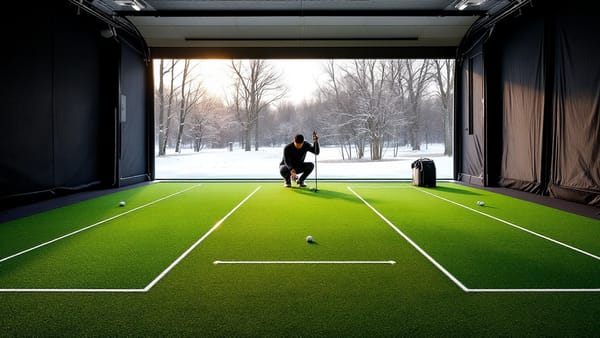
Every other choice in a home simulator setup gets filtered through the room it has to fit in. Ceiling height, net-to-hitting-position depth, and swing clearance on both sides all rule certain launch monitors and enclosures in or out before price ever enters the conversation. A golfer with a 9-foot (2.7m) garage ceiling and a right-handed swing has a genuinely different shopping list than someone with a converted double garage and 10 feet (3m) of clearance overhead, and buying the monitor or the enclosure before measuring the room is one of the most common expensive mistakes in this category. A gift-giver who skips this step is usually the one stuck returning an enclosure that never quite fit the space, which costs more time and money than simply asking about the room first. Our guides on simulator room planning and setting one up in a garage specifically cover the measurements and clearances in detail.
The launch monitor is where most first-time buyers overspend or underspend
This is the single component people either wildly overspend on, chasing tour-level data they'll never use, or underspend on, buying something that can't keep up with faster swing speeds or doesn't support the software they actually want to play. Neither mistake is cheap to fix after the fact, since launch monitors don't resell for anywhere near retail once they're out of the box. For a first sim, our best launch monitor under $1,000 roundup and a direct SkyTrak+ vs. Garmin R50 comparison are worth reading before anything gets added to a cart, because the right answer genuinely depends on the golfer's handicap, swing speed, and how much they care about full-swing data versus short-game practice.
Software shapes daily use more than the hardware does
The launch monitor gets the attention, but the software is what a golfer actually opens most evenings, and the differences between the major platforms are bigger than they look from a features list. Course selection, graphics load on older PCs, subscription cost, and how forgiving or punishing the physics engine feels all change whether the simulator gets used twice a week or twice a month after the novelty wears off. Our GSPro vs. E6 Connect vs. TGC 2019 breakdown covers those differences directly, and it's worth a read before locking in a launch monitor, since not every monitor pairs cleanly with every platform. I'll admit the graphics are what pull my own eye first when I'm comparing platforms, and that's exactly the instinct worth checking against how a golfer will actually use the thing week to week.
The real cost runs past the sticker price
The launch monitor's price tag is rarely the final number. Enclosures, impact screens, flooring, hitting mats, and software subscriptions all add up, and skipping that math is how a gift or a self-purchase ends up costing far more than either side expected. Rather than repeat that breakdown here, our launch monitor total cost of ownership guide lays out the five-year numbers plainly, which is the single most useful thing to read before setting a budget in the first place.
Why the handbook is the safe first move either way
This is exactly the research gap The Home Golf Simulator Handbook is built to close. It's an independent, device-neutral guide, no brand loyalties, no affiliate pressure dressed up as advice, focused on the three decisions that matter most: choosing the right launch monitor for a given space and budget, building the physical setup around real room constraints, and practicing with the sim in a way that actually improves a golfer's game rather than just generating data to look at. The book builds its own total-cost-of-ownership framework, so a buyer sees the real number before committing rather than after, and pairs it with a first-year practice framework aimed at turning simulator time into genuine improvement instead of novelty swings that taper off by spring. It's a short read by design, built to be finished in a weekend rather than treated as a reference book that sits on a shelf.
The three readers this piece has been talking to all get something different out of it. A gift-giver who doesn't know a launch monitor from a projector gets a guided purchase instead of a guess. A golfer researching their first sim gets the decision tree that turns scattered forum threads into an actual plan. And a serious buyer weighing a full enclosure system gets the total-cost-of-ownership framework that keeps the build from quietly doubling in price along the way. None of the three needs to know a monitor's specs going in, since the book's whole job is getting them to that point on their own. Either way, it's the lowest-risk first move before any of the bigger purchases above happen.
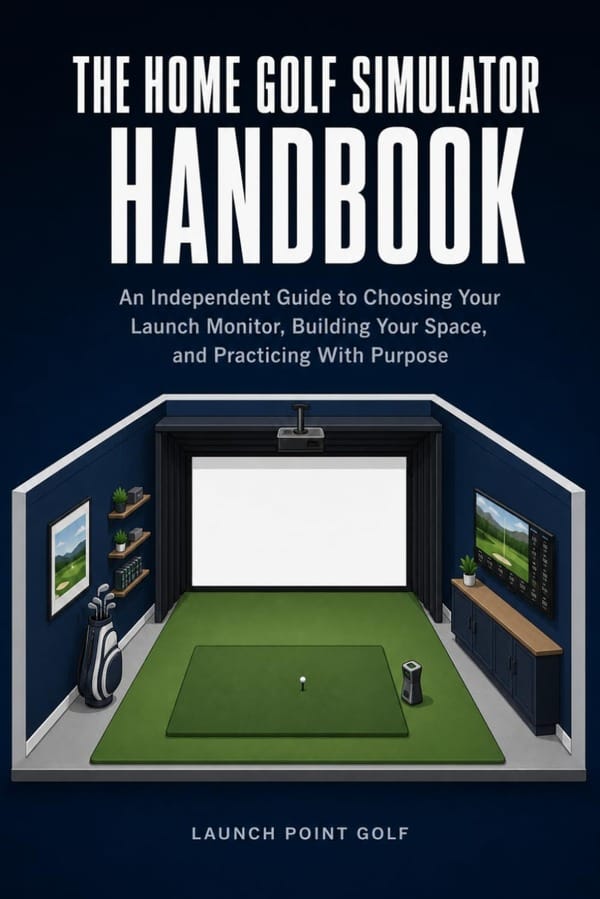
The Home Golf Simulator Handbook is available now.
Frequently Asked Questions
Is a home golf simulator worth it for a casual golfer, or only serious players?
It depends more on how often someone plans to use it than on their skill level. A casual golfer who'll practice twice a week gets real value from even an entry-level setup, while a serious player who won't make time for it won't get their money's worth regardless of how good the equipment is. Usage, not handicap, is the better predictor.
What's the minimum space needed for a home golf simulator?
Most enclosures need roughly 9 feet (2.7m) of ceiling height and enough depth for a full swing plus a safe buffer behind the hitting position, though the exact figures vary by launch monitor and enclosure. Room planning should happen before any equipment is chosen, not after.
Do I need to buy the most expensive launch monitor to get accurate data?
No. Accuracy at the budget and mid-range tiers has closed significantly in recent years; the bigger differentiators now are which metrics a monitor tracks, which software it pairs with, and how it performs at higher swing speeds. Overspending on a launch monitor is one of the most common first-time-buyer mistakes.
Is a home simulator a good Father's Day gift?
The full setup is a considered purchase best made by the golfer themselves, but a book like The Home Golf Simulator Handbook makes a genuinely safe standalone gift: it gives a golfer everything they need to make the bigger decisions well, without anyone else guessing at specs on their behalf.
Some links in this article are affiliate links. If you buy through them, I earn a small commission at no extra cost to you. This never influences what I cover or recommend. I link to gear I'd buy myself.








The golf newsletter that cuts the hype
Data-backed reviews and advice that works. No brand spin.
Recommended products

Rukket SPDR Golf Net Review: 10x7 Bundle for Home Practice.
The Rukket 10x7 SPDR golf net bundle reviewed: what's actually in the box, what MyGolfSpy and PluggedInGolf found, and who it fits best.
Read review