What Is Spin Rate in Golf and How to Improve It
Spin rate controls height, carry, and stopping power. Here's what the number means, what the benchmarks are by club and handicap, and how to fix it.

You step onto the simulator, smash a drive, and the screen flashes 3,400 rpm next to your ball speed. Is that good? Is it terrible? No idea, and the monitor isn't going to tell you.
Spin rate is how fast it spins the instant it leaves the clubface, measured in revolutions per minute. It controls height, carry, and stopping power on the green. Most weekend players run their driver 400 to 700 rpm above the optimal window for their swing speed, per Trackman, and the cost is 10 to 20 yards (9 to 18m) of carry per tee shot. The fix has almost nothing to do with the club.
- 1Definition. Spin rate is rpm at impact. It governs flight height, carry, and how the ball stops on a green.
- 2Driver target. At 90 to 100 mph swing speed, aim for 2,200 to 2,800 rpm and 12 to 14 degree launch (UpYourClub, Sep 2025).
- 3Why yours is high. Steep attack angle and low-face contact are the two biggest causes. Equipment is third.
- 4Fix order. Attack angle and ball position first. Then loft and shaft. Then ball model.
- 5Home monitor caveat. Garmin R10 spin readings indoors are unreliable below 90 mph ball speed. Tuning spin from an R10 in a garage net means tuning to an estimate, not a measurement.
What Spin Rate Means
Backspin keeps a golf ball in the air. That figure counts how fast it turns the moment it leaves the face. A drive might come off at 2,500 rpm. A pitching wedge climbs to 8,500. That gap is why one carries forever, and the other lands soft.
The mechanism is spin loft: the angular gap between dynamic loft (how much the face presents at impact, not what's stamped on the sole) and attack angle (the vertical direction the head travels). The wider that gap, the more revolutions you generate. The narrower it is, the cleaner the energy transfer. Trackman calls it the geometry that connects every other ball-flight number, and they're right. If you only learn one piece of physics from this article, learn that one.
A second kind matters too: spin axis. Pure backspin sits at zero. Tilt the axis left and the shot draws or hooks. Tilt it right and it fades or slices. It's what your monitor shows when it draws a curving line on screen. My club path versus face angle breakdown covers how face and path tilt it. For the rest of this piece, "spin" means backspin rpm, not axis tilt.

Spin Rate Benchmarks by Club
Here's what each club should produce for a competent amateur swing, with PGA Tour averages from Trackman (Sep 2024) and UpYourClub (Sep 2025).
| Club | Optimal Range | PGA Tour Average |
|---|---|---|
| Driver | 2,000 to 3,000 rpm | 2,545 rpm |
| 3-Wood | 3,000 to 3,800 rpm | not published |
| Hybrid | 3,500 to 4,800 rpm | not published |
| 7-Iron | 6,000 to 7,000 rpm | 6,204 rpm |
| 9-Iron | 7,000 to 8,500 rpm | not published |
| Pitching Wedge | 7,000 to 9,000 rpm | not published |
| Sand or Lob Wedge | 9,000 to 11,000+ rpm | not published |
Notice the climb. Each step shorter, the figure roughly doubles relative to the big stick. That's loft doing what loft is supposed to do.
The average reader isn't on Tour, though. Trackman's amateur dataset breaks down spin by handicap:
| Player Type | Driver Spin (rpm) |
|---|---|
| PGA Tour average | 2,545 |
| LPGA Tour average | 2,506 |
| Scratch amateur | 2,896 |
| 5 handicap | 2,987 |
| 10 handicap | 3,192 |
| 14.5 handicap (average amateur) | 3,275 |
| Bogey golfer | 3,127 |
Read the bottom row twice. The bogey golfer spins less than the 10 and 14.5 handicapper, despite hitting down just as hard. Real Trackman data, not a typo. The reason is swing speed. A bogey golfer swings slower, and at slower head speeds, total rpm drops even when spin loft stays high. Useful reminder: "lower rpm isn't the same as a better strike." A 105 mph swing at 2,400 rpm is a great combination. A 75 mph swing at 2,400 rpm is a worm-burner.
The useful target is segmented by swing speed, not handicap:
| Driver Swing Speed | Spin Target | Launch Angle |
|---|---|---|
| 80 to 90 mph | 2,400 to 3,000 rpm | 13 to 15 degrees |
| 90 to 100 mph | 2,200 to 2,800 rpm | 12 to 14 degrees |
| 100 to 110 mph | 2,000 to 2,400 rpm | 11 to 13 degrees |
| 110+ mph | 1,800 to 2,200 rpm | 10 to 12 degrees |
Find your line, hold it next to the rpm reading on your last range session, and you'll know whether you have a problem.
For irons, the rule of thumb is simple. A clean 7-iron strike sits inside Trackman's PGA window of about 6,200 rpm, give or take 800. Below 5,400 you're flighting it too low to hold a green. Above 7,200 you're losing carry to ballooning.
What Causes High or Low Spin Rate
Four things move the figure.
1. Attack angle. The biggest lever, and the most fixable. Hitting down on the driver inflates spin loft and pushes rpm up. Hitting up does the opposite. UpYourClub (Oct 2025) shows the gap:
| Driver Attack Angle | Spin Rate | Launch |
|---|---|---|
| +4 degrees (up) | 2,000 to 2,400 rpm | 12 to 14 degrees |
| 0 degrees (neutral) | 2,600 to 3,000 rpm | 10 to 11 degrees |
| -4 degrees (down) | 3,200 to 3,800 rpm | 8 to 9 degrees |
A 14-handicapper hitting down at -2 sits in the high-spin band by default. Lift the swing direction to +2, same clubhead speed, and rpm drops 700 to 1,000 with no other change. Full breakdown in my attack angle guide.
2. Impact location on the face. Strike the ball low, even by half an inch (1.3cm), and the gear effect spikes spin upward by 600 to 1,000 rpm on a driver. Strike high, just above the center line, and you take rpm off and add launch. This is why pros tee higher than most amateurs and aim above the center stripe. Impact tape for one range session shows where you're striking it. My smash factor breakdown covers why off-center contact also tanks ball speed.
3. The ball. A urethane-cover ball spins more on wedges than a two-piece ionomer ball. The cover and mantle layers do the work. MyGolfSpy's 2025 ball test showed an 800-plus rpm spread off the driver across the field, and their 35-yard (32m) wedge test had Pro V1 at 5,689 rpm and Maxfli Tour X at 5,948 rpm. Same swing, different ball, 259 rpm. If you're playing a budget two-piece ball and wondering why your wedges check up like a beach ball on a shag carpet, that's your answer.
The TaylorMade TP5 (2026) is the firmer-feel alternative to the Pro V1 with comparable wedge spin numbers. If you prefer a clickier sound and feel off the face, that's your direction.
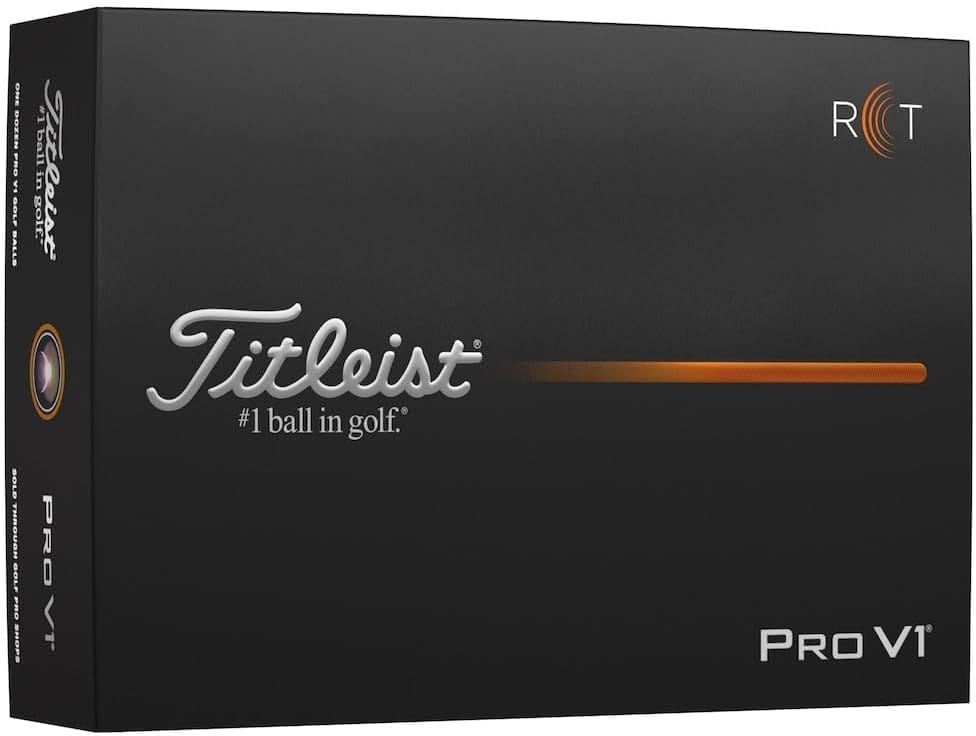
Titleist Pro V1 Golf Balls (2025 RCT)
4. Equipment. Loft and shaft both matter, but they sit fourth because they're expensive to change and the gains are smaller than the first three. A driver lofted half a degree above your optimum adds 100 to 200 rpm. A shaft too soft for your tempo adds a similar amount through extra dynamic loft. If the first three are sorted, driver loft selection and shaft flex are next.
How to Improve Your Spin Rate
The order matters. Setup before swing thoughts. Swing thoughts before equipment.
Fix high driver spin
- Tee the ball higher. Half the ball above the crown at address. This biases impact upward, which is the spin-killing zone of the face.
- Move the ball forward. Off the lead heel, not the center. A ball position too far back forces a steep, descending strike.
- Feel like you're swinging up. Picture launching over a fence ten paces in front of you. The cue is exaggerated, but the default amateur pattern is to chop down.
- Drop loft by half a degree to a degree if you have an adjustable hosel and launch is already high. Most modern drivers let you do this in the parking lot. Full loft guide here.
- Switch to a lower-spin ball. Soft-compression two-piece balls are the worst offenders for high driver spin in mid-handicap players. A premium urethane ball or a low-spin tour-distance model drops you 200 to 400 rpm before you do anything else.
- Use impact tape. One range bucket, tape on the face, ten balls. The pattern shows where you're striking it. Most amateurs find their average impact is half an inch (1.3cm) low and toward the heel.
- Get a shaft fitting if all the above are dialed and spin still won't come down. A whippy shaft adds spin you can't remove with setup. My shaft flex guide is the place to start.
Boost wedge spin
- Clean your grooves. Every shot. Carry a brush. Wet, packed grooves can't grab the ball, and rpm drops by hundreds. The cleanest grooves on tour get attention between every shot, not once a round.
- Play a urethane-cover ball. The single biggest lever for wedge spin. Pro V1, TP5, Chrome Tour, Z-Star: any of them gives you 1,500 to 2,500 rpm more than a two-piece ionomer ball on a 60-yard (55m) wedge.
- Accelerate through impact. Deceleration kills spin. The classic 50-yard (46m) chunk-or-skull pattern is almost always a player decelerating because they've taken too much club. Take less club, swing through.
A note on groove sharpeners, because someone always asks. Plugged In Golf's Dec 2025 test ran six players on Trackman at Club Champion Chicago. Two saw a 10 percent spin gain on a new wedge after sharpening. The other four saw 1 percent or less. On a used wedge, one gained 16 percent, the rest 1 to 4 percent, and one lost 7 percent. The "+500 to +600 rpm" claim from manufacturers isn't supported. Treat the tool as a cleaning aid, not a spin restorer.
Which Launch Monitors Actually Measure Spin Rate
The consumer launch monitor market is full of "spin rate" claims that aren't what they sound like. Some devices measure spin. Others estimate it from ball flight. The difference matters when you're using rpm numbers to make decisions.
| Device | Measurement Method | Spin Accuracy | Ball Required | Notes |
|---|---|---|---|---|
| Trackman 4 | Doppler radar, direct measure | Reference standard | Any ball | The number every other device is benchmarked against |
| Rapsodo MLM2PRO | Dual camera, 240 fps, RPT print read | Within 200 to 300 rpm of pro devices | RPT-marked balls (Pro V1 RCT, Callaway RPT) | Direct measure when paired with marked ball |
| SkyTrak+ | Photometric camera at impact | Within 200 rpm of premium devices | Any ball | Direct measure, no marked ball needed |
| Mevo+ | Doppler radar | Reliable outdoors, requires accessories indoors | Metallic dot stickers or RCT balls indoors | Direct outdoors, dot-assisted indoors |
| Garmin Approach R10 | Radar with ML estimation | Unreliable below 20m flight or 90 mph ball speed | Any ball | Estimated indoors, per My Golf Simulator |
Three things to take from that table.
The R10 is a brilliant outdoor monitor for the money, but indoors into a net the spin number on screen is an estimate, not a measurement. Garmin publishes no official error margin for spin, and the algorithm switches to ML when ball flight is below 20m or ball speed is below 90 mph. Both are true in most home setups. MyGolfSpy's 2025 launch monitor rankings flag this as the headline limitation of the R10 indoors.
The Rapsodo MLM2PRO is the only sub-$1,000 device that measures spin (rather than estimating it), reading a printed pattern on RPT-marked balls at 240 frames per second. If you want trustworthy spin numbers at home, this one punches above its price.
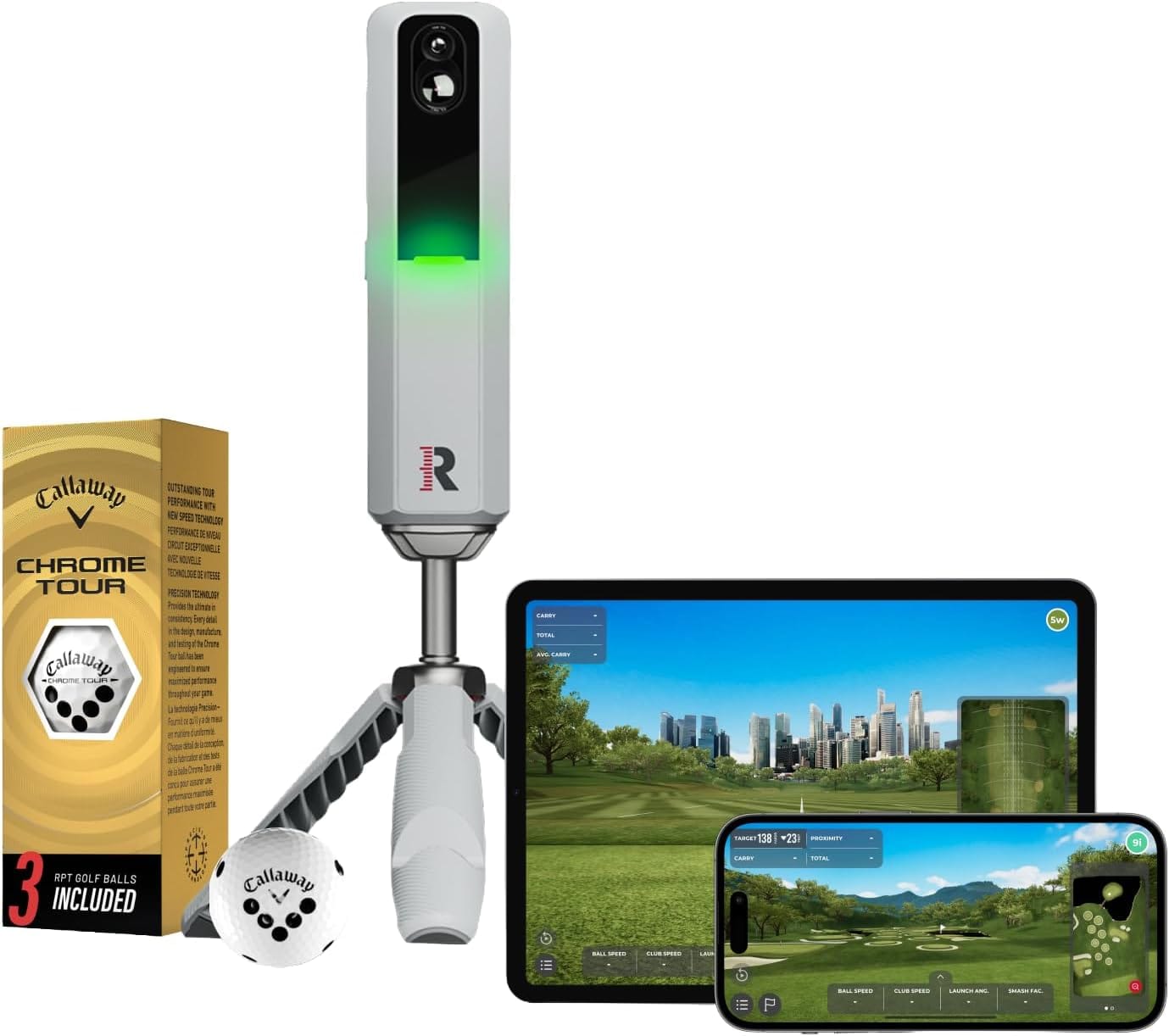
Rapsodo MLM2PRO Mobile Launch Monitor
None of these is a substitute for a Trackman session if you're making spending decisions. A one-off range session on a Trackman, which most coaches and fitters now own, gives you the cleanest reference numbers. Use that as your benchmark, and a home device for trend tracking between sessions.
Frequently Asked Questions
What is a good spin rate for a driver?
It depends on swing speed, not handicap. At 80 to 90 mph, target 2,400 to 3,000 rpm. At 90 to 100 mph, 2,200 to 2,800 rpm. At 100 to 110 mph, 2,000 to 2,400 rpm. At 110+ mph, 1,800 to 2,200 rpm (UpYourClub, Sep 2025). Lower swing speeds want a higher launch (13 to 15 degrees), higher swing speeds want a lower one (10 to 12 degrees). The PGA Tour average sits at 2,545 rpm at 113 mph swing (Trackman, Sep 2024). The mid-handicap amateur average is 3,275 rpm, about 700 rpm above where it should be.
Why is my driver spin too high?
Three causes, in order of likelihood. First, a steep attack angle: if you're hitting down on the driver, spin loft inflates and rpm climbs. The amateur average is -1.8 degrees AoA (Trackman). The fix is to tee the ball higher, move it forward in your stance, and feel like you're swinging up. Second, impact location: low-face contact spikes spin via the gear effect. Use impact tape. Third, the ball. A soft two-piece ionomer ball spins 200 to 400 rpm higher than a premium urethane ball at the same swing. Address those three before looking at loft or shaft changes.
Does spin rate affect distance in golf?
Yes, and the relationship isn't linear. Too little spin, the ball falls out of the air before peak carry. Too much, it balloons, gives back yards to drag, and lands soft with no rollout. For a 95 mph swing, the sweet spot is around 2,500 rpm. Trackman's optimizer at 94 mph and 0 degrees AoA produces 2,772 rpm at 11 degrees launch (Sep 2024). Drop spin from 3,300 to 2,500 rpm at the same swing speed and you gain 10 to 20 yards (9 to 18m) of carry.
Which launch monitors measure spin rate accurately?
Trackman is the reference. Below that price tier, three consumer devices measure spin (rather than estimating it): Rapsodo MLM2PRO (within 200 to 300 rpm of pro devices, requires RPT-marked balls), SkyTrak+ (within 200 rpm, any ball), and Mevo+ (reliable outdoors, requires metallic dot stickers or RCT balls indoors). The Garmin Approach R10 estimates spin via ML when ball flight is below 20m or ball speed is below 90 mph (My Golf Simulator, 2025). Both conditions are true in most home setups, so R10 indoor spin numbers should be treated as estimates. For tuning decisions, use a Trackman or a direct-measurement consumer device.
What is the ideal spin rate for a 7-iron?
Between 6,000 and 7,000 rpm for a competent amateur swing. The PGA Tour average is 6,204 rpm (Trackman, Sep 2024). Trackman's optimizer at 80 mph 7-iron sits at 5,956 rpm, a sensible floor for amateurs. Below 5,400 rpm, the ball flights low and rolls out on the green. Above 7,200, you're losing carry to ballooning. Iron spin is a function of dynamic loft and impact quality. If you're well outside the band, the cause is the wrong ball for your speed, or a strike pattern producing extreme spin loft.
Does ball type affect spin rate?
Yes, by hundreds of rpm. MyGolfSpy's 2025 ball test found an 800-plus rpm spread off the driver across the field. On wedges, the gap is bigger relative to total spin: their 35-yard (32m) wedge test had Pro V1 at 5,689 rpm and Maxfli Tour X at 5,948 rpm, both urethane. Versus a two-piece ionomer ball, a urethane-cover ball can produce 1,500 to 2,500 rpm more on a wedge shot at the same swing. The cover and mantle layers, not the compression number, drive the gap. A urethane ball is the cheapest short-game upgrade you can buy.
The Practical Take
Before you spend a dollar on a new shaft or driver, get two numbers off a launch monitor: attack angle and impact location on the face. Those two figures explain most of the spin problems I see in mid-handicap golfers, and both are fixable for free with impact tape and a higher tee. Equipment is the last lever to pull, not the first.
For reliable home numbers, the Rapsodo MLM2PRO with RPT-marked balls is the only sub-$1,000 device I'd trust for tuning decisions. Above that, book a Trackman session at a coach or fitter and use the readings to set your benchmark. For wedge spin, do the boring thing first: clean your grooves between every shot, and play a urethane ball. The cover does more work than the wedge.
That's the order. Free fixes first. Then the ball. Then the equipment. Spin rate is the most actionable number on the launch monitor and the one most amateurs leave on the table.
Some links in this article are affiliate links. If you buy through them, I earn a small commission at no extra cost to you. This never influences what I cover or recommend. I link to gear I'd buy myself.








The golf newsletter that cuts the hype
Data-backed reviews and advice that works. No brand spin.
Recommended products

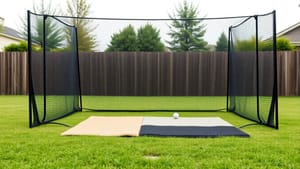
Rukket SPDR Golf Net Review: 10x7 Bundle for Home Practice.
The Rukket 10x7 SPDR golf net bundle reviewed: what's actually in the box, what MyGolfSpy and PluggedInGolf found, and who it fits best.
Read review