Best Golf Fitness Exercises for Seniors
Golfers lose about 5 mph of clubhead speed per decade after 50. These 10 exercises target the physiology behind that decline.
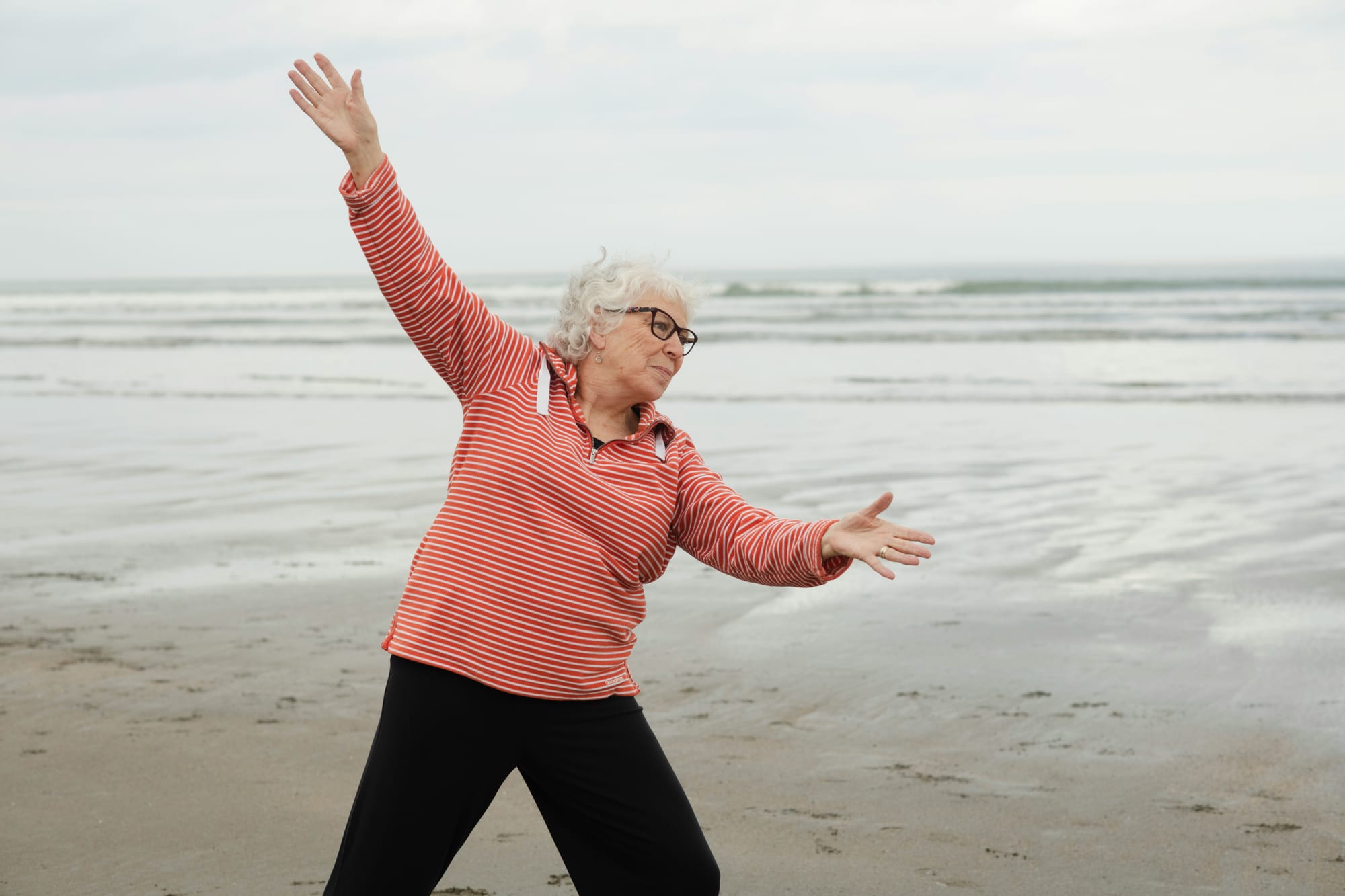
Photo by Kawê Rodrigues on Unsplash
Golfers lose about 5 mph of clubhead speed per decade after 50. That's 10 to 15 yards (9 to 14m) off the tee every ten years, and it compounds. The reason isn't “getting older.” It's specific: your fast-twitch muscle fibers, the ones responsible for explosive speed, decline at twice the rate of your overall strength. Your hips lose internal rotation. Your thoracic spine stiffens. Your X-factor (the differential between hip and shoulder turn) shrinks to just 1.6% in senior golfers versus 13 to 19% in younger players, according to 3D motion capture research (Severin et al., Sports Biomechanics, 2019).
The good news: this is trainable. Research on 72-year-old males showed a 41% increase in fast-twitch fiber size after just 8 weeks of targeted resistance training (Wang et al., 2016, as cited by TPI). These aren't vague “stay active” recommendations. They're exercises matched to the physiology that's costing you distance.
- 1.Golf fitness for seniors is about maintaining explosive rotation, not just flexibility. Power loss after 60 is reversible with the right training.
- 2.The 10 exercises cover three pillars: mobility (hip rotation, thoracic mobility, hip flexor), power and rotation (med ball throws, resistance band, box jumps, goblet squat), and stability (Pallof press, dead bug, single-leg balance).
- 3.Start with the mobility exercises in weeks 1 to 4, then layer in power work from week 5. Rushing ahead increases injury risk.
- 4.Train 2 to 3 sessions per week, 30 to 45 minutes each. Consistency over several months is what produces measurable swing speed gains.
Why Senior Golfers Lose Distance (It's Not What You Think)
The speed loss isn't about general fitness. It's about a specific type of muscle fiber doing a specific job.
Your muscles contain two main fiber types. Slow-twitch fibers handle endurance: walking the course, maintaining posture over 18 holes. Fast-twitch fibers handle explosive force: the burst of rotational speed in your downswing. With age, fast-twitch fibers are lost at a disproportionate rate while slow-twitch fibers stay stable. The Titleist Performance Institute (TPI) puts it this way: muscle power (force multiplied by velocity) declines at twice the rate of muscle strength. You'll lose about 30% of muscle mass and maximal strength between 40 and 70 (TPI).
That distinction matters because it changes what you should train. Strength work (slow, heavy lifts) preserves slow-twitch fibers and general muscle mass. Power work (fast, explosive movements) targets the fast-twitch fibers you're losing. Most senior fitness programs focus on strength. For golfers, power training is where the speed lives.
Then there's the mobility problem. Severin et al. (2019) used a 10-camera 3D motion capture system running at 500 Hz to measure 17 healthy male golfers with a mean age of 62.2. Their X-factor stretch with a driver was just 1.6%, compared to 13 to 19% in younger golfers. Driver clubhead speed averaged 88 mph (39.4m/s), about 16 mph (7.1m/s) slower than the younger cohort at 104 mph (46.7m/s). The researchers also found that older golfers shifted more demand to the trail hip, a compensatory pattern that suggests the lead hip has lost the internal rotation range it needs.
The training priority is clear: restore hip mobility, train rotational power (not just strength), and build stability to protect against injury.
How to Use These Exercises
Structure these into 2 to 3 sessions per week, each lasting 30 to 45 minutes. That's the frequency backed by the research protocols that produced results: Lehman (2006) used 3 sessions per week in a 30-week progressive program, and the SuperSpeed Golf senior study used 3 sessions per week for its speed-training phase.
A sensible weekly split:
- Session A (Mobility + Power): Hip 90/90 stretch, open books, medicine ball rotational throws, resistance band swing drill
- Session B (Strength + Stability): Goblet squats, Pallof press, dead bug, single-leg balance
- Session C (Power + Mobility): Box jumps or jump squats, hip flexor stretch, thoracic rotation, band swing drill
For the first 4 weeks, stay at the lower end of the rep ranges below. Progress load or intensity from week 5. If you haven't done structured training before, start with mobility and stability exercises only for weeks 1 and 2, then introduce the power movements.
If you don't already warm up before rounds, pair this program with a proper pre-round routine. The fitness work builds capacity; the warm-up activates it.
Mobility Exercises
Hip 90/90 Stretch
The hip 90/90 addresses the single biggest mobility limitation for senior golfers: reduced hip internal rotation. Severin et al. (2019) found that senior golfers' lead hip transverse plane angle at the top of the backswing was 22.7 degrees with a driver, well below younger players. That lost rotation shrinks your X-factor and costs clubhead speed at the source.
How to do it: Sit on the floor with both knees bent at 90 degrees. Your front shin should be directly in front of you, your back shin to the side. Rotate your torso toward your front knee, feeling the stretch in the lead hip. Hold, then switch sides.
Reps/sets: 60 seconds per side, 2 to 3 sets. Do this daily if possible.
Modification: If getting to the floor is difficult, do a seated version in a chair. Place one ankle on the opposite knee and press the raised knee down while sitting tall. Same internal rotation stretch, less demand on the floor.
Open Books (Thoracic Rotation)
Thoracic spine rotation drives your shoulder turn. TPI identifies thoracic restriction as one of the most common mobility limitations in senior golfers, and the consequences are predictable: when your mid-back won't rotate, your lumbar spine compensates. That's where injuries start. McHardy, Pollard, and Luo (Journal of Chiropractic Medicine, 2007) found that lower back injuries accounted for 25% of all golf injuries in a survey of 1,634 Australian amateur golfers.
How to do it: Lie on your side with knees stacked and bent at 90 degrees. Extend both arms in front of you, palms together. Keeping your knees together, rotate your top arm up and over, opening your chest toward the ceiling. Follow your hand with your eyes. Return slowly.
Reps/sets: 10 to 15 reps per side, 2 to 3 sets.
Modification: Place a pillow between your knees for comfort. If shoulder mobility limits the range, don't force the arm to the floor. Go to where the stretch is felt through the mid-back, not the shoulder.
Hip Flexor Stretch
Tight hip flexors restrict hip extension during the follow-through and correlate with lower back injuries in golfers. Meira and Brumitt (Sports Health, 2010) identified limited hip internal rotation and tight hip flexors as correlated with low-back injury in golfers. Lower back injuries are the number one injury site in amateur golf (28% of all injuries in recreational golfers, according to a cross-sectional study of 1,170 male golfers). This is a prevention exercise as much as a performance one.
How to do it: Kneel on one knee with the opposite foot flat in front of you, both knees at 90 degrees. Tuck your pelvis under (posterior tilt) and shift your weight forward until you feel the stretch in the front of the kneeling hip. Keep your torso tall.
Reps/sets: 60 to 90 seconds per side, 2 sets. Daily.
Modification: Use a standing version by placing the back foot on a bench or chair behind you. Hold a club for balance.
Power and Rotation Exercises
Medicine Ball Rotational Throw
This is the best exercise for rate of force development, the capacity that declines faster than strength with age. TPI recommends training maximum force production within the first 200 milliseconds because that's the time window of a downswing. A slow, heavy lift doesn't train this. A fast, explosive rotation does.
How to do it: Stand side-on to a wall, about 3 feet (1m) away, holding a medicine ball at waist height. Rotate away from the wall (simulating a backswing), then rotate explosively and throw the ball into the wall. Catch and repeat.
Reps/sets: 3 sets of 8 to 10 reps per side. Use a light medicine ball: 4 to 8 lbs (2 to 4kg). The goal is speed, not load.
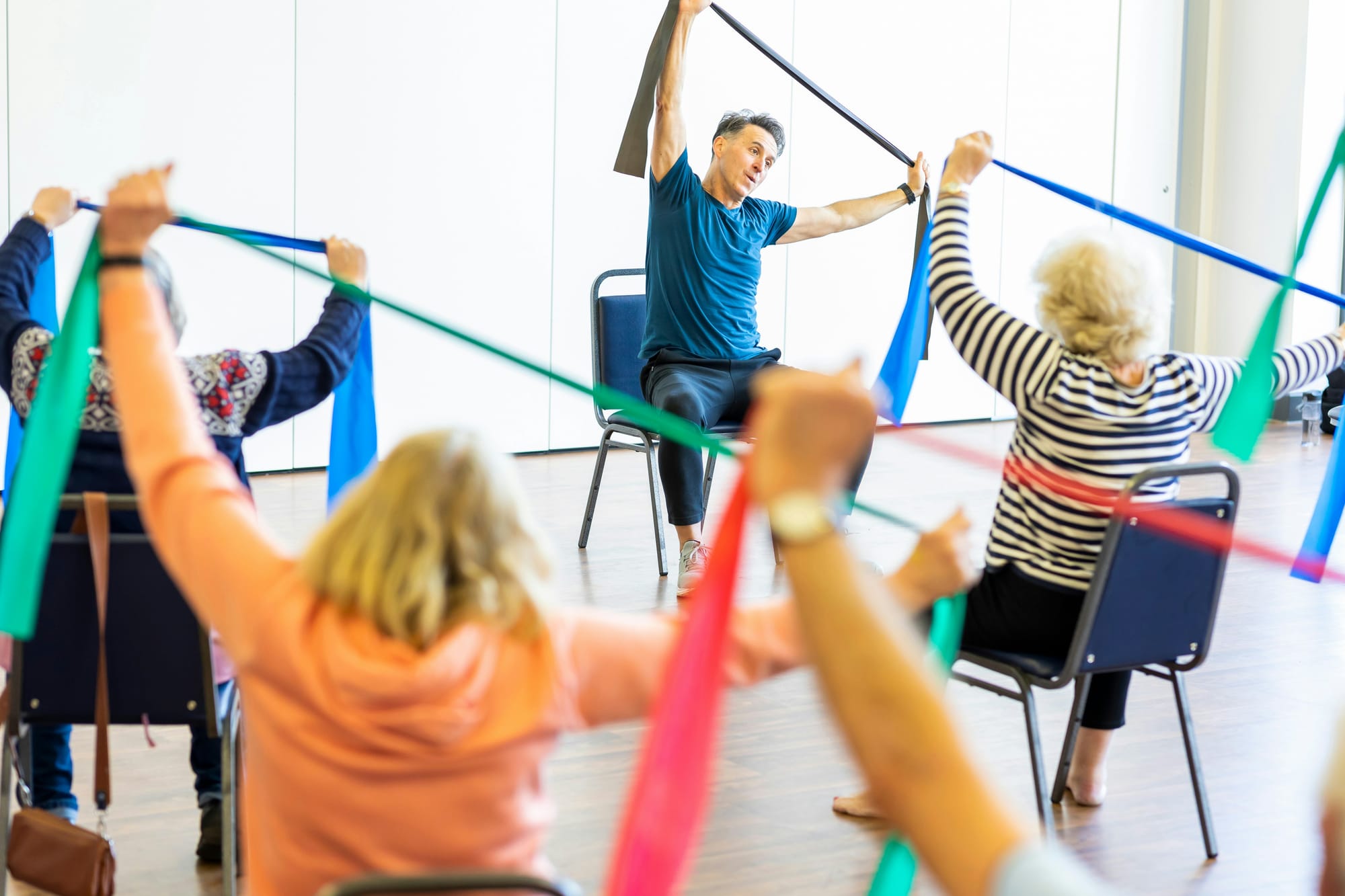
Modification: If you don't have a medicine ball or wall space, anchor a resistance band at waist height and perform a rotational pull with the same explosive intent. Research cited by the National Institute on Aging supports resistance bands as producing equivalent strength gains to free weights in older adults, with lower joint stress.
Goblet Squat
Quad strength, glute activation, and hip mobility all degrade with age, and all affect your golf posture and stability through the ball. TPI includes the goblet squat in their senior athlete programming and has demonstrated it with an 82-year-old client. Not glamorous. Works.
Biomechanical research puts the force on your lead leg at 4.5 to 5 times your body weight during a swing, all in less than a quarter of a second. Your quads and glutes absorb that force. Without the strength to handle it, your knee or hip compensates.
How to do it: Hold a dumbbell or kettlebell at chest height with both hands. Squat down until your thighs are parallel to the floor (or as low as comfortable), keeping your chest up and weight through your heels. Stand up.
Reps/sets: 3 sets of 10 to 12 reps with light to moderate weight.
Modification: Use a chair behind you as a depth guide and safety net. Squat down until you lightly touch the chair, then stand. No weight needed initially.
Resistance Band Swing Speed Drill
This trains rotational power through the exact movement pattern you use on the course. Adding band resistance to your swing motion forces higher fast-twitch fiber recruitment at the joint angles that matter.
How to do it: Anchor a resistance band at waist height. Hold the band with both hands in your golf grip. Perform slow-motion golf swings against the band resistance in both directions: resistance on the downswing (power), and resistance on the backswing (eccentric loading). Progress to faster tempos as strength builds.
Reps/sets: 3 sets of 10 reps in each direction.
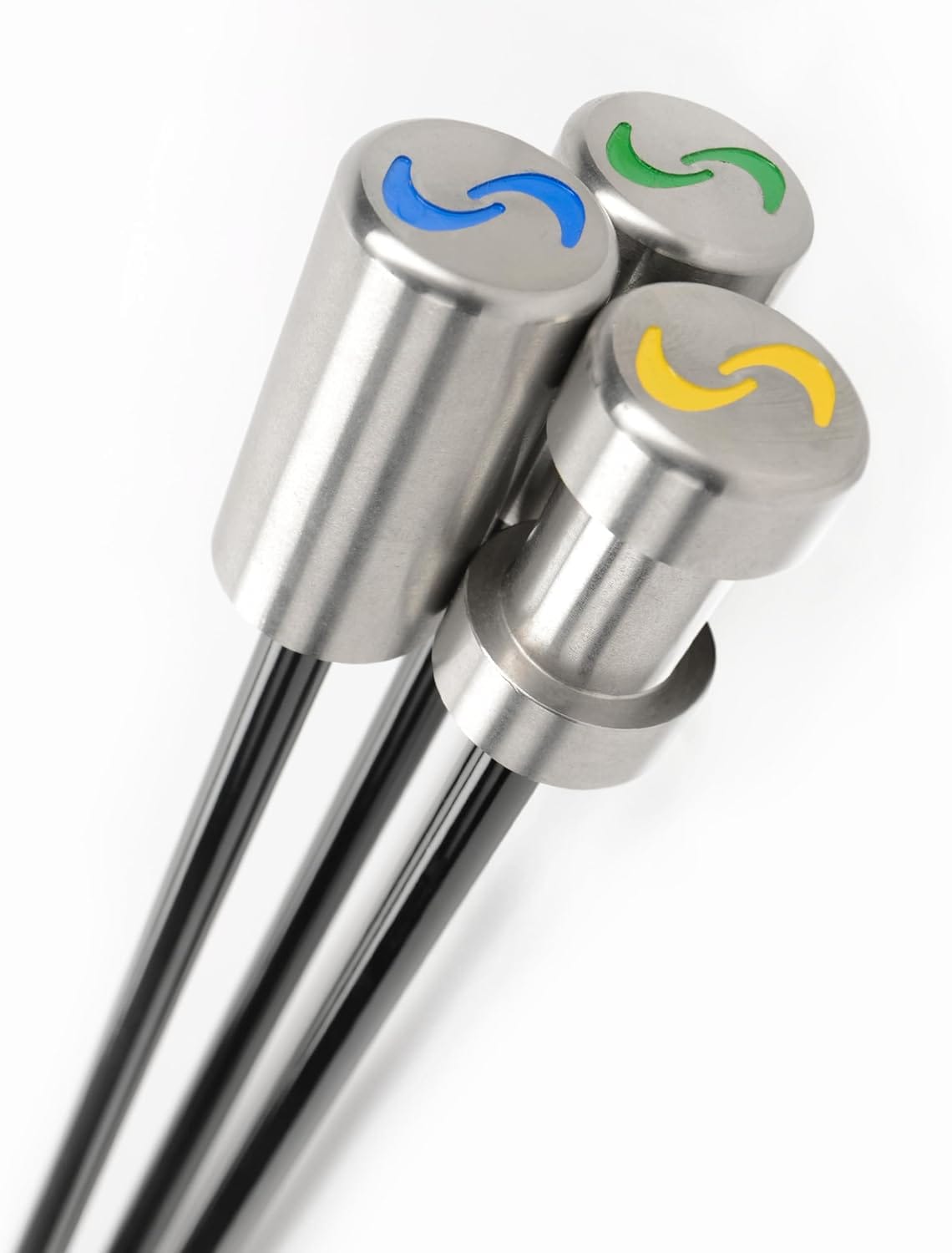
SuperSpeed Golf Senior Training System
The SuperSpeed study (Terravita Golf and Country Club, Arizona, September 2024) is the only senior-specific speed training trial published to date. All 47 participants gained speed, with no correlation between age and gains. It's brand-produced, so take the exact numbers with appropriate caution. The direction of the findings aligns with the broader research on fast-twitch fiber trainability in older adults.
Box Jump or Jump Squat
Plyometric training is the most direct method for recruiting fast-twitch fibers. Wang et al. (2016, as cited by TPI) found that 72-year-old males who completed 8 weeks of plyometric-integrated training improved their rate of force development by 48%. TPI recommends box jumps for senior golfers and has demonstrated them with their 82-year-old client.
How to do it: Use a low box: 6 to 12 inches (15 to 30cm). Step close to the box, swing your arms, and jump up. Land softly with both feet. Step down (don't jump down). Reset and repeat.
Reps/sets: 3 sets of 5 to 8 reps. Quality over quantity. Each jump should be maximal intent, full rest between reps.
Modification: If a box isn't available or feels uncomfortable, perform jump squats: quarter-squat, jump up, land softly. For golfers with knee concerns, a chair-assisted squat-to-stand (sit, stand up explosively, sit back down under control) trains the same fast-twitch recruitment at lower joint load.
Stability and Injury Prevention Exercises
Pallof Press
The Pallof Press trains your core to resist rotation, not create it, which is the exact demand pattern of a golf swing on your lumbar spine. Lehman (Journal of the Canadian Chiropractic Association, 2006) identified spinal extensor endurance as correlated with decreased lower back injury risk. McHardy et al. (2007) found that poor swing mechanics and lack of core stability contributed to 46.9% of golf injuries, with the follow-through phase associated with 46.1% of lower back injuries.
How to do it: Attach a resistance band to a fixed point at chest height. Stand side-on to the anchor. Hold the band at your sternum with both hands. Press your hands straight out in front of you, hold for 3 to 5 seconds, and return. The band tries to rotate you toward the anchor; your job is to resist.
Reps/sets: 3 sets of 10 to 12 reps per side (3 to 5 second hold each rep).
Modification: Reduce the band tension or step closer to the anchor point. You should feel your core working to resist rotation, but you should be able to hold the extended position without twisting.
Dead Bug
Joyce et al. (International Journal of Golf Science, 2021) studied 52 older adults (age 55+) who played a minimum of 18 holes per week. The healthy group outperformed those with age-related musculoskeletal conditions on core endurance, and that gap correlated with better golf performance. The dead bug trains deep core stability while maintaining a neutral lumbar spine, the exact position your lower back needs during a golf swing.
How to do it: Lie on your back with arms extended toward the ceiling and knees bent at 90 degrees (tabletop position). Slowly extend your right arm overhead and your left leg out straight, keeping your lower back pressed into the floor. Return to start. Alternate sides.
Reps/sets: 3 sets of 10 to 15 reps per side.
Modification: Keep your knees bent throughout (don't extend the leg fully) to reduce the lever arm and make it easier to maintain lumbar contact with the floor.
Single-Leg Balance
With 4.5 to 5 times your body weight going through your lead leg at impact, balance and proprioception aren't optional. Severin et al. (2019) found that older golfers maintain increased knee flexion during the swing, a compensatory strategy for maintaining their center of mass. Training single-leg balance reduces the need for these compensations and protects the lead knee.
How to do it: Stand on one leg. Hold a golf club vertically in front of you for light support if needed. Maintain a tall posture. Close your eyes for an advanced challenge.
Reps/sets: 3 sets of 20 to 30 seconds per leg.
Modification: Stand near a wall or chair for support and progress to unassisted as confidence builds. Even with support, the proprioceptive challenge of single-leg stance provides training benefit.
Power Training vs Strength Training for Senior Golfers
| Power Training | Strength Training | |
|---|---|---|
| What it trains | Rate of force development (speed of muscle contraction) | Maximum force production (how much weight you can move) |
| Fiber type targeted | Fast-twitch (Type II), which decline faster with age | Both fiber types, but favors slow-twitch under heavy loads |
| Examples | Medicine ball throws, jump squats, band swing drills, SuperSpeed | Goblet squats, deadlifts, leg press, seated rows |
| Tempo | Fast, explosive | Controlled, 2 to 3 seconds per phase |
| Golf outcome | Clubhead speed, distance | Posture endurance, stability, injury resilience |
| What the research says | Wang et al. (2016): 48% improvement in rate of force development after 8 weeks in 72-year-olds | Wang et al. (2016): 68% improvement in 1RM strength in the same cohort |
| Priority for senior golfers | Higher, because power declines at 2x the rate of strength | Still necessary as a foundation for power training |
Both belong in your program. Build a strength foundation first (weeks 1 to 4), then layer in power exercises (weeks 5 onward). The mistake most senior golfers make is doing strength work without ever progressing to power training, which means they get stronger but not faster.
Frequently Asked Questions
How much swing speed do senior golfers lose with age?
Research shows about 5 mph of clubhead speed lost per decade after 50, with the sharpest decline after 65. Severin et al. (2019) measured senior golfers (mean age 62.2) averaging 88 mph (39.4m/s) driver clubhead speed versus 104 mph (46.7m/s) in younger golfers, a gap of about 16 mph (7.1m/s). Individual variation is huge: a 70-year-old who trains power can maintain speeds that an untrained 55-year-old has already lost. The decline isn't linear and it isn't inevitable, but it does require targeted training to slow.
Can older golfers regain swing speed?
Yes. A SuperSpeed Golf study of 47 senior golfers (average age 70.3, range 58 to 89) at Terravita Golf and Country Club found an average 5% clubhead speed gain after 6 weeks of structured speed training, with all 47 participants showing improvement and no correlation between age and gains. Wang et al. (2016, as cited by TPI) found a 48% improvement in rate of force development in 72-year-old males after 8 weeks. The SuperSpeed data is brand-produced, so treat the exact figures with appropriate caution, but the direction aligns with independent research on fast-twitch fiber trainability in older adults.
What's the most important exercise for senior golfers?
Based on 3D motion capture data from Severin et al. (2019), hip internal rotation is the single biggest mobility limitation for senior golfers. The hip 90/90 stretch targets this and costs nothing but 5 minutes a day. That said, the most neglected training category is rotational power. Most senior golfers stretch but never train speed. If you're choosing two exercises, pair the hip 90/90 stretch (daily) with a rotational power exercise like the medicine ball throw (2 to 3 times per week). That combination targets the two primary physiological drivers of senior distance loss.
How often should seniors do golf fitness exercises?
Two to three sessions per week, each lasting 30 to 45 minutes. This is the frequency used in the training protocols that produced results: Lehman (2006) prescribed 3 sessions per week in a 30-week progressive program, and the SuperSpeed Golf study used 3 sessions per week for its intensive training phase, dropping to once per week for maintenance. Older adults need more recovery time between sessions, so avoid training the same muscle groups on consecutive days. A Monday/Wednesday/Friday or Tuesday/Thursday/Saturday split works well, leaving your weekend for golf.
Are resistance bands as effective as weights for senior golf fitness?
For most exercises relevant to senior golf fitness, research supports equivalent strength gains from resistance bands and free weights. The National Institute on Aging recommends resistance training for older adults, and systematic review data shows that bands used for 40 to 60 minutes, more than 3 times per week, for at least 12 weeks improved muscle mass in older adults. Bands offer lower joint stress and are easier to use at home. The one area where a cable stack or weighted implement has an edge is rotational power training, where the even resistance profile of a cable better mimics the loading pattern of a golf downswing compared to a band's increasing resistance curve.
Where to Start
If you're only going to do two things, do the hip 90/90 stretch daily and add one rotational power exercise (medicine ball throw or band swing drill) 2 to 3 times per week. That combination hits both physiological drivers of senior distance loss: lost hip internal rotation and reduced fast-twitch fiber recruitment.
Build from there. Add the goblet squat and Pallof press for your strength and stability base. Layer in box jumps or jump squats once you've built 4 weeks of foundational work. If you're losing more distance than you think you should be, it's also worth getting your shafts checked, because shaft weight and flex specs that matched your swing at 95 mph (42.5m/s) won't perform the same at 85 mph (38m/s).
One more thing. A 10-minute warm-up (windmills, trunk twists, static stretching, practice swings) increased clubhead speed by 24% over 7 weeks in a Sports Health study (Meira and Brumitt, 2010). You don't need to choose between fitness and practice time. The fitness work builds the engine; the same ball flight laws still determine your carry distance. You're just giving them more to work with.
Some links in this article are affiliate links. If you buy through them, I earn a small commission at no extra cost to you. This never influences what I cover or recommend. I link to gear I'd buy myself.








The golf newsletter that cuts the hype
Data-backed reviews and advice that works. No brand spin.
Recommended products

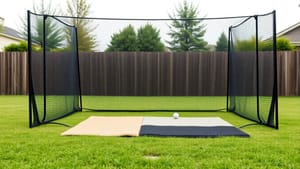
Rukket SPDR Golf Net Review: 10x7 Bundle for Home Practice.
The Rukket 10x7 SPDR golf net bundle reviewed: what's actually in the box, what MyGolfSpy and PluggedInGolf found, and who it fits best.
Read review