What to Expect From a Custom Club Fitting (And When It's Worth It)
There are two things most golfers believe about custom fittings that aren't quite right.
The first is that fitting is something you earn: you need to be a certain level of player before it's worth your time or money. This is backwards. A higher handicapper playing with clubs that are the wrong lie angle and shaft flex is fighting their equipment on every shot. A fitting doesn't require you to be good; it requires you to have a repeatable enough swing to give the fitter something to measure.
The second is that fitted clubs will fix a broken swing. They won't. A fitting optimizes equipment for how you currently deliver the club. It can't change the swing itself. If you're coming over the top and hitting a pull every time, a fitting will help you find a shaft and head that works with that pattern; it won't straighten it out. That's what instruction is for.
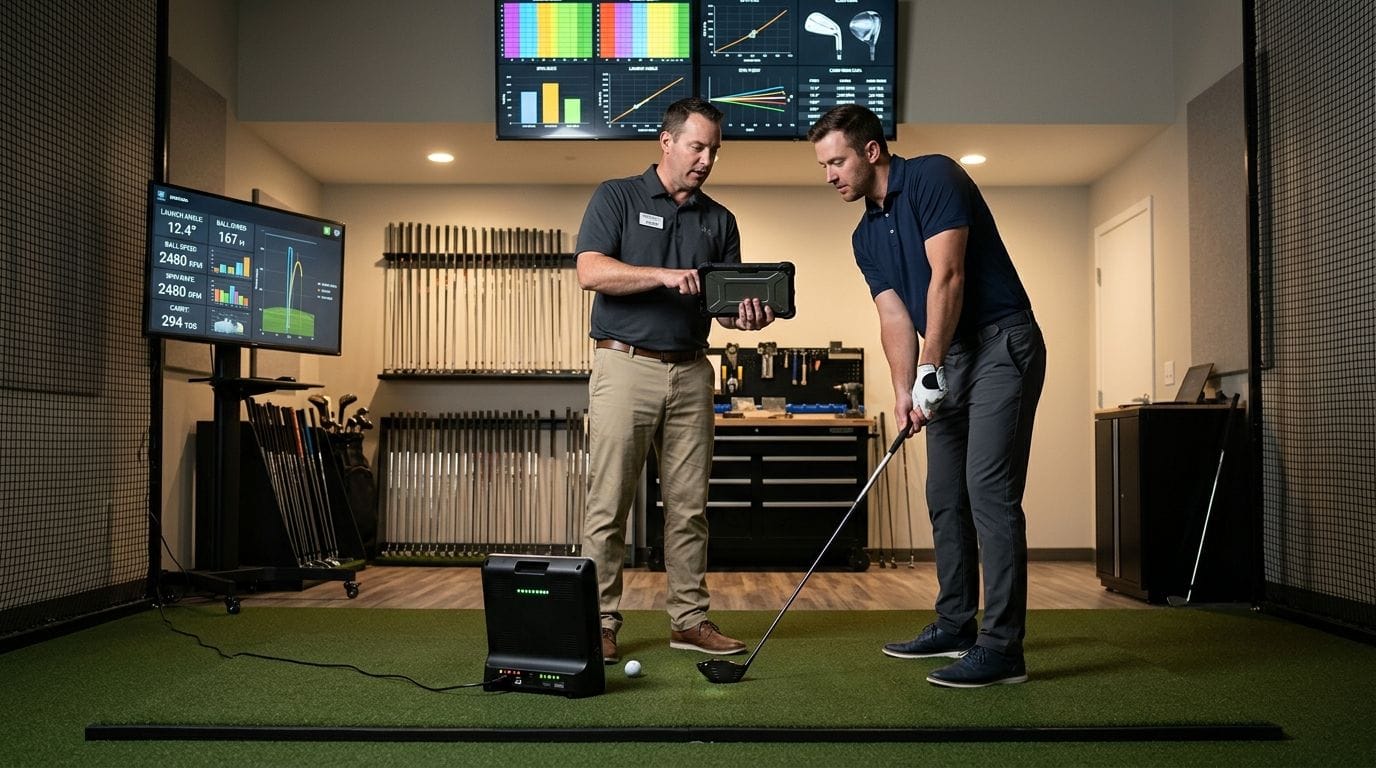
With those two things clear, here's what a custom fitting actually involves, which data the fitter is watching, and when it genuinely moves the needle.
- 1Custom fitting optimizes equipment for your current swing. It adjusts shaft flex, weight, loft, lie angle, and length. It doesn't fix swing path or face angle; those need instruction.
- 2Fitting is worth it at most handicap levels, not just for low-handicappers. Lie angle errors cause systematic off-line misses that no amount of swing work will correct.
- 3Driver fitting is the highest-return fitting for most amateurs. Trackman fitting data suggests average golfers leave 20 or more yards (18 or more m) of carry on the table through suboptimal launch conditions. The right combination of shaft, loft, and attack angle accounts for most of that gap.
- 4Don't get a lesson and a fitting in the same week. You want the fitter to see your actual, representative swing, not one you're actively rebuilding.
- 5The two metrics that tend to shift most between shaft options are smash factor (contact quality) and spin rate (trajectory consistency). Everything else is context for those two.
- 6Iron fitting delivers the best accuracy gains and is the most underrated fitting. Lie angle correction alone can shift ball landing position by 5 to 10 yards (4.5 to 9.1m) at 150 yards (137m).
What happens during a fitting
A fitting for a single club, typically the driver, runs 45 to 60 minutes. A full bag fitting is a 2.5 to 3-hour session. The process follows a consistent pattern regardless of where you go.
It starts with questions. A good fitter will ask about your current equipment, your typical miss, your ball flight tendencies, and what you're hoping to get from the session. They're not making small talk; they're building a hypothesis before you hit a single ball. What shaft flex you're currently playing, whether you tend to miss left or right, whether the issue is distance or accuracy: all of this helps them narrow the test matrix before you start.
Then you hit your current clubs. The fitter needs a baseline: your actual numbers with your actual equipment, so they know what they're trying to improve on. This is the session that establishes your starting point on the launch monitor.
From there, it's a structured process of swapping shaft options (different flex, weight, and profile) and head options (different loft, face angle, and head geometry), reading the data after each change, and narrowing toward what works. A good fitter runs you through at least three or four shaft candidates, not just two before declaring a winner.
Named fitting operations worth knowing: Club Champion runs multi-brand fitting sessions that compare shafts across several head manufacturers simultaneously, which is a more honest process than a brand-captive fitting where only one manufacturer's products are on the table. Rain or Shine Golf has fitting bays at several locations with a reputation for no-pressure sessions. Neither is a site affiliate; they're named because they consistently come up in r/golfsimulator and GolfWRX discussions when golfers ask for fitting recommendations.
The metrics that drive fitting decisions
A launch monitor is the fitter's primary diagnostic tool. Six metrics do most of the work.
Ball speed and smash factor. Smash factor (ball speed divided by club head speed) tells the fitter how efficiently you're transferring energy at impact. If your smash factor is consistently below 1.44 with the driver, the fitting conversation needs to start with contact quality before shaft selection means much. The smash factor explainer on this site covers this in detail.
Launch angle. The angle the ball leaves the face relative to the ground. For most amateurs, optimal driver launch angle sits between 12 and 16 degrees. A fitter who sees a consistent 8-degree launch knows the golfer is hitting down too steeply or playing too low a loft. The fix might be a higher-lofted head, a shaft that promotes higher launch, or both.
Spin rate. Spin rate determines trajectory and landing behavior. Too much spin (above 3,500 rpm on a driver) and the ball balloons and loses distance. Too little (below 1,800 rpm) and it knuckles, according to Trackman's published optimal launch conditions data. Most amateurs carry too much spin, which typically points to a shaft that's too soft, too much dynamic loft, or a steep attack angle. Changing the shaft profile or loft can shift spin rate by several hundred rpm, enough to move a golfer meaningfully up or down the optimal range.
Attack angle. Whether you're hitting up or down on the ball at impact. With a driver, a positive attack angle (hitting slightly up) increases launch and reduces spin. Most amateurs hit slightly down on their driver, which costs distance. A fitter can recommend tee height, ball position adjustments, and a shaft profile that accommodates a shallower delivery, none of which requires a swing overhaul.
Dynamic loft. The actual loft delivered at impact, which differs from the club's stamped loft because of shaft lean, attack angle, and timing. A golfer who delofts aggressively through impact might play a 10.5-degree driver but deliver 7 degrees of dynamic loft, killing launch and producing inconsistent spin. Dynamic loft is where shaft flex and swing timing interact most directly.
Carry distance and dispersion. The output the fitter is trying to move. More important than any individual metric is whether carry distance is consistent across a sequence of shots. A shaft that produces one perfect 275-yard (251m) carry and nine inconsistent ones is worse than a shaft that produces 12 consistent 260-yard (238m) carries. Dispersion (how spread out the landing zones are) matters as much as average distance.
What fitting can and can't fix
Fitting can adjust:
Shaft flex and weight. If your tempo is fast and aggressive, a stiffer shaft controls the load. If your tempo is smooth and deliberate, a softer flex promotes better timing. Shaft weight affects swing feel and fatigue; many amateurs play shafts heavier than optimal, which costs speed late in the round.
Loft. Most off-the-rack drivers come in at 9 or 10.5 degrees because those numbers look impressive on a spec sheet. Most amateurs should be playing 11 to 13 degrees. A fitter sets this based on your actual launch and spin numbers, not the stamped number on the hosel.
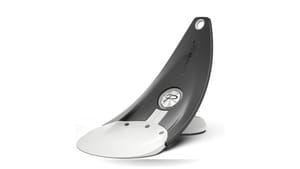
Lie angle. This matters more in irons than in the driver. A club with too upright a lie angle (toe pointing up at impact) pushes the ball left; too flat (heel up) pushes it right. Standard off-the-rack irons are built for a golfer of average height and arm length. If your build or swing plane is different from that baseline, your lie angle may be causing systematic directional errors that no amount of alignment practice will correct. Checking lie angle with a lie board, a piece of vinyl material placed on the sole that marks where the club contacts the ground, is a straightforward periodic diagnostic. Lie angle boards on Amazon run $15 to $25.
Shaft length. Longer shafts theoretically add speed, but most amateurs already play shafts too long for consistent center contact. A fitter who shortens a driver shaft by half an inch (1.3cm) and sees smash factor climb is optimizing for what actually matters.
Grip size. A grip that's too thin promotes hand and wrist activity through impact; too thick and it limits it. Grip sizing is a fast, inexpensive fit that can reduce tension-driven misses.
Fitting cannot fix:
Swing path. If you're cutting across the ball from outside to inside, a fitting can help you work with that pattern, but it can't straighten the path. That's instruction.
Face angle at impact. A draw-biased driver head will help a chronic slicer, but it compensates for an open face at impact; it doesn't close it. The bias reduces the symptom; it doesn't address the cause.
Timing inconsistency. If your tempo varies significantly from swing to swing, no shaft profile makes your numbers consistent. The fitting will tell you this by showing wide dispersion on the launch monitor.
The most useful frame for a fitting: it maximizes the performance of your current swing, even for golfers who are predisposed to trust the numbers over what the shot felt like (James raises his hand on that one). If you're planning a significant swing change, get the instruction first, let the new pattern settle for a few months, then fit.
When fitting is worth the investment
Driver. Highest-return fitting for most amateurs. Trackman fitting data suggests average golfers leave 20 or more yards (18 or more m) of carry on the table through suboptimal launch conditions, and the combination of shaft, loft, and head geometry is where most of that gap lives. For a golfer playing off 15, that's often the difference between a driver that's a liability and one that's an asset.
Irons. The most underrated fitting. Lie angle correction can shift ball landing position by 5 to 10 yards (4.5 to 9.1m) at 150 yards (137m). If you've noticed a consistent directional bias in your iron shots (they go straight, but always slightly right of target), lie angle is the first thing to check.
Wedges. Less critical for most golfers in the 10 to 22 handicap range. The precision short shots where wedge fitting matters most require a level of swing consistency that most amateurs in this range haven't yet achieved. Spend the fitting budget on driver and irons first.
When to skip it: if you're actively working with an instructor on a significant swing change, delay the fitting until the new pattern has been yours for at least two to three months. Fitting a swing that's in transition is fitting a swing that won't exist by the time the clubs arrive.
What to do before you go
- Warm up before you arrive. The fitter needs to see your representative swing, not your first five cold swings of the day. Hit balls for 20 minutes at the range or driving bay before the session.
- Don't book a lesson and a fitting in the same week. If you're actively working on a new swing thought, it'll show up in the data, and the fitter will be optimizing around mechanics you're trying to change.
- Know your typical miss. "I slice it" is useful. "I slice it when I rush and pull it when I slow down" is more useful.
- Bring your current driver. The baseline session with your actual equipment is essential; the fitter can't measure improvement without knowing the starting point.
- Ask to see the data. A good fitter will show you the launch monitor numbers for each shaft and explain why one worked better than another. If the fitter can't walk you through the data, find a different fitter.
Frequently Asked Questions
Am I good enough to be fitted for clubs?
Fitting is not a reward for being a good golfer; it's a process for finding equipment that works with your swing. There's no handicap floor. A 20-handicapper playing with the wrong lie angle and shaft flex is making an already difficult game harder than it needs to be. The main requirement is that you can make relatively consistent contact so the fitter has a pattern to measure. If you're new to golf and miss the ball entirely on a significant portion of swings, wait a few months. If you're making contact and playing regularly, a fitting will give you useful information.
How much does a custom fitting cost?
Driver fitting typically runs $75 to $150 at most reputable fitting operations; a full bag fitting runs $200 to $400. Some fitters credit the fitting fee toward a club purchase. The clubs themselves are a separate cost that varies widely by brand and spec. For most golfers, a driver fitting is the highest-return spend in this range: it's often cheaper than a set of lessons and can add more consistency in the short term.
Should I fit my driver or my irons first?
Driver first, if you're only doing one. The driver fitting surfaces information about your swing that's useful for the iron fitting too (attack angle, tempo, shaft preference), and driver performance has the largest effect on overall scoring for most amateurs. If you already know your driver is roughly in the right place and you have a consistent directional bias with your irons, skip straight to iron fitting; lie angle correction is often one of the faster and more meaningful changes you can make.
What to do next
Rapsodo MLM2PRO Mobile Launch Monitor
Pairs with an iPhone for ball-flight data including spin rate, carry, and launch angle. Practical for confirming your fitted clubs are performing as expected at home or on the range.
 View on Amazon
Garmin Approach R10 Portable Launch Monitor
A twelve-metric monitor compatible with E6 Connect and WGT Golf for simulator use, plus the Garmin Golf app for on-course data. A practical option for checking numbers between range sessions without booking a fitting bay.
If you own a launch monitor and want to understand which subscription tiers give you access to the fitting-relevant metrics (dynamic loft, attack angle, face impact data), the launch monitor total cost guide covers the full breakdown.
And if smash factor came up in your last fitting session, the smash factor guide explains the diagnostic loop in detail.
Some links in this article are affiliate links. If you buy through them, I earn a small commission at no extra cost to you. This never influences what I cover or recommend. I link to gear I'd buy myself.









The golf newsletter that cuts the hype
Data-backed reviews and advice that works. No brand spin.
Recommended products