Summer Golf: Playing Through Heat and Firm, Fast Conditions
Heat adds real distance and firm turf decouples carry from total distance, plus how to adjust club selection, short-game shot choice, and heat-safety habits for summer rounds.
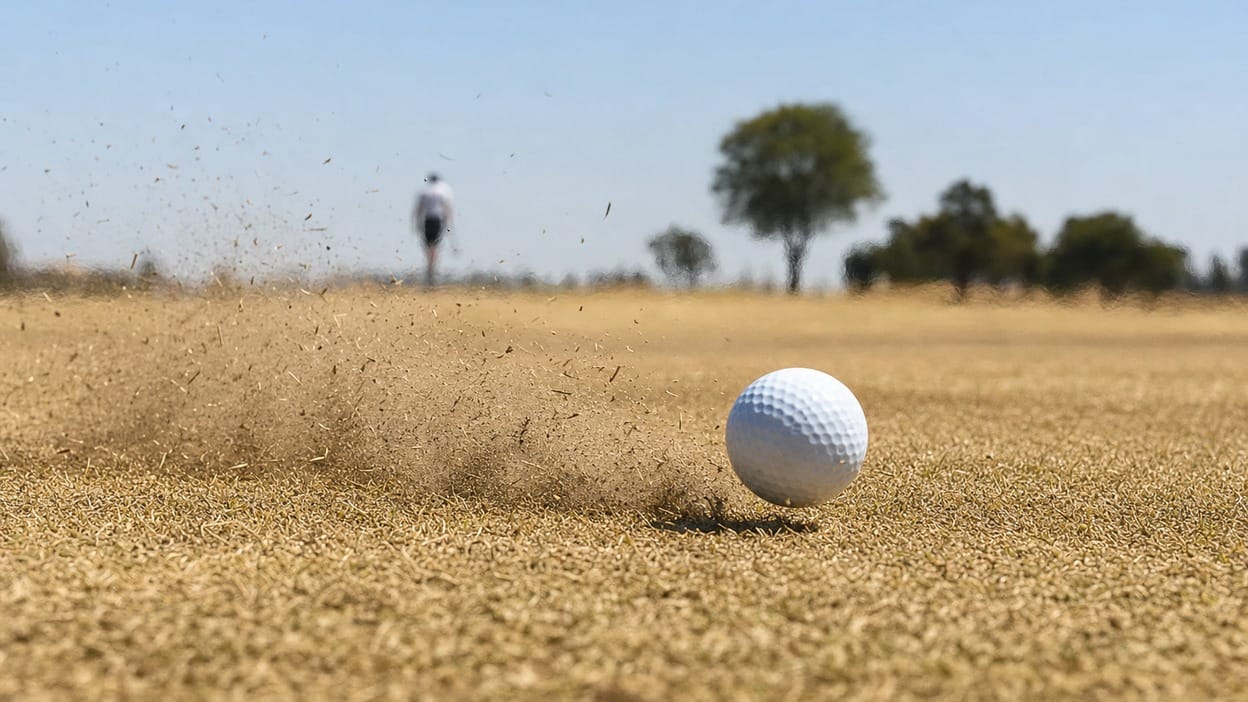
Heat adds yards, firm ground steals control back, and the two effects show up on the course at the same time every summer. Neither one is a myth, and neither one behaves the way most golfers assume. This is what actually happens to your ball and your course management when the temperature climbs and the turf dries out, and how to adjust for both.
- Firm, fast turf decouples carry from total distance. Play the carry number for club selection, then let the ball release.
- Heat adds real distance, roughly 1.3 to 2 yards (1.2 to 1.8m) per club for every 10°F (5.6°C) rise in temperature, but the exact number varies by source, so treat it as a range, not a fixed figure.
- Heat safety matters. Hot, sun-exposed rounds carry real heat-safety risk. Hydration and sun protection matter more than most weekend golfers plan for.
- Tee time is the easy lever. An early tee time is still the single easiest adjustment available to you in peak summer.
What firm, fast turf does to your ball flight
Golf course superintendents spend a lot of the summer chasing firm and fast conditions on purpose. The USGA's Green Section has promoted firmer turf for years, partly as a water-conservation measure and partly because firm fairways add roll for every swing speed, which benefits slower swingers more than faster ones. The tradeoff is that firm ground punishes precision in a way soft ground doesn't.
The mechanic that trips golfers up most is the gap between carry distance and total distance. On firm turf, a ball that carries the same distance it always does can run out an extra ten or twenty percent once it lands, so the number that matters for club selection is carry, not the total yardage you're used to thinking about. If you don't carry a launch monitor to the course, you can still track this by feel: watch how far the ball rolls out after it lands relative to how it usually behaves, and pay attention when a shot that felt exactly like your normal contact still finishes well past where you expected. That extra roll after a normal-feeling strike is the tell that the ground is playing firm and fast, launch monitor or not.
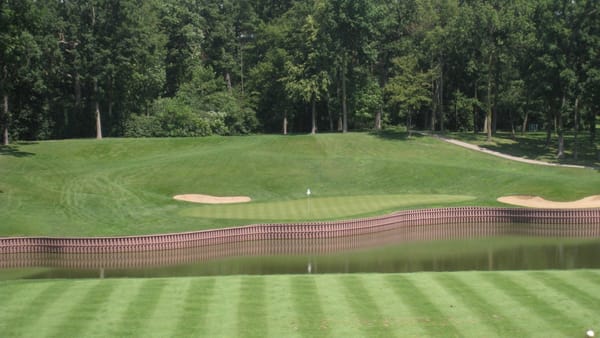
Around the greens, firm turf changes the short game too. Approach shots that land short and release toward the pin tend to work better than ones flown all the way to the hole, since firm greens won't hold a ball the way soft ones do, and a long miss gets punished harder than a short one. It's also often the week to trade a high, spinny wedge shot for a low chip-and-release, since firm ground behind the green gives a running shot more margin for error than a shot that has to carry all the way to the flag. These are the same principles that come up in our guide to course management for shooting lower scores, and the firm-turf version of that thinking is worth revisiting heading into a dry summer stretch.
Why heat adds distance, and why the exact number keeps moving
The physical mechanism behind hot-weather distance gains is well established and not really in dispute. Hot air is less dense than cold air, so a golf ball meets less resistance in flight, and heat also raises the coefficient of restitution, the liveliness of the ball's rebound off the clubface, adding a small amount of extra ball speed on top of the aerodynamic gain.
What's less settled is exactly how many yards that adds. According to research reported by Golf.com, the gain runs from roughly 1.3 yards (1.2m) per club at the short end, closer to a wedge, up to about 2 yards (1.8m) per club at the long end, closer to a driver, for every 10°F (5.6°C) the temperature rises. That's a real, useful range, but it's still a range: different instructors and different testing setups land on somewhat different numbers, and a commonly repeated figure claiming a flat 7-to-10-yard swing between a 40°F (4°C) morning and a 90°F (32°C) afternoon is a rounded, secondary estimate rather than a number you should treat as precise. Published data carries more weight here than the commonly repeated shortcuts, so if a yardage range feels like more precision than you need on the course, the simple version still holds: it plays a little longer when it's hot, and a little shorter when it's cold.
Humidity, for what it's worth, barely factors in. The research on this points to roughly 1 yard (0.9m) of total effect from humidity alone, which is small enough that temperature is really the only atmospheric variable worth adjusting for during a summer round.
The practical effect shows up most on a driver, since it's the club with the most yardage to work with in the first place. A player carrying a driver 250 yards (229m) on a mild 70°F (21°C) morning might see something closer to 254 yards (232m) once the afternoon climbs into the 90s (32-37°C), and closer to 246 yards (225m) on a cool 50°F (10°C) day, using the driver end of that per-10-degree range across the gap. Shorter clubs move a smaller amount in absolute terms, which is exactly why the range narrows toward a wedge and widens toward a driver.
Playing smart when the ground is fast and the air is hot
The practical adjustments for summer conditions mostly come down to club selection and shot shape rather than anything mechanical in your swing. Play the carry yardage, not the total, when a hazard sits in range, since firm fairways narrow your effective driving lines by bringing trouble into play that a softer course would have kept out of reach. Miss short of greenside hazards rather than long, and keep approach shots below the hole whenever the pin position allows it, since putting uphill on fast, firm greens is a far more forgiving mistake than a downhill putt from above the cup.
None of this is unique to summer weather specifically. It overlaps heavily with the kind of course-management thinking that shows up in our piece on course management for shooting lower scores, and it's worth pairing with our guides on the two conditions at the opposite ends of the calendar from firm and fast: playing in the wind and playing in the rain, since between the three of them you've got a plan for whatever the weather throws at a summer, fall, or winter round.
Tee-time strategy matters as much as any swing adjustment. An early tee time, as early as 6 a.m. where the course allows it, gets a round finished before the afternoon heat and the firmest, driest conditions of the day both peak at once. It's a simple change and still probably the single most effective one available to most weekend golfers.
Staying safe in the heat
The strategy adjustments matter, but the safety side of a hot round matters more. Heat exhaustion and heat stroke sit on the same spectrum, and the warning signs, heavy sweating, dizziness, nausea, a headache that won't ease up, are worth knowing before you're three hours into a round and starting to feel them. Heat stroke is the more serious end of that spectrum, marked by confusion, hot and dry skin instead of heavy sweating, or a rapid pulse, and it's a medical emergency rather than something to play through. The general sports-medicine guidance here is consistent: stop and cool down at the first sign of symptoms rather than pushing through to finish a hole, and get out of direct sun and seek help immediately if symptoms progress toward the more serious end of that list.
Hydration works better as a day-before habit than a morning-of scramble. Golf rounds run 4-plus hours with sustained sun exposure, which is a longer and more exposed stretch than most other summer sports, so starting a hot-weather round already behind on fluids puts you in a hole you're unlikely to climb out of by the back nine. Sun protection matters just as much: broad-spectrum sunscreen reapplied through the round, a wide-brim hat, UV-protective sunglasses, and loose, UPF sun-protective clothing all help more than most golfers give them credit for. A cooling towel and a dedicated piece of hydration gear, whether that's an insulated bottle or a bag-mounted reservoir, are both worth having in the bag once temperatures climb, the same way rain gear earns its spot in the bag for a wet forecast.
Frequently Asked Questions
How much extra distance does heat really add to my shots?
Expect somewhere in the range of 1.3 to 2 yards (1.2 to 1.8m) per club for every 10°F (5.6°C) the temperature rises, with shorter clubs gaining less than longer ones. Treat it as a range rather than a fixed number, since different sources land on slightly different figures.
Why does the ball roll out more on firm, fast turf?
Firm turf offers less cushioning on landing, so a ball that carries its normal distance keeps traveling once it hits the ground instead of stopping quickly the way it would on soft turf. That's why carry distance, not total distance, is the number to plan around for club selection.
What's the safest way to play golf in extreme heat?
Hydrate starting the day before a hot round rather than just the morning of, and stop at the first sign of heat-exhaustion symptoms like heavy sweating, dizziness, or a persistent headache rather than trying to finish the hole. Sun protection, sunscreen, a wide-brim hat, and UV-protective sunglasses, help as much as hydration does over a 4-hour round.
Should I change my tee time in summer?
An early tee time, as early as 6 a.m. where it's offered, is one of the simplest ways to beat both the afternoon heat and the driest, firmest conditions of the day. If your course allows it, booking early is worth more than almost any other single adjustment for a summer round.









The golf newsletter that cuts the hype
Data-backed reviews and advice that works. No brand spin.
Recommended products