









how-to
How to Hit a Fairway Wood Off the Ground
You can smash a 3-wood off a tee. Put the same club on the turf and the
Learn how to play a par 5 the smart way: when to go for the green in two, when to lay up, and how to pick your numbers by handicap.

Learning how to play a par 5 starts with one early decision: reachable in two shots, or a three-shot hole no matter what. Decide before you tee off, then hit a tee shot that sets up a number you like. If you're laying up, aim for a full-swing yardage, not the spot closest to the green.
Before you pull a club on the tee, decide what kind of hole you're actually playing. A par 5 under roughly 480 yards (439m) is reachable in two for a lot of golfers who can carry a hybrid or fairway wood 200 yards (183m) or more. A par 5 over 560 yards (512m), or one guarded by a forced carry, is a three-shot hole for almost everyone, no matter how well the tee shot comes off.
The scorecard yardage is a starting point, not the answer. Wind, elevation change, and the actual lie you'll have for your second shot all move a hole from one category to the other. A 500-yard (457m) par 5 playing downhill and downwind can be reachable; the same yardage into a headwind, uphill, usually isn't.
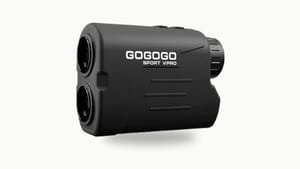
This is where knowing your real numbers matters more than guessing off a sprinkler head marker. A rangefinder that locks in your actual distance to the front, middle, or a hazard edge removes the biggest variable in this decision. If you don't already carry one, the Blue Tees Series 3 Max+ is a straightforward starting point, and our full rangefinder guide covers picks across every budget if you want to compare options first.
Make the call before you tee off, not standing over your second shot with the adrenaline of a good drive still running. A hole you've already classified as a three-shot hole doesn't get reclassified because you caught one flush off the tee.
Once you know which kind of hole you're playing, the tee shot has a job beyond "hit it as far as possible."
On a reachable-in-two hole, the tee shot needs to leave you a full-swing club for your second shot, ideally from a fairway lie. A drive that finds the rough 260 yards (238m) out often leaves a worse angle and a longer effective carry than a controlled tee shot 20 yards (18m) shorter that stays in the fairway. Distance that costs you the lie isn't actually an advantage on this type of hole.
On a three-shot hole, the tee shot's job is to set up your favorite yardage for the lay-up, not to maximize carry. If your best wedge number is 100 yards (91m), working backward from that on a 540-yard (494m) hole tells you roughly where you want the tee shot and the lay-up to land, rather than just swinging away and hoping the numbers work out afterward.
Either way, play to the widest part of the fairway you can find, not a single point. A tee shot aimed at "left-center" that misses by 10 yards (9m) is usually still playable. A tee shot aimed at a specific bunker edge that misses by the same 10 yards (9m) often isn't.
This is the decision that actually separates a good par-5 score from a blown one, and it happens on your second shot, not your tee shot.
Before you commit to going for the green, run three checks. First, the honest carry: what do you actually need to fly over trouble, not the number to the pin. Second, the lie: a green-in-two attempt from a tight, downhill, or sidehill lie carries far more risk than the same yardage from a flat fairway lie, even though the number on the rangefinder is identical. Third, the conditions: wind and elevation change the real number more on a long carry than a short one, so a club that covers it in calm conditions might come up well short into a breeze.
Then apply a simple test: can you cover that carry roughly 8 times out of 10 with the club you'd actually hit, not the one time in ten when you catch it perfectly? If the honest answer is no, lay up. This is the step our course management guide covers in general terms across every hole type, its own par-5 example shows a 15-handicapper facing a 220-yard (201m) approach from light rough, where the greens-in-regulation odds from that lie sit in the single digits, against roughly 45% from an 80-to-90-yard (73-to-82m) wedge distance, per MyGolfSpy data cited there. The math behind that example is exactly what this test is checking for on a par 5 specifically, a deliberately conservative bar I'll admit my own instinct still fights more than the numbers say it should.
Once the coverage test says go, the club selection and the target still matter.
Take one more club than you think you need on a long approach. A green-in-two attempt is rarely a full, aggressive swing; taking enough club to make an easy three-quarter swing produces more consistent contact than forcing a longer club to its absolute limit. A 3-wood swung at 90% is more repeatable than a driver-off-the-deck swung at 100%.
Pick your miss before you swing. Miss short and to the side away from the green's biggest trouble, not long or dead at the flag. A shot that comes up 15 yards (14m) short of a greenside bunker still leaves a playable pitch. A shot that's a fraction long and finds water, a back bunker, or thick rough behind the green turns a two-putt birdie look into bogey or worse. Aiming at the safe miss side, not the flag, is what actually lowers your average score on these holes, even though it feels less aggressive standing over the ball.
A lay-up isn't just "hit it as close to the green as you can." That instinct is what produces the worst outcome on a par 5: a half-swing wedge from an awkward in-between distance.
Instead, work backward from your best full-swing wedge number. If you're most confident from 100 yards (91m), pick a lay-up target in a band around that number, say 90 to 110 yards (82 to 101m), rather than aiming at the ball closest to the green regardless of what that leaves. A full, committed swing from a slightly longer distance is more repeatable than a delicate, decelerated half-swing from a distance that's technically shorter.
Know your own numbers here before you're standing in the fairway deciding. If you haven't mapped your wedge distances by club and swing length, that's worth doing on the range before your next round rather than guessing mid-hole, and it's the same kind of preparation our free scoring checklist walks through if you want a simple way to track it.
Once you've picked the band, commit to the layup shot the same way you'd commit to a full approach. A tentative, steering swing at a lay-up produces worse misses than a committed one, even when the target is closer to the tee than the green.
The right default answer on most par 5s changes with your game, and pretending otherwise is how a lot of golfers talk themselves into the wrong decision.
Weekend golfer (roughly 18 handicap and up). Three shots is the right default on almost every par 5 you play, and that's not a limitation to apologize for. Your best scoring gain comes from Step 5's yardage-band discipline, not from occasionally trying to reach a green you can't consistently cover. If you're rarely inside 220 yards (201m) with a clean second shot, treat every par 5 as a three-shot hole and focus your effort on the lay-up and the wedge.
Improver (roughly 10 to 17 handicap). This is the range where the go/lay-up decision actually matters most, because you can reach some par 5s in two but not all of them, and guessing wrong is expensive. Run the Step 3 coverage test honestly on every hole in this category rather than defaulting to "go" because you did it once successfully last summer.
Lower-handicap or reachable-distance player (roughly single digits, or anyone who regularly carries 230 yards (210m) or more). Most par 5s under 550 yards (503m) are genuinely in range for you, and the discipline shifts from "can I reach it" to "should I, given the lie and the miss." The coverage test still applies. A player who can physically reach a green doesn't automatically have a good number to attack it with.
Usually not. As Step 3 covers, greens-in-regulation odds from a long approach out of an imperfect lie run far lower than the odds from a full-swing wedge distance, so for most golfers carrying a mid-teens handicap or higher, laying up to that wedge number produces more pars and far fewer blow-up holes than trying to cover a long carry with a fairway wood or hybrid.
There's no single number that works for every golfer. The best lay-up distance is whatever yardage matches your most reliable full-swing wedge, typically somewhere in a band around 90 to 120 yards (82 to 110m) for most amateur golfers. Landing in that band beats leaving yourself a partial, decelerated wedge shot that falls in between two clubs.
It depends on the hole's length and your longest reliable carry with a hybrid, wood, or long iron from a fairway lie, so there's no fixed number. As a general guide, a player who can carry roughly 200 yards (183m) or more with a fairway club, and has a clean fairway lie to work with, has a legitimate go at most par 5s under 560 yards (512m). Longer than that usually puts the green out of range for all but the longest hitters.
Miss short and to the side away from the green's biggest trouble, not long or dead at the flag. A shot that comes up short of a greenside hazard still leaves a playable pitch or chip. A shot that's a touch long and finds water, deep rough beyond the green, or a back bunker turns a two-putt birdie chance into bogey or worse.
For whole-round risk management beyond just the par 5s, see our guide on how to avoid big numbers. For the general course-management system this sequence plugs into, see how to manage a golf course to score lower.
Some links in this article are affiliate links. If you buy through them, I earn a small commission at no extra cost to you. This never influences what I cover or recommend. I link to gear I'd buy myself.
Data-backed reviews and advice that works. No brand spin.