






articles
Golf Formats Explained
Stroke play, match play, Stableford, and scrambles: the scoring, handicap allowance, and strategy for each.
Most mid-handicappers are playing shafts that are too stiff and too heavy. The data is clearer on this than the industry admits. Here is what iron fitting actually tests, and what it means for your game.
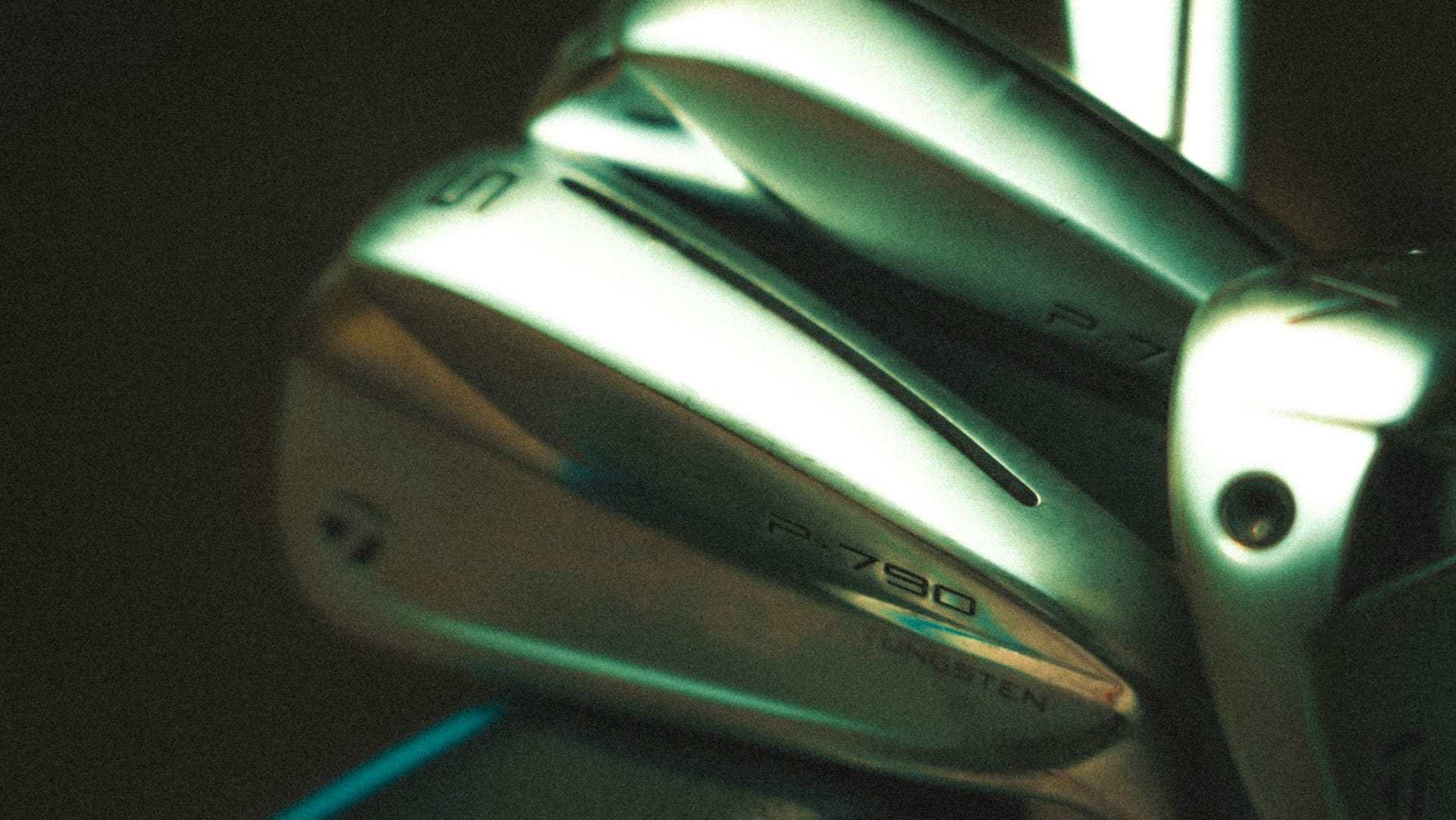
Iron fitting is the process of matching your irons to your swing: shaft flex, shaft weight, head design, lie angle, club length, and grip size, all dialed in to how you move the club rather than how a manufacturer guesses you move it. The shaft is the variable most mid-handicappers get wrong, and it's the one that costs you the most shots without you knowing it.
If you bought your irons off the rack, there's a good chance you're playing a stiff steel shaft north of 120g. According to MyGolfSpy, that spec is designed for driver swing speeds above 95 mph. The average 15-handicapper swings a driver at about 93.4 mph. That gap between what the club expects and what you deliver is where consistency goes to die.
Most golfers walk into a fitting thinking it’s about which iron head to buy. Titleist T150 or Ping i230? Blade or cavity back? The head matters, but it’s not where you’re losing shots.
A full iron fitting tests five variables:
Of those five, the shaft spec is the one that’s hardest to get right off the rack and the one that creates the widest performance gap when it’s wrong. Here’s why.
The common belief is that faster swingers need stiffer shafts, and softer flex means more slicing. Plugged In Golf ran a controlled TrackMan test that challenges both ideas.
Six golfers (handicaps ranging from 10 to scratch) hit seven-shot sequences with identical 6-iron heads paired with regular, stiff, and x-stiff shafts. The results:
Plugged In Golf’s conclusion: “No direct relationship exists between swing speed and required shaft flex.” Tempo, bend profile, and torque all matter more than raw speed.
And here’s the problem nobody talks about. There’s no industry standard for flex labeling. As Practical Golf notes, “One company might call one shaft ‘stiff,’ and another might call the same shaft ‘regular.’” You could buy two sets of “stiff” irons from two different brands and be playing two different flex profiles. That’s not a minor footnote. It means the label on your current clubs tells you almost nothing about whether the flex suits your swing.
Shaft weight is a separate variable from flex, and it’s one that mid-handicappers tend to ignore. Most stock men’s iron sets ship with steel shafts weighing 110g to 130g. That spec was built for tour-speed swings.
D’Lance Golf ran a TrackMan and GEARS test across four shafts ranging from 53g to 68g in both senior and x-stiff flex. One golfer in the test lost 26 yards (200 yards / 183m down to 175 yards / 160m, a 12.5% drop) when using a heavy, stiff shaft versus a lighter, better-matched option. Golfers with driver speeds between 75 and 90 mph saw club speed drops of up to 2 mph between shaft weights. That said, one golfer in the same test showed only a 3-yard (2.7m) variation. Results are individual, which is the whole point of getting fitted.
According to True Fit Clubs, switching from a 120g steel shaft to a 65g graphite option can add 3 to 5 mph of club speed for golfers with 7-iron speeds around 70 mph. That translates to 8 to 12 yards (7.3 to 11.0m) of carry. For golfers swinging at 85+ mph, the benefit shrinks to about 1 to 2 mph. Lighter isn’t a universal fix, but for the majority of mid-handicappers, the stock shaft is heavier than it needs to be.
Here’s a rough guide to shaft weight by driver swing speed:
| Driver Swing Speed | Shaft Weight Range | Typical Flex |
|---|---|---|
| Under 85 mph | 65 to 85g (lightweight graphite or light steel) | Regular or Senior |
| 85 to 95 mph | 85 to 105g (mid-weight steel or heavy graphite) | Regular |
| 95 to 105 mph | 105 to 125g (standard steel) | Stiff |
| 105+ mph | 120g+ (tour steel) | Stiff or X-Stiff |
Most mid-handicappers (10 to 20 HCP) fall in the 85 to 95 mph band. Most stock men’s iron sets ship with shafts designed for the 95 to 105 mph band. That mismatch is the gap a fitting closes.
You don’t need a fitting appointment to suspect your spec is off. Five symptoms to watch for:
Want to see your own numbers before booking? A personal launch monitor gives you club speed and ball speed at home, enough to compare against the weight and flex ranges above. We’ve tested the best launch monitors under $1,000 if you’re weighing up options.
A proper iron fitting follows a predictable sequence. Knowing it beforehand means you’ll ask better questions.
Player interview. The fitter asks about your game: handicap, typical miss, how many rounds you play per year, and what you’re trying to improve. Be honest. Saying “I’m a 15 who wants to hit more greens” is more useful than “I want to hit it further.”
Existing club assessment. You hit your current irons on a launch monitor so the fitter captures a baseline: club speed, ball speed, launch angle, spin rate, attack angle, and dispersion. This is the “before” picture.
Shaft matrix testing. The core of the session. You’ll hit multiple shaft options in different flex, weight, and material combinations, all in the same head. The fitter watches for changes in dispersion (shot-to-shot spread), peak height, landing angle, and spin. Consistency matters more than occasional distance peaks.
Head selection. Once the shaft is narrowed down, the fitter matches a head design to your needs. More forgiveness (cavity back, wider sole) or more workability (compact head, thinner topline).
If forgiveness is what you're after, our game-improvement iron picks are built around exactly that head profile.
Lie angle and length fitting. Dynamic lie angle testing uses impact tape or a lie board at the fitter’s station. Length adjustments follow wrist-to-floor measurements refined by strike pattern data.
The numbers: Sessions run 60 to 90 minutes and cost $100 to $300 for a standalone iron fitting. Most fitters credit that fee toward a club purchase. Bring your current irons, a current glove, and an honest answer about how much you play.
The data on fitting outcomes is limited, but it’s more specific than a vague “you’ll play better.”
Golf Digest tracked nine golfers through their first club fitting and monitored their results via GolfLogix. Eight of the nine improved. The average gain was 1.7 strokes in less than half a season. Average iron distance improved by 13 yards (11.9m), which is about one full club. One golfer, Gene McGarry (a 13-handicapper), gained 29 yards (26.5m) with his 6-iron. Another reduced iron dispersion by 10 yards (9.1m) and dropped his average score from 95 to 89.
Small sample? Yes. n=9 is not a controlled study. But the directional evidence is consistent: a fitted shaft removes a known variable. Your swing stays the same. The equipment stops working against it.
D’Lance Golf claims a 50% reduction in shot dispersion and 5 to 10% distance improvement from their fittings, though that’s a brand claim from their own fitting operation, not independent data. Take it as directional.
For a mid-handicapper hitting 4 to 5 greens in regulation per round, even a modest improvement in dispersion could mean 1 to 2 additional GIR. Over 18 holes, that’s measurable. If you want to understand how that connects to scoring, strokes gained for amateurs is the place to start.
A full iron fitting tests and matches five variables to your swing: shaft (flex, weight, material, and bend profile), head design, lie angle, club length, and grip size. The session uses a launch monitor to measure club speed, ball speed, launch angle, spin rate, attack angle, and shot dispersion. Most sessions run 60 to 90 minutes with a qualified fitter.
It depends on swing speed and tempo, not handicap alone. Most 15-handicappers have a driver swing speed around 93 mph, which sits right at the regular/stiff threshold. According to the Plugged In Golf TrackMan test, four of six golfers in the 10-handicap-to-scratch range performed best with regular flex, not stiff. The safest answer: get fitted, because the flex label on the box varies between brands.
Standalone iron fittings cost $100 to $300 at most fitting studios. The fee is credited toward a club purchase at many retailers, including Club Champion and local pro shops. A full-bag fitting (driver through wedges plus putter) costs more, often $300 to $500+.
Yes. Many fitters offer a re-shaft or spec check service where they assess your current heads and recommend shaft swaps or adjustments (lie angle bending, grip re-sizing, length trimming). If your heads are in good condition and less than five years old, re-shafting to the right spec can deliver most of the benefit at a fraction of the cost of a new set.
Plan for 60 to 90 minutes for a dedicated iron fitting. If you’re fitting irons and wedges together, allow two hours. Arrive warmed up. Hitting cold shots in the first 10 minutes skews the fitter’s data.
A fitting won’t fix your swing. It removes the equipment variable so your swing produces the result it’s capable of. If you’re a mid-handicapper playing off-the-rack stiff steel and you’ve never checked your shaft spec, that variable is costing you shots. The data is clear enough on that point. Book a session, bring your current irons, and let the numbers tell you what your clubs have been hiding.
Still deciding which irons to fit into? Here are the best irons for mid-handicap players in 2026.
Some links in this article are affiliate links. If you buy through them, I earn a small commission at no extra cost to you. This never influences what I cover or recommend. I link to gear I'd buy myself.
Data-backed reviews and advice that works. No brand spin.