







how-to
How to Know Your Real Iron Distances (No Launch Monitor)
Most golfers don't actually know their iron distances. They know their best one. Ask a 15
How to break 90 in golf without changing your swing. The 4 data-backed fixes that move 20-handicappers from the 90s to the 80s.

87% of 20-handicappers fail to break 90 in any given round. That's Will Shaw, PhD, writing for Break X Golf in February 2026, after analyzing 3,788 rounds of amateur scoring data. If you're reading articles on how to break 90 in golf, you're in that group. Good news: this is not a swing problem. Golfers who cross from the 90s into the 80s aren't 30 yards (27m) longer or rebuilding their action with a coach. They're plugging three or four scoring leaks that show up in every round. The shots are already in your bag.
TL;DR
Breaking 90 means shooting 89 or better. On a standard par-72, that's 17-over. Most golfers stuck in the 90s think the path to 89 runs through pars. It doesn't. It runs through fewer doubles.
Three scorecards that all add up to 89:
| Scorecard type | Pars | Bogeys | Doubles | Triples+ | Total |
|---|---|---|---|---|---|
| Survival card | 1 | 17 | 0 | 0 | 89 |
| Typical break-90 card | 3 | 12 | 3 | 0 | 89 |
| High-error card (still works) | 2 | 9 | 6 | 1 | 89 |
Notice what isn't there. Birdies. You don't need them. You need to stop turning bogeys into doubles, and doubles into triples. A bogey costs one stroke of your 17-over budget. A double costs two. A triple costs three. Going from four doubles per round to two is worth four strokes, and that alone takes a 93-shooter to 89.
A 20-handicapper breaks 90 in 13% of rounds. A 15-handicapper does it 55% of the time (Shaw, Break X Golf, February 2026). The National Golf Foundation puts the break-90 rate across all US golfers at 26%, with the average male golfer scoring around 94. You're aiming for the 73rd percentile, not the PGA Tour.
Shot Scope, the GPS and analytics company, has tracked millions of amateur rounds, and their data shows where the strokes go. The numbers below come from Golf Monthly (Adam Harnett, April 22 2026) and MyGolfSpy (Tony Covey, August 7 2025), both citing Shot Scope datasets.
| Metric | 90-shooter | 80-shooter | Gap |
|---|---|---|---|
| Troublesome tee shots/round | 4.9 | 3.3 | 1.6 |
| Greens in regulation | 3.6 | 5.4 | 1.8 |
| Three-putts/round | 4.5+ | 3.5 | 1.0+ |
| Short-game failures inside 50 yds (46m)/round | 3.2 | 2.1 | 1.1 |
| Driving distance | 225 yds (206m) | 236 yds (216m) | 11 yds (10m) |
Look at the bottom row, then the top row. The 80-shooter is 11 yards (10m) longer off the tee and has 1.6 fewer blow-up tee shots per round. One of those numbers is in your control next weekend. The other takes years and risks injury. Tee-shot trouble is the biggest scoring gap. GIR is second. Putting is third. Driving distance is dead last. If you're grinding range balls for ten extra yards, you're working on the smallest line in the table.
Two prerequisites, both free.
First, honest yardages. Not your best 7-iron ever. Your average carry on a normal swing on a normal day. Most amateurs overestimate their carry by 10 to 20 yards (9 to 18m), so they under-club every approach and watch balls splash short. No launch monitor or GPS? Hit ten balls per iron at the range and take the median, not the longest. If you want real numbers without a tour-level price, here's how to get a budget fitting that measures the right things.
Second, tee selection. If your driver carry is under 200 yards (183m), the back tees are costing you shots, not building character. The USGA's 2011 "Tee It Forward" research found golfers playing tees matched to their distance scored 5 to 7 strokes lower without changing anything else. Move up. Your ego will recover.
The 4.9 troublesome tee shots per round (Shot Scope) are the single largest scoring gap between you and an 80-shooter. A "troublesome tee shot" ends in trouble: out of bounds, water, deep rough, trees, an unplayable lie. Each one almost guarantees a double or worse.
The fix is two-fold.
Aim management first. If you fade the ball, tee up on the right side of the box and aim down the left edge of the fairway. That gives you the entire fairway to work with. Most 90-shooters tee up middle and aim middle, leaving themselves half the short grass. You don't need a perfect shot. You need one that finishes in play.
Club management second. Before every drive, ask: do I trust my driver here? If the answer is no, hit a 3-wood or a hybrid. The 11-yard driving gap is small enough that giving up 30 yards (27m) for a fairway is almost always the right trade. If a slice is your main tee-shot problem, work through the slice fix sequence before your next round.
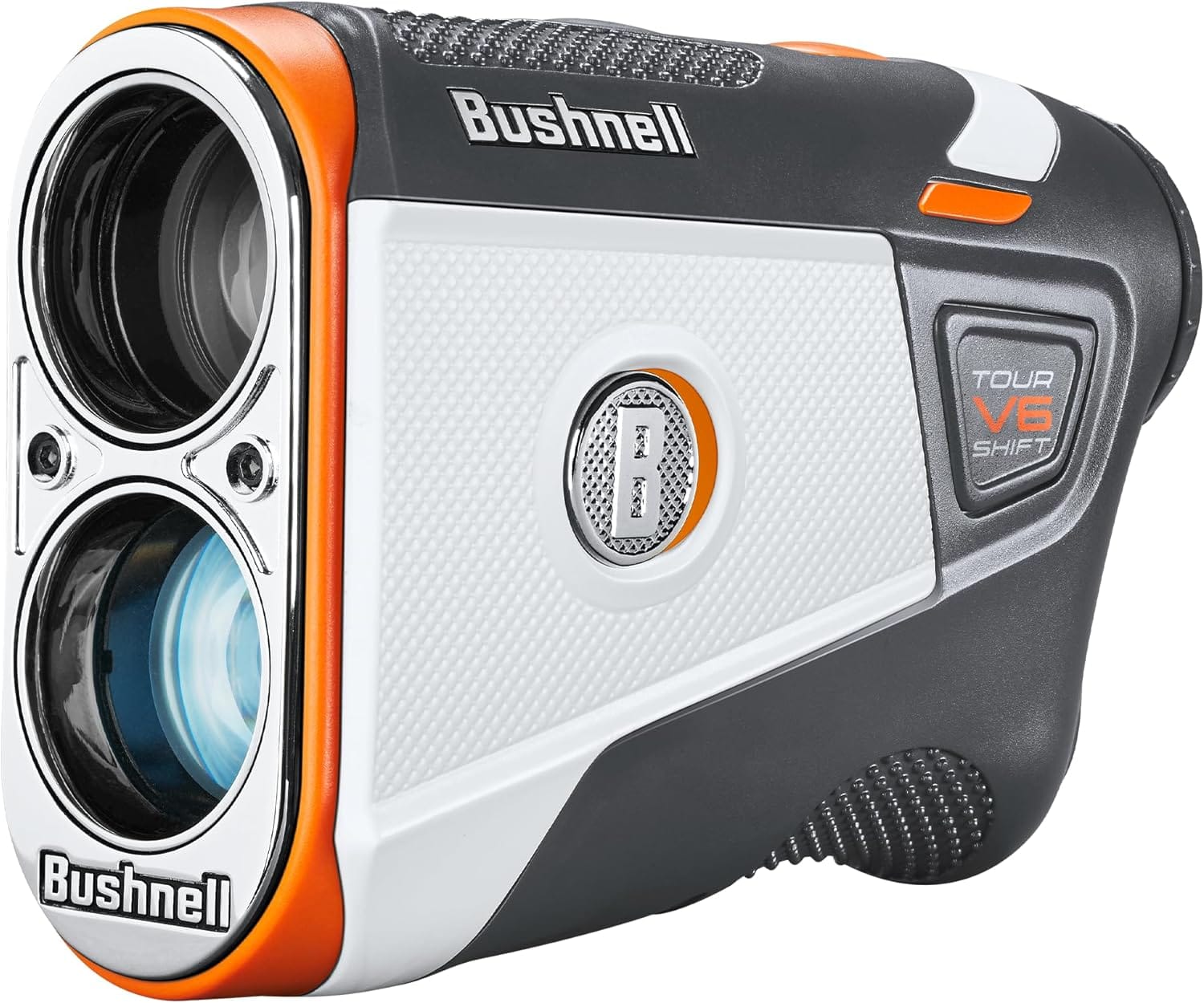
Once your tee ball is in play, the next mistake is guessing distance to the flag and short-siding yourself in a bunker. Knowing front, back, and pin yardages turns a guess into a number. The Bushnell Tour V6 Shift adds a toggleable slope mode (off for tournaments, on for everything else) and handles every distance question on the course.
90-shooters hit 3.6 greens in regulation per round. 80-shooters hit 5.4. That 1.8 GIR gap is the second-biggest scoring leak in the data, and you don't fix it by hitting it stiff. You fix it by aiming at the middle of the green and taking enough club.
The math is brutal. Up-and-down conversion for a 20-handicapper sits around 33% (Shot Scope), so two out of three missed greens cost a stroke. Turning a missed green into a hit green is worth far more than turning a 25-foot par putt into a 10-foot par putt.
Three rules:
Hitting more greens also kills the short-game cost from Step 4. Cut your 3.2 missed-green chips to 2 by hitting one more green and you've saved a stroke or two.
4.5+ three-putts per round. The single most fixable scoring leak in your game.
Most golfers get this backwards. They blame the missed second putt. The data says otherwise: even a 25-handicapper makes 88 to 90% of putts from inside 3 feet (0.9m). The first putt is what kills you. Leave a 30-foot lag 6 feet (1.8m) past the hole, miss the comebacker, and you've handed yourself a three-putt. The second-putt miss rate is just downstream of a bad lag.
The drill is simple and free. Set a tee 3 feet (0.9m) past the hole and another 3 feet (0.9m) short of it, marking a 6-foot (1.8m) circle. Hit ten putts from 30 feet (9m). Count how many stop inside the circle. 7 of 10 is the threshold. If you can't hit it, this is your putting session until you can.
The second lag-putting fix is alignment. Eye position over the ball and putter-face alignment at address are the two causes of missed short putts you can fix at home in 60 seconds. EyeLine's putting mirror has the eye line, the putter-face line, and the gate-width markings on one surface.
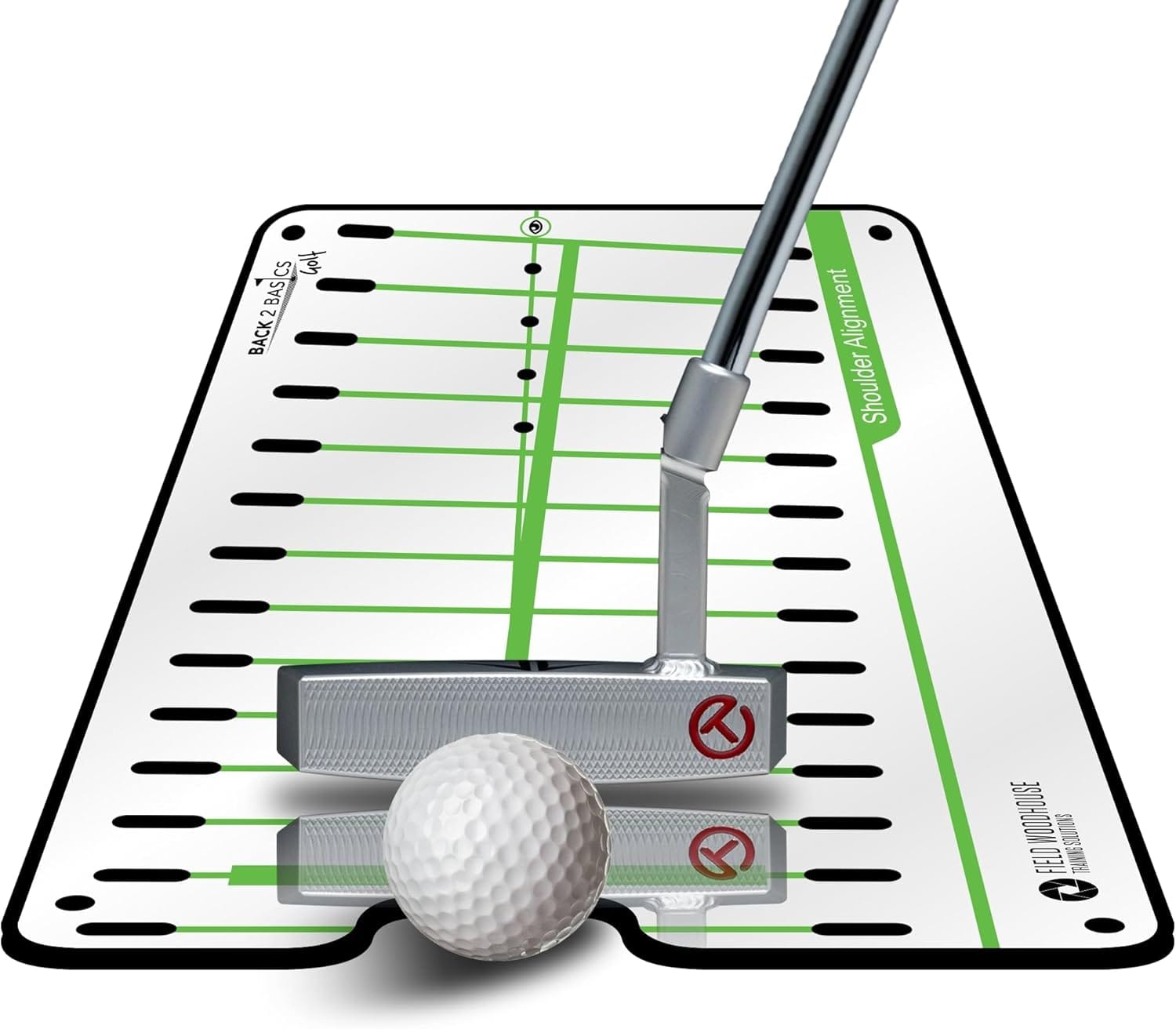
90-shooters miss the green from inside 50 yards (46m) about 3.2 times per round and convert up-and-down around 21% of the time. One more up-and-down per round is worth a full stroke. Two is worth two.
The fix isn't a new short-game system. It's the one-club rule.
Pick one chip club. Master it before adding variety. A 7- or 8-iron for bump-and-runs from tight lies; a pitching wedge for standard chips with more carry. Use that club for 80% of your chip shots. Most 90-shooters reach for a different club every time and end up executing three chip techniques in one round.
Avoid the lob wedge from tight lies. Shot Scope data shows the lob wedge has an 8% up-and-down conversion rate for 8 to 20 handicappers. A low-running 8-iron chip from the same lie destroys it. Save the lob for fluffy lies and bunkers where you have grass or sand under the ball. On tight lies, take your medicine and run it at the hole.
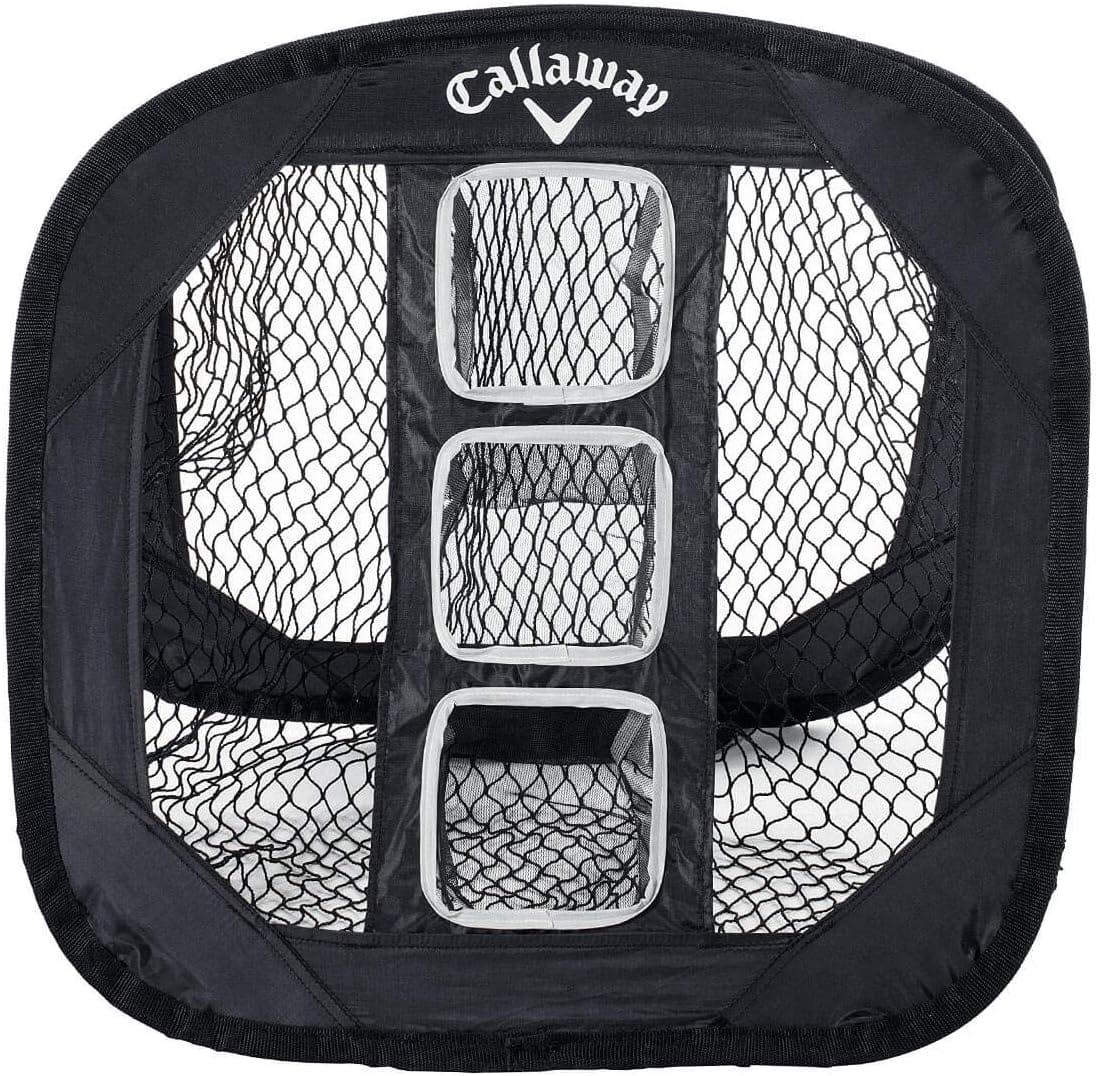
For home practice, a chipping net and a target on the lawn is enough. Aim to land the ball within 3 feet (0.9m) of the spot. Fifty chips a session. The Callaway Chip-Shot net pops up in seconds and absorbs a full chip without ricochets.
Most golfers spend 70%+ of their practice time pounding drivers and mid-irons. Strokes-gained data has shown for years that putting and short game account for the majority of strokes lost above bogey at this level. The practice ratio is upside down for almost every 90-shooter.
Jon Sherman at Practical Golf uses a 20/20/20 framework (October 2023): an hour split into 20 minutes of short game, 20 of putting, 20 of full swing. Half the time? Run 10/10/10. Practice twice a week? Push it further: 60% goes to putting and short game, full swing eats what's left.
Three drills that pay off at this level:
If you want a deeper look at the training aids that move the needle at this level, the list is shorter than most articles suggest.
Three habits stop more golfers from breaking 90 than any technique flaw.
About 26% of US golfers do it on a routine basis, per the National Golf Foundation. Average male score is around 94. Shaw's 2026 analysis (3,788 rounds, Break X Golf) puts a 20-handicapper at 13% of rounds and a 15-handicapper at 55%.
On a par-72 you have a 17-over budget. That's 17 bogeys and a par, or 12 bogeys with 3 doubles and 3 pars, or 9 bogeys with 6 doubles plus 2 pars and a triple. You don't need birdies. Fewer doubles, not more pars.
No. The largest gaps between 90- and 80-shooters are tee-shot trouble (4.9 vs 3.3), GIR (3.6 vs 5.4), and three-putts (4.5+ vs 3.5). Driving distance gap is 11 yards (10m). Course management, club selection, and lag putting close the score. Swing changes don't.
Most golfers who run the four fixes see a 5 to 7 stroke drop within 8 to 12 rounds. The break-90 round itself often comes inside a season. Pair it with a structured handicap-reduction plan if you want to keep going after the first 89.
Yes. Approach guessing drives short-side misses, which feed straight into the 3.2 short-game failures per round in the Shot Scope data. Front, back, and flag yardages turn a guess into a number. A rangefinder pays for itself in shots saved inside a season.
Lag putting. 90-shooters average 4.5+ three-putts per round; 80-shooters average 3.5. Ten minutes of the 6-foot (1.8m) circle drill addresses the most fixable line in the data.
Don't try to fix all four leaks in one round. Pick the one that cost you the most strokes last weekend, work it for two weeks, move to the next. If you don't know which one costs you the most, start with lag putting. The drill is free, the room in your house is enough, and the data says it's the most fixable line on the scorecard. The 89 is hiding in your second putts.
Some links in this article are affiliate links. If you buy through them, I earn a small commission at no extra cost to you. This never influences what I cover or recommend. I link to gear I'd buy myself.
Data-backed reviews and advice that works. No brand spin.