






how-to
How to Hit Consistent Iron Shots from Uneven Lies
Four common slopes, the setup change each one demands, and the miss you'll make if you skip it.
A three-phase range session backed by motor learning research, five named drills, and the ball counts pros actually hit.
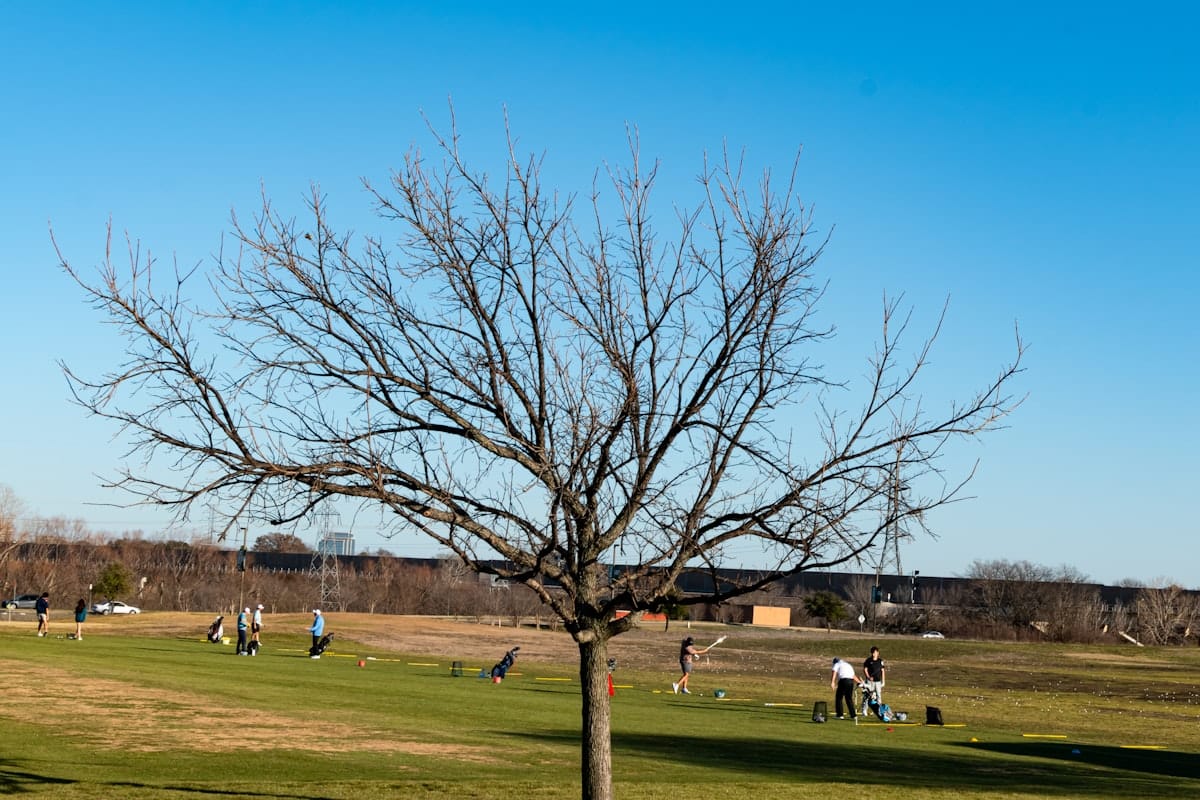
Blocked drilling means hitting one shot on repeat: ten 7-irons to a 150 flag, then ten 8-irons, then ten drivers. It feels productive because strikes clean up as you go. They clean up because your brain is solving one problem on a loop, not because your golf is improving.
Random schedules do the opposite. Something changes between every attempt: club, target, shape, trajectory. Each swing is a fresh problem. Strikes worsen during the session. Skill, measured days later, gets better.
Wulf and Lee's 1993 paper first showed it: random schedules outperformed the repetitive approach for "generalised motor program learning," the technical name for skills that travel. Fazeli and colleagues replicated this on golf putting in 2017 with 30 novice golfers, and at a one-week retention test the variable group had pulled away. Chua's 2019 paper in Human Movement Science added a mechanism: variety nudges attention onto a target, while repetition nudges it onto your body. External focus beats internal focus.
A 2024 systematic review by Barzyk and Gruber in Frontiers in Sports and Active Living pulled together 52 randomised trials on golf motor learning and confirmed the pattern. One caveat: too much variation, too soon, hurts beginners. If you're brand new to the game, you need some repetition to build a baseline. Once you can make contact with most clubs, variety wins.
The science is 30 years old. Range culture hasn't caught up. Practical Golf has a good summary if you want the long version.
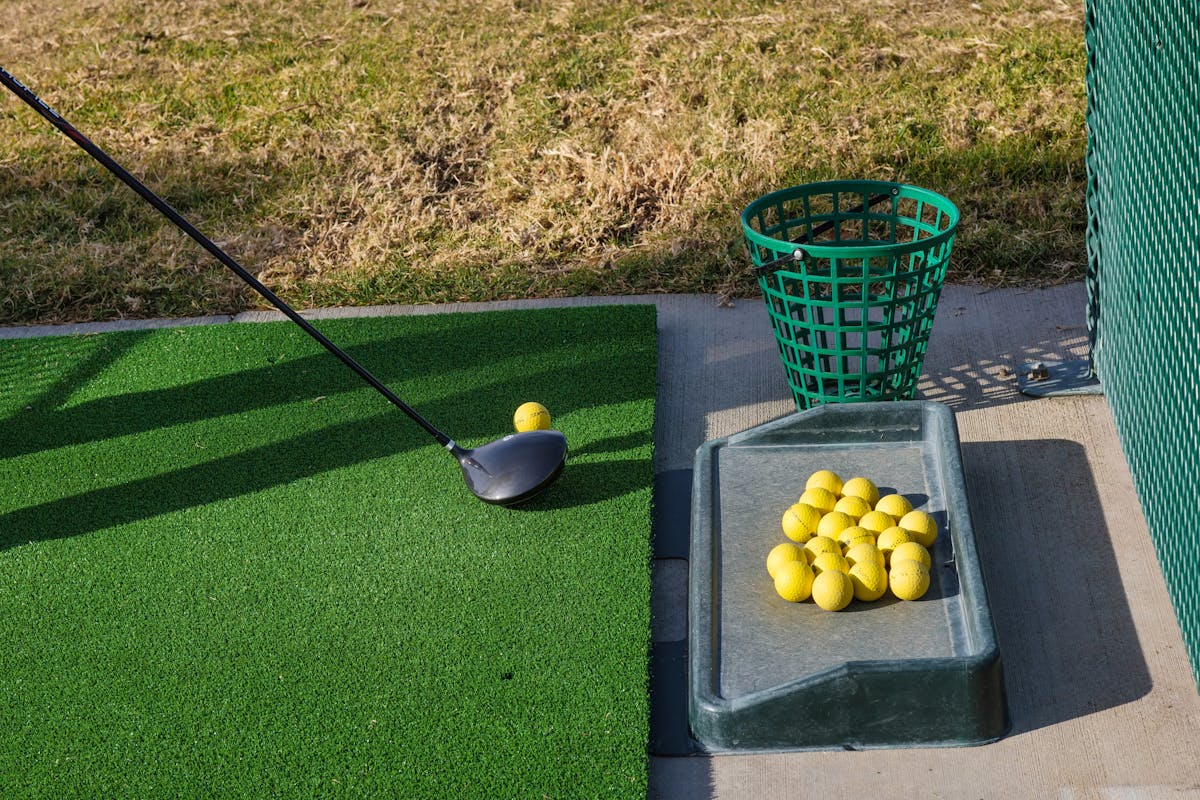
The kit list is short and cheap.
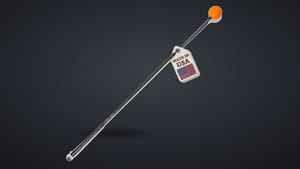
For alignment sticks, the GoSports 3-pack is the default cheap option (4.6 stars, 11,000+ reviews on Amazon). The SKLZ set with ring markers is the upgrade pick.
Mark Blackburn, Justin Rose's coach and Golf Digest's number one ranked teacher, splits a 60-minute hour into 15-minute blocks. Will Shaw, PhD and PGA Pro at Golf Insider UK, uses something close. The blocks are short on purpose. Switching modes inside a session is part of how the learning sticks.
Wedges and short irons. Half swings, then bigger swings as the body wakes up. The job is to move blood and rehearse tempo, not to hit pure shots. A wedge at 50% feel beats a 7-iron at 90% effort.
Drop one alignment stick on the ground parallel to your target line at the ball. Check your stance to it on every shot. Costs 60 seconds. Buys you honest aim for the rest of the hour.
One swing feel. One club. Impact tape on the face.
This is the only block where you think about your body. Pick a single feel, whatever your coach or your last lesson gave you, and hit the ball. Look at the tape after every shot. If the strike pattern moves toward the centre of the face, the feel is working. If it doesn't, change feels or change the drill. Don't hit the same swing harder.
Keep the count tight. Will Shaw caps this phase at around 20 balls. Past that, you stop learning and start grinding.
The most important block, and the one most amateurs skip. Different club, different target, full pre-shot routine on every ball. Treat each shot like it's the only one you're going to hit.
Blackburn's line: "We don't hit ball after ball to the same target on the course." So don't do it on the range either. Pick a flag. Pick a club for that flag. Run your routine. Hit one ball. Step away. New flag, new club.
Save the last 10 to 15 balls for a pressure block. Score yourself out of 10 on each shot, where 10 is "I'd take that on the course" and 1 is "I'd be reloading." Aim for an average above 6. Bet a sleeve against yourself if you need the stakes.
Total ball count: 60 to 90. The 2025 Masters Practice Range Tracker, written up by Zephyr Melton on Golf.com, showed pros averaged 86.5 balls per session with a median of 79. Bryson DeChambeau hit 393 in one day, which is why he's the outlier, not the model. Amateur Josele Ballester hit 14. Tour pros aren't grinding 200-ball buckets. They're deliberate.
Pick two or three per session. Don't try to run all five in one hour.
Johnny Miller's drill, with a GolfPass video walkthrough. Nine shots, each one different.
A mid-iron is the cleanest club for it. You build control of the ball, not the swing. That's external focus, what Chua's 2019 paper credited to variable schedules.
Immediate physical feedback on club path and face direction at impact.
If the gate drill keeps showing a persistent outside-in path, my slice fix guide walks through the correction in detail. A personal launch monitor confirms what the gate is telling you. Watch the club path versus face angle numbers. With the driver, attack angle joins the conversation, since attack angle plus path produces your true driver delivery. Driver setup is its own rabbit hole, and getting the loft right is half the battle before you ever swing.
Builds a wedge distance ladder. What pros call having "your numbers."
From 110 yards (101m) and in, course management is mostly knowing those numbers cold.
The cheapest swing feedback tool ever invented. Shows you what your strike pattern looks like, which drives smash factor and ball speed loss on mishits.
You can't talk yourself out of a strike pattern. The tape doesn't care what your swing felt like.
The drill Annika Sorenstam built her career on. PGA coach John Kolls of Duke University Golf Course has written about it. Annika's pre-shot routine was 24 seconds, consistent within one second across video analysis spanning 14 years.
Build your version.
That last step is the whole point. On the course you have a four-minute walk between shots. On a typical range you have four seconds. Forcing the wait teaches your body to repeat the routine cold. Forty-five balls in an hour with a full routine, as Kolls frames it, beats 100 balls in 30 minutes. You're not training a swing. You're training the decision sequence that wraps it.
PGA coach Daniel Gray has cited National Golf Foundation data showing 74% of golfers don't break 90. For a 90-shooter, the driver accounts for 16% of shots in a round, irons and fairway woods 31%, short game and putting 53%. Walk past your local range. Driver bay full. Short-game green empty.
Track your last five rounds. Work out the percentage of shots from inside 100 yards (91m), and match your practice time to it. For a 90-shooter that's half your practice. For a 100-shooter, closer to 60%.
The Golf Practice, a PGA-recognised academy, made the related point in July 2025: distributed practice beats massed practice. Three one-hour sessions across a week beats one three-hour Sunday grind. Sleep cycles between sessions are when the gains lock in.
About one hour, 60 to 90 balls. The 2025 Masters range tracker showed tour pros averaged 86.5 balls per session with a median of 79. Past 90 balls, fatigue trains broken-down swings into your motor memory. Frequency matters more than duration. Three one-hour sessions across a week, spaced 48 to 72 hours apart, beats one three-hour Sunday grind, because the brain consolidates motor learning between sessions, not during them.
Allocate by shot frequency. For a 90-shooter, 53% of shots in a round are short game and putting, 31% are irons and fairway woods, 16% are driver. Most amateurs invert this and bash drivers. Inside an hour-long session: 10 balls warming up with wedges, 15 to 20 balls on one technical thing, 25 to 30 balls running variable targets and clubs with a full pre-shot routine. Save the last block for scored pressure shots.
Use Ben Emerson's three-ball rule. Treat every set of three balls like an on-course situation: pick a club, pick a target, run your routine, step away after each shot. After three balls, change the club, target, or shape. The 9-Shot Drill is the structured version: nine shots covering three trajectories by three shapes, no two the same. Change is what builds skill that travels off the range.
Yes. They're the cheapest piece of golf gear that changes how you practise. Without them, your aim drifts within five balls and every drill is built on a wonky foundation. A 3-pack runs $12 to $15 (GoSports) or around $46 for a kit with ring markers (SKLZ). Two sticks let you set up the alignment station, the gate drill, and a wedge distance ladder. If you're paying for lessons or a launch monitor and you don't own alignment sticks, fix that first.
Use one if you have it. The drills above work without one. A personal launch monitor turns the technical phase from "did that feel better" into "did that change the number." The four numbers worth tracking are ball speed, launch angle, spin rate, and club path. Watch them across five to ten balls, not on a single shot. One ball is noise. Five balls is signal. Pick two metrics per session and ignore the rest to dodge data overload.
Pick four range sessions over the next two weeks, spaced 48 to 72 hours apart. Run the three-phase structure each time. Use two drills per session, rotated, so all five from the list above get used at least once. Track one number you care about: GIR, scrambling percentage, or a personal launch monitor metric, before and after.
The on-course test isn't whether you're hitting it further or straighter. The earliest signal that the work is sticking is that you stop standing over the ball thinking about your swing. You think about the target. That's the external focus the research kept pointing at.
The next layer up is a structured home practice routine for the days you can't get to the range. That's where the wedge distance ladder, the alignment sticks, and a piece of impact tape do most of their work indoors. The range is a third of the picture. The other two thirds happen at home and on the course.
Some links in this article are affiliate links. If you buy through them, I earn a small commission at no extra cost to you. This never influences what I recommend. I link to gear I'd buy myself.
Data-backed reviews and advice that works. No brand spin.