

How to Hit a Plugged Bunker Shot (Fried Egg and Buried Lies)
The standard bunker shot assumes the ball sits on top of the sand. A plugged lie breaks that assumption: part or all of the ball sits below the surface, and
The standard bunker shot assumes the ball sits on top of the sand. A plugged lie breaks that assumption: part or all of the ball sits below the surface, and

A tight lie is the same descending strike, with less grass cushion and less room for error. Read the lie, decide if you need a full swing, match club and bounce to the ground, and make small setup changes instead of a new motion.

Six golf books that target what is actually costing you shots: mental game, swing basics, strategy, course play, short game, and the fundamentals.

A flop shot clears trouble and stops fast when you're short-sided. Here's how to hit one without blading it or chunking it into the ground.

A greenside bunker shot and a fairway bunker shot share a name and almost nothing else. This is the recovery skill for the moment avoidance already failed, the ball found the sand anyway, and the only decision left is how to get it back into play without making the hole worse.

The lie decides the shot, not a blanket rule. How to read a rough lie and pick the fix that actually matches it.

James Whitfield weighs the evidence on the Cleveland CBX4 Zipcore Wedge, a cavity-back wedge built for golfers who miss the center of the face.

A club-by-club landing system for chips inside 20 yards (18m), built on carry-to-roll ratios instead of feel alone.

Blades, Game-Improvers, and the Right Lofts for Your Game

And Stop Leaving the Ball Short

Most bunker shots fail because the swing decelerates before impact. Open the clubface before you grip the club, aim your stance left of the target, enter the sand 2 inches
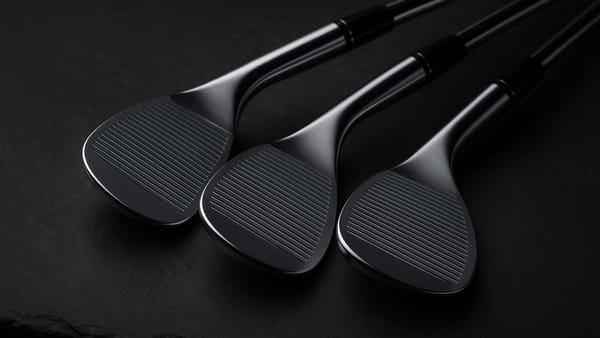
Most golfers have an undetected loft gap in their scoring zone. Here's how to audit your wedge setup and fix the configuration for your game.

Shot Scope data shows a 25-handicapper is 3x more likely to get up and down with a 9-iron than a lob wedge. Here is the home practice system that fixes it.
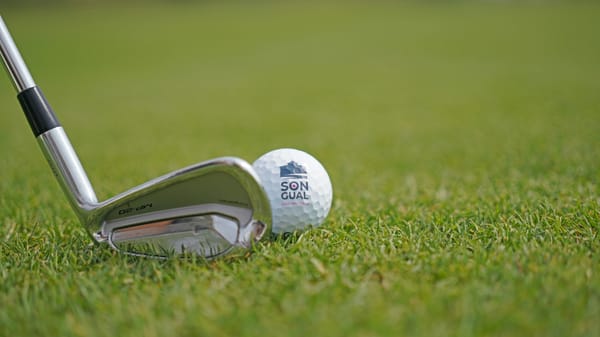
Arccos data from 870,000 rounds shows mid-handicappers reach for the lob wedge too often and pay for it. Here is the decision framework.

Gap wedge vs sand wedge vs lob wedge: data-led guide to which wedges a mid-handicapper actually needs, with carry distances and gapping rules.
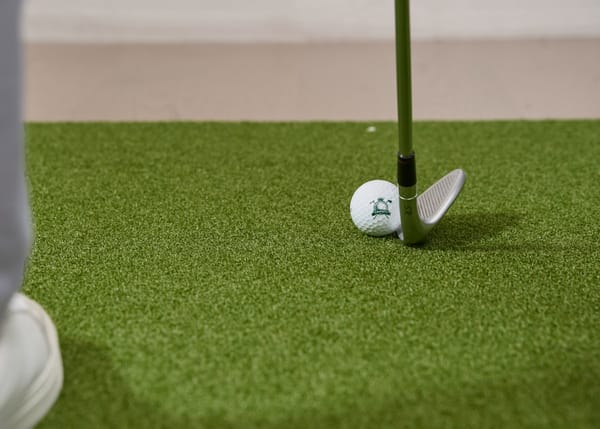
Wedge grinds explained without the jargon. What F, S, M, D, K and T mean on a Vokey, and how to pick the right shape for your swing and turf.

Wedge bounce explained: what the angle does, when high or low works best, the right choice for mid-handicappers, and how to self-fit at home.

Mid-handicappers lose 3.5 strokes per round chipping. Fix the root cause with wrist data, smarter club selection, and two drills you can use this week.

High-spin wedge with multiple grinds and data to support the price