5 Driver Mistakes That Are Costing You Distance
Mid-handicappers lose 15 to 30 yards off the tee through setup and decision errors, not swing flaws. Here are five driver mistakes costing you distance, backed by launch monitor data.
Mid-handicappers lose 15 to 30 yards off the tee through setup and decision errors, not swing flaws. Here are five driver mistakes costing you distance, backed by launch monitor data.
Overspeed training is real. A structured 6-week SuperSpeed Golf protocol delivers 3 to 10 mph of swing speed gains in independent testing, and our SuperSpeed Golf review covers exactly what the data shows. But most mid-handicappers are simultaneously giving away 15 to 20 of those yards through setup decisions before the club moves. Shot Scope's 2026 data puts the average 15-handicapper at 236 yards (216m) off the tee, while the average 10-handicapper sits at 259 yards (237m). That 23-yard gap isn't all swing talent. A substantial chunk is decisions you can fix today.
These five mistakes are diagnostic, not mechanical. You won't find "fix your takeaway" here. What you will find are setup and strategy errors that launch monitor data exposes in about 15 minutes on the range.
TL;DR
- 1Spin rate is the biggest hidden distance killer: running 500 to 875 rpm over optimal costs 15 to 30 yards of carry for most mid-handicappers.
- 2Tee height matters: raising the ball to equator height gains 8+ yards for most mid-handicappers.
- 3Position yourself strategically on the tee box: most golfers stand in the same spot every hole, narrowing the playable fairway for no reason.
- 4Hitting driver by default costs strokes: USGA data shows golfers pull driver 84 to 91% of the time regardless of hole design.
- 5An ill-fitting driver costs 16.3 yards below baseline, more than the right driver gains at 15.0 yards above it.
1. Your Spin Rate Is Running 500 RPM Over Optimal
Excess spin is the biggest distance killer mid-handicappers can't see without a launch monitor. Trackman Combine data shows the average 10-handicapper spins the driver at 3,192 rpm. The average 14.5-handicapper sits at 3,275 rpm. The optimal window for swing speeds in the 84 to 96 mph (135 to 155km/h) range is 2,400 to 2,700 rpm, according to MyGolfSpy's optimal launch chart, citing Trackman Optimizer data.
That's a gap of 500 to 875 rpm. Not a small leak. It's the difference between a ball that climbs, holds, and drops with forward roll versus one that balloons, stalls, and lands soft.
MyGolfSpy modeled this at 95 mph (153km/h) club speed using the Trackman Optimizer: a player with a -5 degree angle of attack produces about 9.9 degrees of launch and 3,630 rpm of spin. Flip that to a +5 degree angle of attack and the numbers shift to 15.7 degrees of launch and 2,595 rpm. The carry difference is 20 to 30 yards. Same swing speed, same golfer, same club.
| Metric | Typical Mid-Handicapper (10 to 20 HCP) | Optimal Target | Gap |
|---|---|---|---|
| Swing Speed | 84 to 96 mph (135 to 155km/h) | N/A | N/A |
| Average Spin Rate | 3,192 to 3,275 rpm | 2,400 to 2,700 rpm | 500 to 875 rpm over |
| Launch Angle | 11 to 12 degrees | 13 to 16 degrees | 2 to 4 degrees low |
| Estimated Carry Cost | N/A | N/A | 15 to 30 yards |
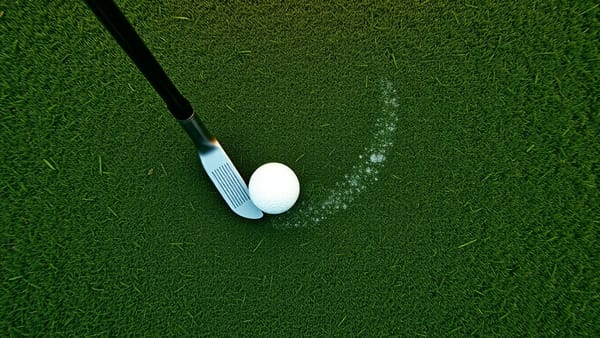
Trackman's angle of attack data shows the average 14.5-handicapper hits down at -1.8 degrees. Optimal for distance is +2 to +4 degrees. That 4 to 6 degree gap generates most of the excess spin. The culprits are negative angle of attack, ball position too far back in the stance, and off-center face contact.
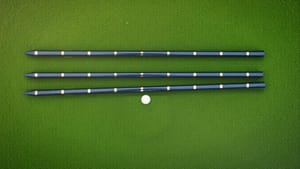
Face angle is the overlooked fourth lever. The face controls 75 to 85% of where the ball starts, per TrackMan's D-plane data. An open face at impact adds sidespin on top of excess backspin, compounding the distance loss in two directions. The fix sequence matters: face angle is addressed first, then path. A face-to-path gap of +3 degrees or under is the target for both distance and accuracy. For a full breakdown of how face angle and path interact, see how to fix a driver slice and why your driver slices when your irons don't. Building path awareness on the range is straightforward with alignment sticks: SKLZ Pro Rods (Amazon, B008RATH18) let you set a visual corridor that makes neutral path a repeatable reference on every swing.
You can't fix what you can't measure. Fifteen minutes on the range with a launch monitor that reads spin will tell you whether this is your biggest leak, and how big it is. The Rapsodo MLM2PRO (~US$700) and Garmin Approach R10 (~US$500) both read spin, launch angle, ball speed, and carry distance. Either one gives you the diagnostic data to pin down this mistake.
2. You're Teeing the Ball Too Low
Tee height is free distance that most golfers leave on the table. Eric Alpenfels and Bob Christian ran a controlled study on 27 golfers from scratch to 29 handicap, published in GOLF Magazine. The mid-handicap group (10 to 19 HCP) results tell the story:
| Tee Height | Carry Distance | Spin Rate | Launch Angle | Fairway % |
|---|---|---|---|---|
| Low tee | 171.46 yards | 3,844 rpm | 12.4 degrees | 58.5% |
| High tee | 179.84 yards | 3,529 rpm | 14.04 degrees | 61.5% |
| Difference | +8.38 yards | -315 rpm | +1.64 degrees | +3.0% |
That's 8 yards of carry from tee height alone, with no swing change. The high-handicap group (20+) gained an average of 18 yards. And accuracy didn't suffer. The high tee group hit more fairways, not fewer.
USGA robot testing backs this up. Report R22-06 tested at 120 mph (193km/h) and confirmed that lowering tee height reduced total distance by 2 to 13 yards, depending on the club and ball combination. Phase I player testing showed the same pattern: lower tee, less carry, more spin, less launch.
The practical rule: the top half of the ball should sit above the crown of the driver at address. If you can see less than half the ball above the crown, you're teeing it too low.
Quick check at address: Look down at the ball on the tee. If you can't see at least half the ball sitting above the top edge of your driver head, push the tee up. This is the simplest distance gain in golf.
3. You Stand in the Same Spot on the Tee Box Every Time
The tee box gives you two club lengths of depth and the full width of the markers. That's over 40 square feet of real estate. Most golfers walk up, tee it between the markers, and aim down the middle. Every hole, same spot.
This is a decision error, not a swing error.
Trouble down the right side? Tee up on the right side of the box and aim left. You've widened the available fairway because your natural shot shape works away from the hazard, and even a straight ball lands in the fat part of the short grass. Dogleg left? Move back on the right side. You've changed your angle into the corner, and the extra distance to the trouble zone gives your miss more room to stay in play.
Scott Fawcett's DECADE Golf research found that a Tour player picks up about 0.07 strokes every time they swing driver instead of a shorter club. Over 6 to 7 extra driver holes per round, that's about half a stroke. But that advantage assumes the driver stays in play. For mid-handicappers whose misses lead to penalty strokes, the math shifts fast.
The fix costs nothing. Before you tee up, identify where the trouble is. Tee on the same side as the trouble. Aim away from it. You're not hitting it farther. You're making the fairway wider for the swing you already have.
4. You Hit Driver Because That's What You Do
A USGA survey of 2,263 golfers found that golfers hit driver 84.12% of the time on par 4s and 91.36% on par 5s. Confidence level made almost no difference to that number. Golfers pulled driver regardless of whether they felt confident with it. The variables that drove club changes were a penalty area in reach or a hole short enough that driver wasn't needed.
That's autopilot, not strategy.
The counter-argument is real: distance matters. Arccos data shows that "81% of players who added 10 or more yards off the tee also gained strokes." And 65% of players who lost 10 or more yards also lost strokes. That's not a formula, but it's a strong directional signal: more distance off the tee makes better scoring more probable. So this isn't an argument to pull the 3-wood because you're nervous. That's fear-based course management, and it costs strokes too.
The correct framework is penalty-based. Ask one question before every tee shot: what happens if I miss? If your miss with driver brings a penalty stroke into play (water, OB, unplayable lie), the expected cost of that miss wipes out the distance advantage. A 3-wood 20 yards shorter but in the fairway beats a driver that's 20 yards longer but puts you in a penalty area even 3% of the time. That 3% adds up across 14 driving holes.
5. Your Driver Doesn't Fit Your Swing
An off-the-shelf driver is a guess. MyGolfSpy's 2026 Most Wanted Driver test (35 testers, 42 drivers, 20,580+ shots on GCQuad over 490 hours) quantified what that guess costs. The wrong driver cost testers an average of 16.3 yards, or 6.8% below their personal baseline. The right driver gained 15.0 yards, or 6.0% above baseline. For 66% of testers, the penalty of the wrong driver was larger than the gain from the right one.
That asymmetry matters. The best-to-worst spread for the same golfer, same swing, ranged from 16 to 60.8 yards. In the worst cases, spin rate varied by close to 1,000 rpm between the best and worst performing driver for the same player.
Plugged In Golf and Club Champion ran a fitting study with 25 golfers. Of 24 measured, 22 were leaving 10+ yards of carry on the table. Nine were missing 40+ yards. The average golfer was 34 yards short of their optimal carry distance. After fitting, the average gain was 16 yards, and every single golfer in the study gained distance. PING's nFlight fitting data showed similar results: an average 11-yard total distance gain and 9.5 extra yards of carry with the right head, loft, and shaft combination.
The MyGolfSpy 2026 data showed something else: the best-fit driver pulled the average miss 6.7 yards tighter, a 56.5% improvement from baseline. Fitting doesn't just add distance. It tightens dispersion too.
A launch monitor session IS a fitting session. The same data that reveals your spin rate also reveals whether your current driver head, loft, and shaft are right for your swing. You don't need to buy a new driver first. You need data first.
The fastest single fix from this list: get a launch monitor session and check your spin rate and angle of attack. If your spin is over 3,200 rpm and your swing speed sits between 85 and 95 mph (137 and 153km/h), that's your biggest leak. The honest answer is that these setup leaks are probably easier to recover than most golfers expect, which somehow makes them harder to talk about than buying something new.
Once the setup is sorted, swing speed is the other dial worth turning. A structured 6-week SuperSpeed Golf program (Amazon, B073SZXD2Q) delivers 3 to 10 mph in independent testing. See our full review for the protocol and data. The Orange Whip 47" (Amazon, B07HXTFD8D) pairs well as a tempo and sequencing primer before speed work. For golfers also working on the fitness side of swing speed, see our driver fitness guide. The setup fixes above and the speed gains compound; neither replaces the other.
Don't change your swing until you know whether the problem is your setup, your equipment, or your decisions on the course. Data first. Speed work second. New equipment last.
Frequently Asked Questions
What is the optimal launch angle and spin rate for a mid-handicapper with their driver?
For swing speeds between 84 and 96 mph (135 to 155km/h), the typical range for 10 to 20 handicappers, optimal launch sits between 13 and 16 degrees with a spin rate of 2,400 to 2,700 rpm. That's according to MyGolfSpy's optimal launch chart, citing Trackman Optimizer data. Most mid-handicappers produce 11 to 12 degrees of launch with 3,192 to 3,275 rpm of spin, per Trackman Combine averages. Closing that gap is worth 15 to 30 yards of carry.
How much does tee height affect driver distance?
A controlled study by Alpenfels and Christian found that mid-handicappers gained an average of 8.38 yards of carry by switching from a low tee to a high tee. High-handicappers gained 18 yards. USGA robot testing confirmed the pattern: lowering tee height reduced total distance by 2 to 13 yards. The rule of thumb: at least half the ball should sit above the crown of the driver at address.
Should I always use my driver off the tee?
No. USGA survey data shows golfers hit driver 84% of the time on par 4s and 91% on par 5s, regardless of confidence level. That's autopilot, not strategy. The decision should be penalty-based: if your miss with driver brings a penalty stroke into play (water, OB, forced drop), the expected cost outweighs the distance advantage. Arccos data shows that 81% of golfers who gained 10+ yards off the tee also gained strokes, so distance does matter, but the decision to use it needs to be deliberate, not automatic.
How do I know if my spin rate or face angle is leaking distance?
You need a launch monitor. There's no way to tell from ball flight alone whether you're at 2,800 rpm or 3,500 rpm, or whether the face is 3 degrees open at contact. The Rapsodo MLM2PRO, Garmin Approach R10, or any unit that reads spin rate and face angle will give you the answer in a few swings. If spin is above 3,000 rpm with a swing speed under 100 mph (161km/h), you're losing distance to excess spin. If the face-to-path gap is above +3 degrees, you're leaking distance and accuracy simultaneously. Common causes of both: negative angle of attack, ball position too far back in the stance, and an open face at contact. Fix face angle first, path second.
How much distance can I gain from a proper driver fitting?
MyGolfSpy's 2026 Most Wanted test found the right driver adds an average of 15.0 yards over a golfer's baseline. Plugged In Golf and Club Champion's fitting study found average gains of 16 yards, with 22 of 24 golfers leaving 10+ yards on the table before fitting. PING's nFlight data showed an average 11-yard total distance gain. The more striking finding from the MyGolfSpy data: the wrong driver costs 16.3 yards, meaning the penalty of a bad fit is larger than the reward of a good one.
Some links in this article are affiliate links. If you buy through them, I earn a small commission at no extra cost to you. This never influences what I recommend. I link to gear I'd buy myself.







The golf newsletter that cuts the hype
Data-backed reviews and advice that works. No brand spin.
Recommended products

Rukket SPDR Golf Net Review: 10x7 Bundle for Home Practice.
The Rukket 10x7 SPDR golf net bundle reviewed: what's actually in the box, what MyGolfSpy and PluggedInGolf found, and who it fits best.
Read review