








reviews
Torrey Pines South Course Review
Torrey Pines South is a municipal golf course that any golfer can book, and it has still hosted
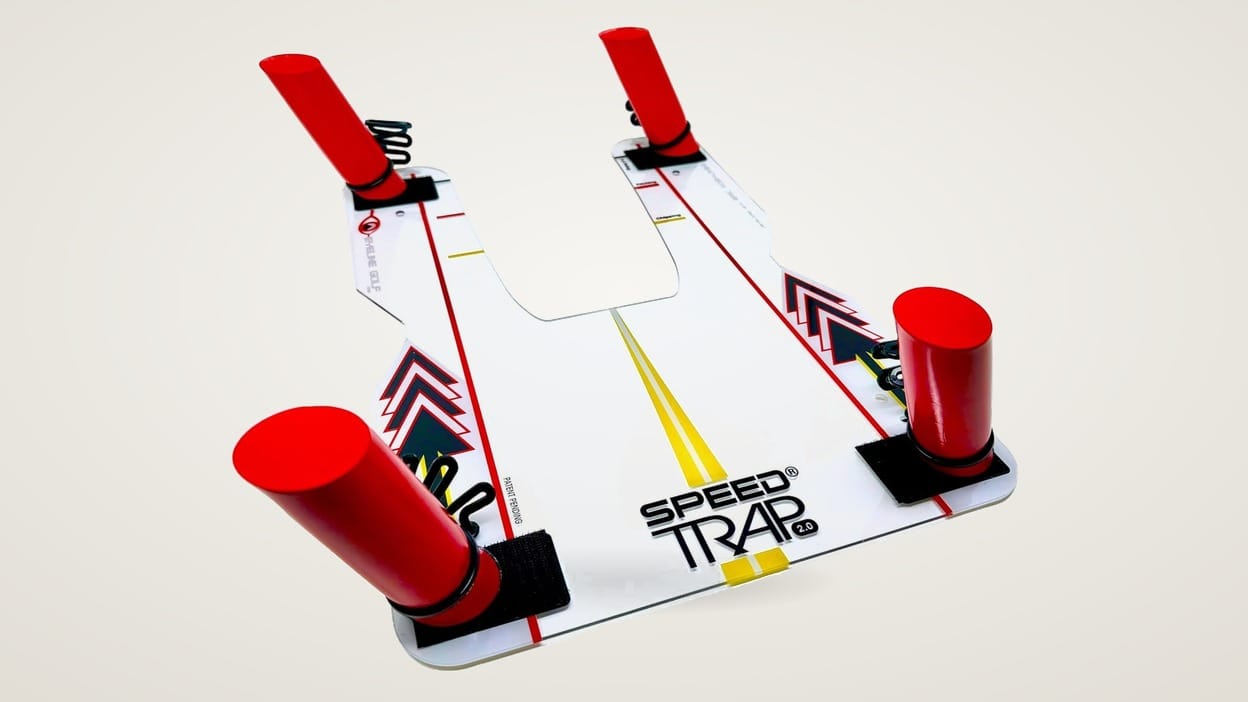
The EyeLine Golf Speed Trap 2.0 is built for one specific problem: a swing path that curves the ball hard in one direction, with no way to see why. It's the right pick for a golfer who slices or hooks and wants instant, visible feedback on path without a launch monitor. It's the wrong pick for someone whose miss is a strike issue, a speed problem, or a face-angle issue the path work alone won't touch.
This is a fit for a weekend golfer or improver who slices or hooks the driver and has never actually seen the path that's causing it. A player who can feel that something's wrong but can't diagnose it benefits from a tool that gives an immediate physical signal (clipping a rod) the moment the clubhead strays. It's also a reasonable pick for anyone who wants a slice-and-hook trainer that doesn't need a launch monitor, a phone app, or a trip to a fitting bay to be useful.
It's a poor fit for a golfer whose main miss is a thin or fat strike rather than a curved shot; the Speed Trap has nothing to say about contact quality. It's also the wrong tool for someone chasing more distance through clubhead speed (that's a SuperSpeed problem, not a path problem), or someone whose slice is driven mainly by an open face at impact rather than an out-to-in path. Published analysis on driver slices makes the same point about the underlying mechanics: face angle typically accounts for the majority of where the ball starts, and path governs the curve on top of that. A path trainer used in isolation, with the face angle left unaddressed, will train a better path without necessarily fixing the slice.
The Speed Trap 2.0 is a passive training aid, not an electronic one. The base is a single piece of polycarbonate, described by the manufacturer as unbreakable, with slots that hold two adjustable foam rods upright. Positioned correctly, the rods form a channel just wide enough for a clean strike, and the golfer's job is to swing the clubhead through that channel without touching either rod.
The feedback is immediate and physical rather than data-driven. Catch the outer rod on the way through and the swing has moved from outside the target line to inside it too aggressively, or has cut across the ball from out to in, the path signature behind a slice. Catch the inner rod and the path has come from too far inside, the signature behind a hook and, in some cases, a push. Because the rods are adjustable, the gate can be widened for a beginner learning to feel a neutral path or narrowed as the swing improves, which gives the tool some room to grow with a golfer rather than becoming redundant after a few sessions.
There's no monitor, no radar, and no companion app. That's a deliberate design choice, not a missing feature: the entire premise is that seeing and feeling a mis-hit path in real time, on every single rep, changes swing behavior faster than reviewing a number on a screen after the fact.
Aggregated owner reports and published reviews consistently credit the Speed Trap with doing one thing well: making an inconsistent path impossible to ignore. Golfers who've struggled to feel the difference between an in-to-out and an out-to-in swing report that clipping the rods gives them a concrete reference point that a mirror or a coach's verbal cue doesn't. For a golfer who slices and has never had that path problem made visible, that immediate feedback loop is the tool's clearest strength.
The honest limitation is scope. This is a feel-and-feedback aid, not a swing rebuild. It doesn't touch grip, clubface control, tempo, or strike quality, and it has no mechanism for diagnosing why a path drifts (weight shift, hip rotation, hand position) beyond telling the golfer that it has. Independent write-ups are generally clear-eyed about this: the device is best treated as a drill station bolted onto an existing lesson or practice plan, not a stand-alone fix. A golfer whose slice is a face-angle problem more than a path problem can run this drill faithfully and still slice the ball, because the gate has no way to signal what the clubface was doing at impact, only where the clubhead traveled. That's a limitation worth taking seriously rather than glossing over, since a training aid that only tells half the story can leave a golfer confident they've "fixed" something that hasn't actually moved.
That's also why this review holds the same line as the site's existing driver slice breakdown: path and face both shape a slice, and a tool built around one half of that equation works best paired with attention to the other half, not used as a complete substitute for it.
It's worth being precise about what the Speed Trap isn't, because two other training aids this site has reviewed sit in adjacent but distinct territory.
The SuperSpeed Golf Swing Speed Training System is built around overspeed training with a set of weighted clubs, and its entire premise is adding clubhead speed, not correcting path. A golfer who swings on a clean, repeatable line but wants more distance is better served there.
The Orange Whip trains tempo and sequencing through a flexible, counterweighted shaft. It's a feel trainer for rhythm, not a path corrector, and it has nothing to say about whether a swing travels inside-out or outside-in.
The Speed Trap sits in a third lane entirely: it isn't a speed system and it isn't a tempo trainer, it's a path-specific feedback gate. A golfer working on distance, rhythm, and path could reasonably own all three without much overlap between them, since each one is answering a different question about the swing.
At a street price of about $150, the Speed Trap 2.0 sits below SuperSpeed's roughly $175 system price and a little above Orange Whip's roughly $120, though all three numbers move with sales and bundle configuration, so treat them as ballpark figures rather than fixed pricing. What that price buys is a single, durable, made-in-the-USA training station with no ongoing cost: no app subscription, no batteries, no consumables beyond the occasional foam rod replacement.
For a golfer who slices or hooks specifically, and who has never had a tool that makes the path visible in real time, that's a reasonable trade for a problem that otherwise takes a lesson or a launch monitor session to diagnose. For a golfer chasing speed or tempo instead, the SuperSpeed or Orange Whip systems above are the better dollar-for-dollar fit.
Pros
Cons
EyeLine Golf Speed Trap 2.0: View on Amazon
It trains swing path specifically. Swinging the clubhead through the gate without clipping either foam rod builds a neutral or in-to-out path, which is one half of what causes a slice or a hook. It doesn't address clubface angle, strike quality, or swing speed.
Yes. Clipping the outer rod signals an out-to-in path, the pattern behind a slice. Clipping the inner rod signals an overly inside path, the pattern behind a hook or a push. The same gate trains against both misses depending on which rod gets clipped.
No. The Speed Trap is a passive, feedback-on-contact tool. It requires no monitor, radar, or app, which is part of its appeal for golfers who want immediate feedback without added equipment.
SuperSpeed trains clubhead speed through overspeed training with weighted clubs. Orange Whip trains tempo and sequencing through a flexible, counterweighted shaft. The Speed Trap trains neither speed nor tempo directly. It's built around swing path, a distinct problem from both.
Not on its own if the clubface is the bigger contributor. Published analysis on driver slices attributes the majority of starting direction to clubface angle at impact, with path shaping the curve on top of that. The Speed Trap addresses the path half of that equation; a face-angle problem needs separate attention.
Some links in this article are affiliate links. If you buy through them, I earn a small commission at no extra cost to you. This never influences what I cover or recommend. I link to gear I'd buy myself.
Data-backed reviews and advice that works. No brand spin.